Israel News
Latest news
IDF escalates strikes on Hezbollah as fears grow of Iran-directed assault on Israel
Army steps up efforts to degrade missile capabilities, no longer assessing proxy will stay out of fight should US strike Tehran, thanks to heavy Iranian pressure and $1 billion for group's rehab
The post IDF escalates strikes on Hezbollah as fears grow of Iran-directed assault on Israel appeared first on The Times of Israel.
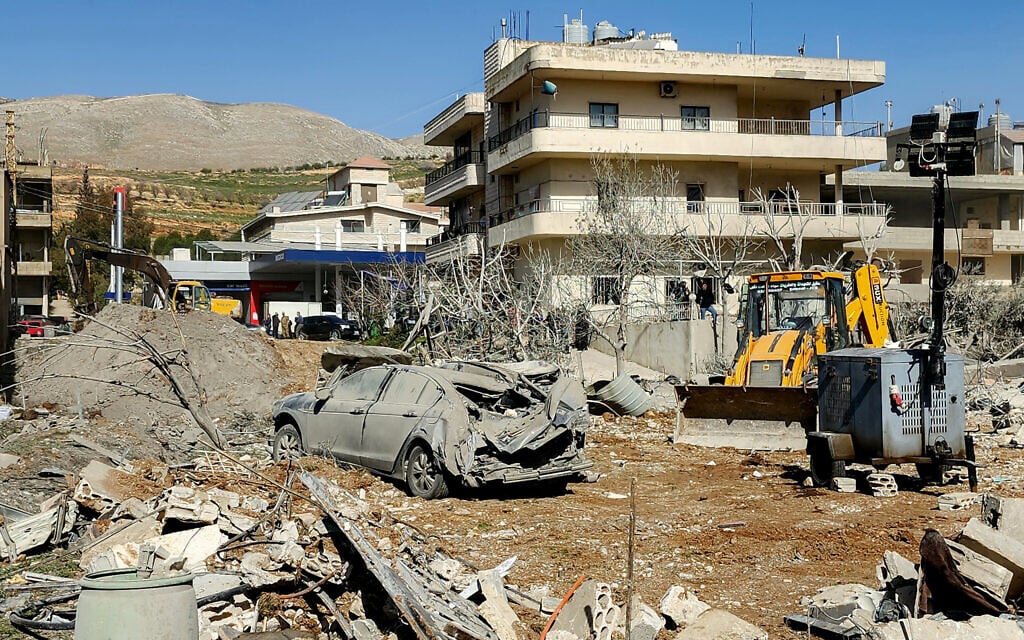
Seeking recognition, Somaliland minister says US can access its minerals, military bases
Khadar Hussein Abdi suggests granting 'exclusive' mineral rights to Washington, is 'open to offer' military sites; won't rule out possibility of Israeli military presence
The post Seeking recognition, Somaliland minister says US can access its minerals, military bases appeared first on The Times of Israel.

Daily Briefing Feb. 22 — IDF ramps up Hezbollah strikes as Iran supports proxy group
Military correspondent Emanuel Fabian discusses IDF strikes in Lebanon with Iran's Guards in region, USS Gerald Ford nearing Mediterranean, and far-right settlers enter Gaza
The post Daily Briefing Feb. 22 — IDF ramps up Hezbollah strikes as Iran supports proxy group appeared first on The Times of Israel.

After two years of war, defense tech buoys Israel’s economic recovery
Though entire tech sector took serious hit from workers' reserve duty, air traffic pauses and brain drain, demand is now high for technology that was honed and tested in wartime
The post After two years of war, defense tech buoys Israel’s economic recovery appeared first on The Times of Israel.

HaZamir in Concert, March 15th at Lincoln Center - Sponsored Content
Celebrating Jewish Identity Through the Power of Song — An International Teen Choir Experience at David Geffen Hall, Lincoln Center. Tickets on sale now.
The post HaZamir in Concert, March 15th at Lincoln Center appeared first on The Times of Israel.

Witkoff says Trump ‘curious’ why Iran hasn’t ‘capitulated’ under US pressure
Trump's envoy says US president has 'plenty of alternatives' to a deal; Iranian official says sides aren't on same page about sanctions relief, but talks could lead to interim agreement
The post Witkoff says Trump ‘curious’ why Iran hasn’t ‘capitulated’ under US pressure appeared first on The Times of Israel.
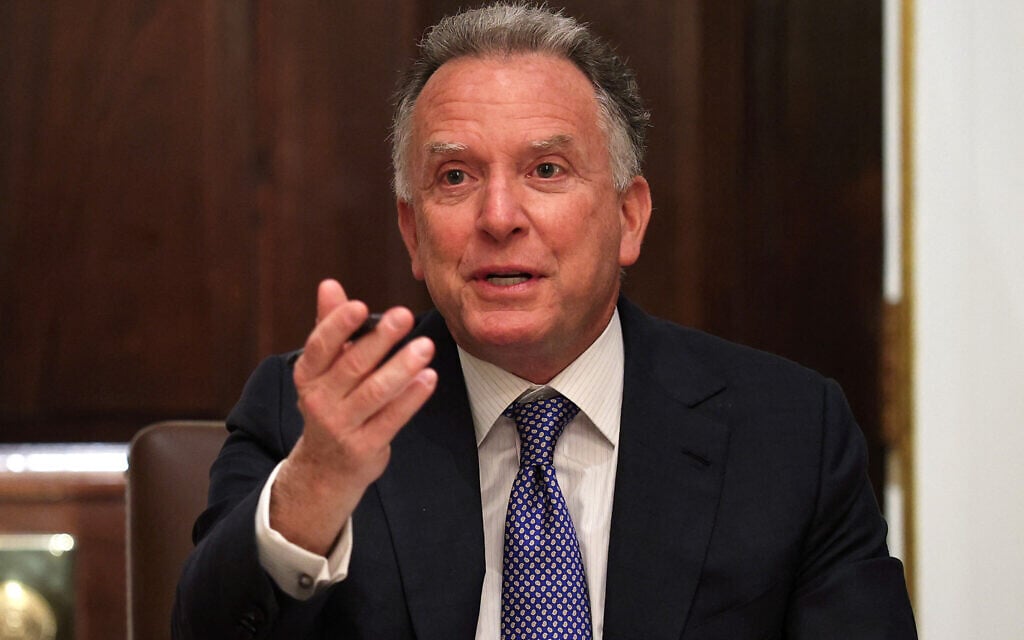
UK government botched response to police ban on Maccabi fans, lawmakers’ report says
MPs blast police for bogus research, failure to liaise with local Jewish community ahead of Aston Villa game last year, say government's 'clumsy' response inflamed tensions further
The post UK government botched response to police ban on Maccabi fans, lawmakers’ report says appeared first on The Times of Israel.

Right-wing activist detained for protest at home of Arab Israeli anchor Lucy Aharish
Video shows provocateur Mordechai David arguing with newswoman's partner, actor Tsahi Halevi; is released along with second protester; network says it's 'shocked by the escalation'
The post Right-wing activist detained for protest at home of Arab Israeli anchor Lucy Aharish appeared first on The Times of Israel.

Thousands march in France for slain far-right activist, blame hard left for his death
1 detained; officials say more arrests possible as police investigate Nazi salutes, racist slurs and homophobic insults
The post Thousands march in France for slain far-right activist, blame hard left for his death appeared first on The Times of Israel.

US avoids condemning settler killing of Palestinian-American in armed West Bank attack
Asked for comment on killing of 19-year-old Nasrallah Abu Siam in settler attack, US State Department says it has 'no higher priority' than safety of Americans, is 'monitoring' situation
The post US avoids condemning settler killing of Palestinian-American in armed West Bank attack appeared first on The Times of Israel.

Hugh Laurie, attacked for mourning ‘Tehran’ producer, rejects assumptions he’s ‘Zionist’
Denial comes after anti-Israel accounts disparaged British actor for grieving Dana Eden, who died last week; his response then drives backlash from pro-Israel accounts
The post Hugh Laurie, attacked for mourning ‘Tehran’ producer, rejects assumptions he’s ‘Zionist’ appeared first on The Times of Israel.

Khamenei takes steps to ensure succession amid rising fears of US strikes, assassination - NYT

Iran’s supreme leader has appointed his close ally, Ali Larijani, as the country’s de facto leader, sidelining the elected president, Masoud Pezeshkian.
Israel disqualifies own bobsleigh team from Winter Olympics for faking illness

The disqualification follows a series of tense moments for the Israeli delegation at the Milan-Cortina games.
UK slams West Midlands Police over Maccabi fan ban based on AI reports
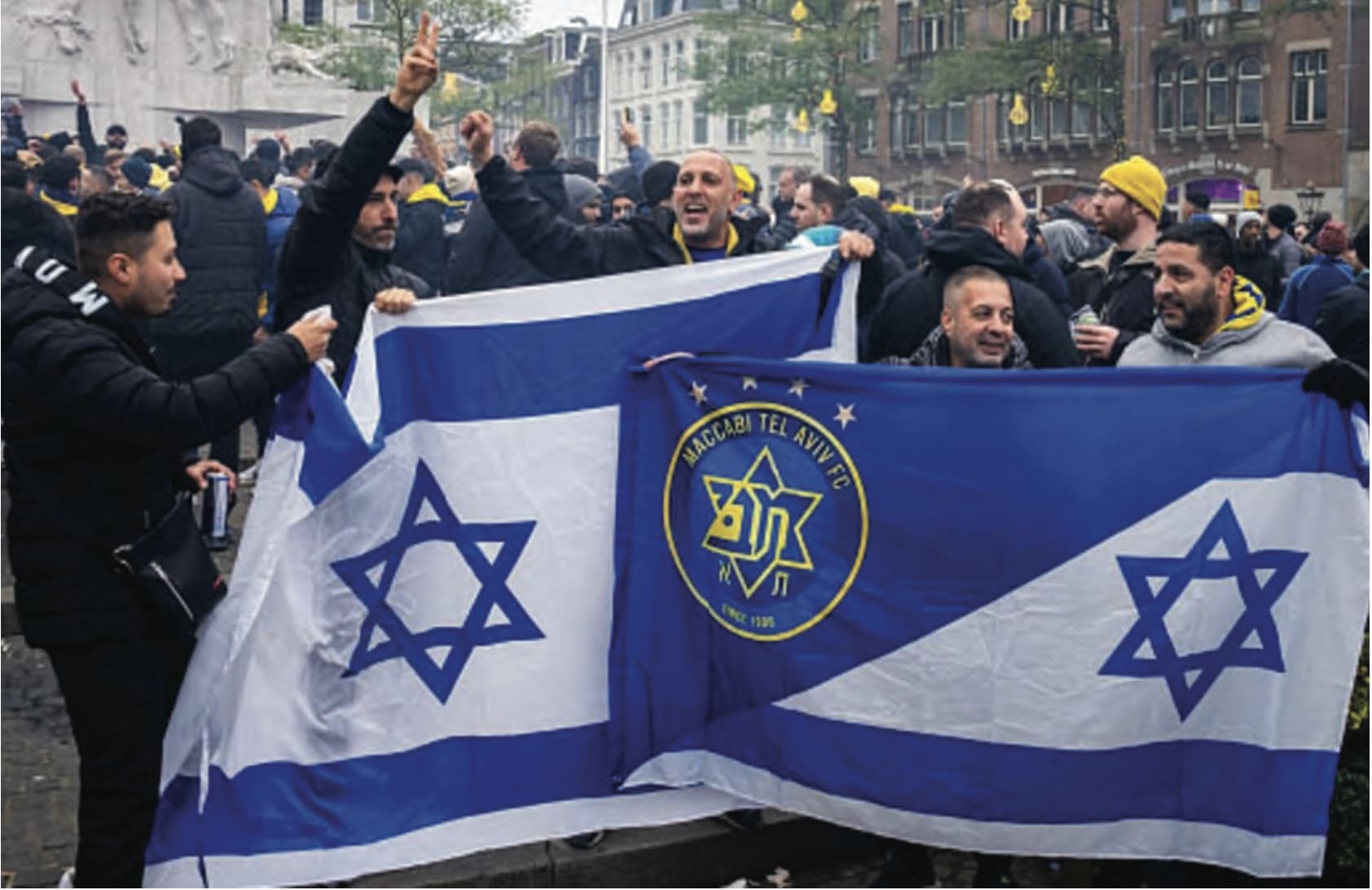
The committee said local police relied too heavily on “inaccurate and unverified” material, including information partly based on false AI-generated content that painted a misleading picture.
Pro-Palestinian activists intimidate Jewish residents in UK, push for Israel boycott

The activists, associated with the Apartheid-Free Zone (AFZ) movement, have been canvassing neighborhoods in Hackney, Bristol, Sheffield, and Brighton.
Why Mike Huckabee's interview with Tucker Carlson matters for the Middle East - analysis

The interview has led to a debate in some sectors about how views on Israel and the Middle East are shaping US policy, and also how religious views have shaped policy in the region.
Iran could be close to enriching uranium for bomb-making material, US envoy Steve Witkoff claims

The US envoy left out that Iran currently has no access to its material, no machines to enrich it, and no weapons program to use it for any operational purpose.
Weakened but willful: Experts tell ‘Post’ Hezbollah role in potential Iran war possible but costly

The assessment comes only days before the Saudi media outlet Al-Arabiya reported that Hezbollah is now being led by officers from Tehran’s IRGC.
Iranian protesters cry ‘death to Khamenei’ as Trump, Iranian FM clash over casuality numbers

A video circulating from the scene showed students dispersing while chanting, “Don’t be afraid, we are all together,” according to the outlets.
Anti-Zionist group plans keffiyeh protest amid Buchenwald camp's ban on pro-Palestinian symbols
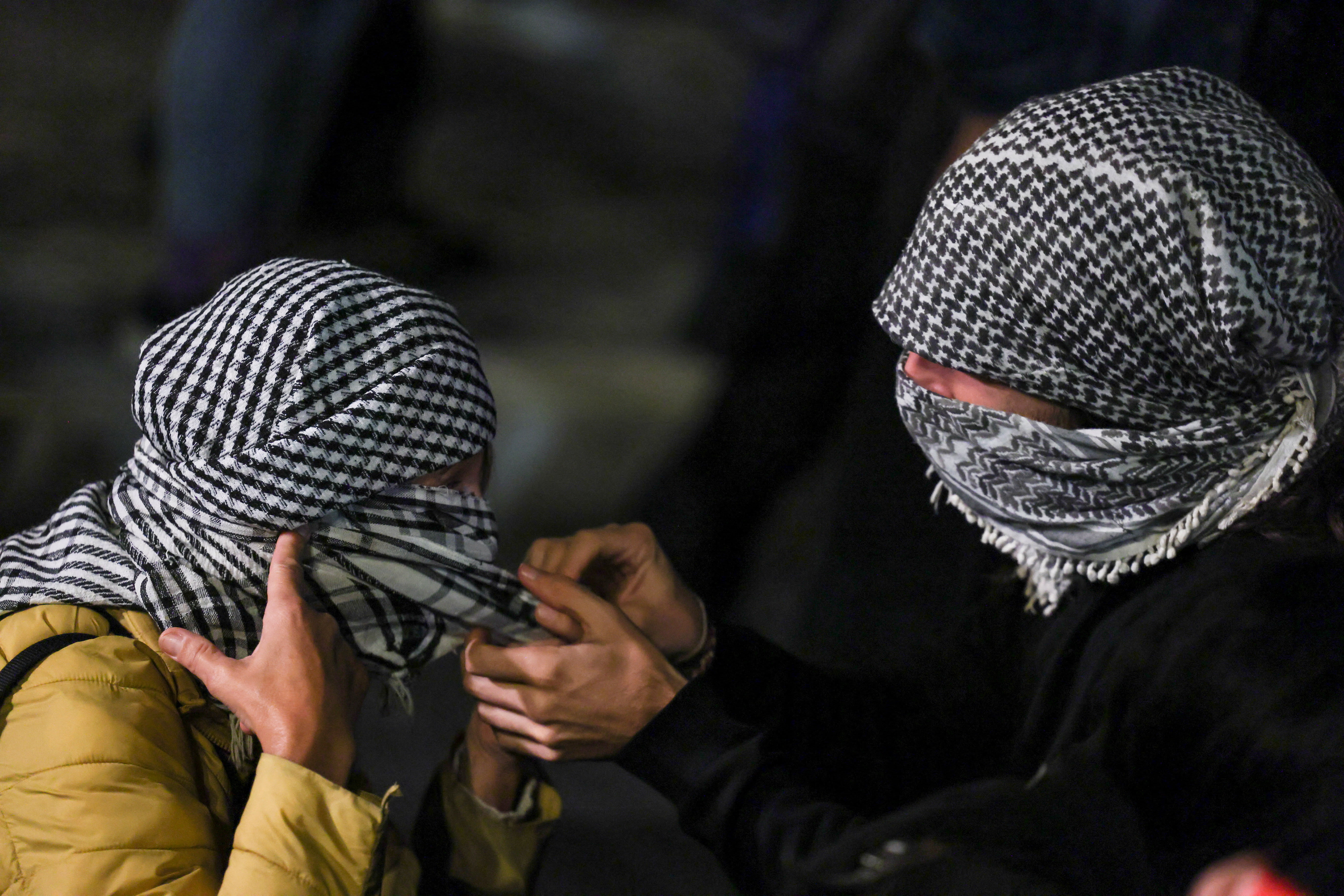
The organizing group is Kufiyas Network's Kufiyas in Buchenwald program, which accuses the site of "massively intensifying repression against solidarity with Palestine."
Crisis-driver or Gaza stabilizer? Why Turkey believes it switched roles with Israel - analysis

Ankara feels that from the Horn of Africa to the Eastern Mediterranean and Syria and Iraq it has increased its influence greatly in the last years.
Tech Talk: Deel puts $15m. behind YC-style global start-up competition, launching in Tel Aviv

Deel has structured the competition into seven in-person regional finals across major tech hubs, with Tel Aviv hosting the first event on March 23, 2026.
Supreme Court rejects Braverman's appeal, keeps travel ban in place over ‘midnight meeting’ probe

Braverman asked the Supreme Court to lift the travel ban, arguing it harmed his UK ambassador appointment and Israel’s foreign relations after the Lod court overturned an earlier ruling.
Ono Academic College unveils International Law Program bridging Israeli and US legal systems

New LL.B. track at Ono International School combines Israeli law with NY Bar eligibility
'Over 90% of Iranians hate the regime,' INSS’s Beni Sabti reveals from leaked Iran survey

“It was a secret poll which said that 92% of the Iranian people hate their regime,” Sabti said, according to a transcript provided to The Jerusalem Post.
Alshareef: Israel, Jews, should help Iranians seek liberty to ‘repay debt to Cyrus’

Speaking at the Jerusalem Post Miami Summit on Wednesday, Alshareef called on Israel and the Jewish people to back Iranians seeking freedom, as Netanyahu voiced solidarity with the protesters.
How TALMA turns English education into social mobility and a Zionist mission

At the Jerusalem Post Miami Conference, TALMA CEO Ido Mahatzri showed how teachers, language and values reshape Israel’s periphery.
From the front lines to the future: Israeli society and the Jewish people in 2036

Speaking at the Jerusalem Post Miami Conference, IDF veterans and civil-society leaders highlighted service, dignity, and Diaspora responsibility as pillars of Israel’s next chapter.
Watch: The Jerusalem Post Miami Summit

Amid changing geopolitics and evolving Diaspora-Israel relations, the conference served as a platform for powerful ideas, bold discussions, and building bridges across continents.
Huckabee tells Carlson Israel ruling entire Middle East 'would be fine,' drawing Arab backlash

The controversy began when Carlson and Huckabee discussed a biblical verse that indicated land that including parts of Egypt, Syria and Iraq belonged to Israel.
Turkish boxer attacks Israeli opponent before fight, Israeli wins in two rounds

Konyuncu was seen bleeding profusely from a wound on the side of his head, and the judges made the call to end the fight there, awarding victory to Gordon.
Most Jewish Israelis blame Arab crime wave on 'cultural problem,' poll finds

While most Jewish respondents pointed to cultural factors, a similar majority of Arab respondents (57%) blamed police inaction.
Preparing for the inevitable: The venture fund built on crisis and chaos - interview

“The world is changing faster than our systems can adapt. So I started mapping the challenges and the meeting points between them,” said Shani Zanescu.
Israel must advance permits for egalitarian Western Wall plaza, High Court orders
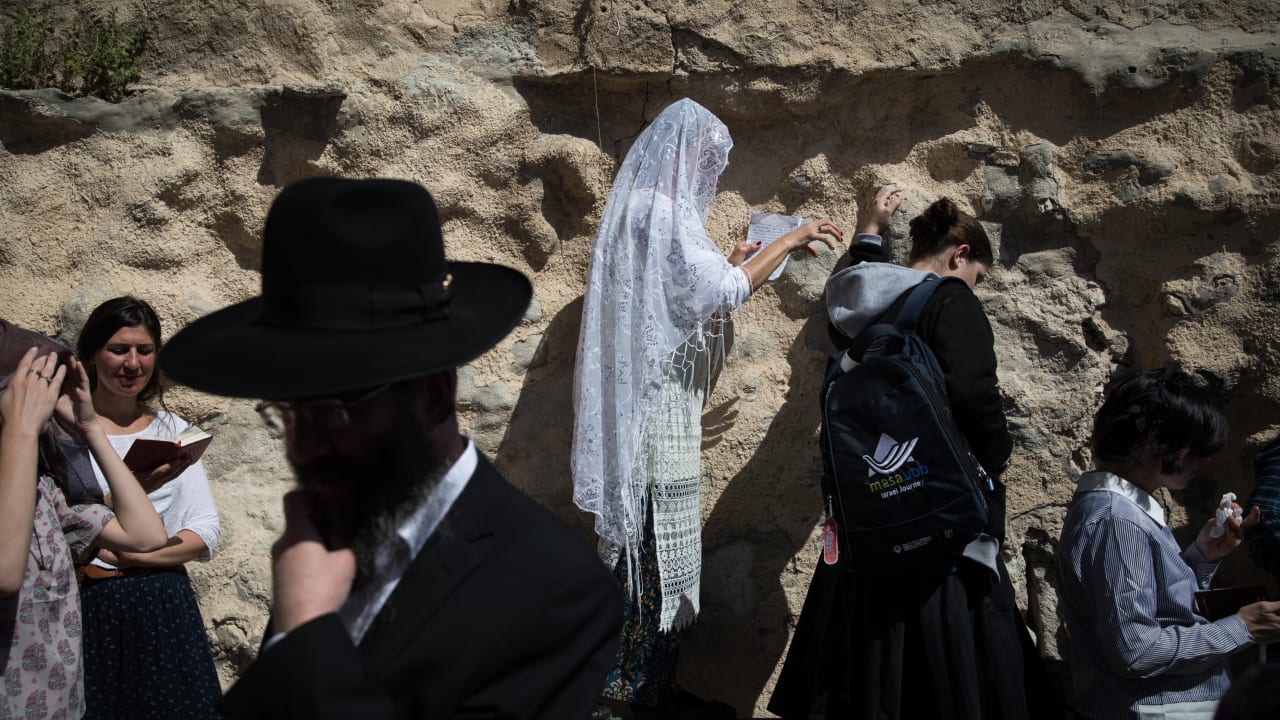
The ruling followed a hearing earlier last week, during which justices pressed state and municipal representatives over why worshippers at the egalitarian section still cannot reach the Wall.
Trump’s Carlson outreach was worth trying, but it ultimately failed - editorial

The Trump administration deserves credit for recognizing the seriousness of antisemitism on the Right and the Israel divide feeding it. But it must be understood that invitations are not enough.
Huckabee fires back at Tucker Carlson after interview descends into Israel-smearing

"If Tucker was really a 'journalist' he could have found out what I easily did later," Huckabee stated in response to one claim by Carlson that Israel had sheltered an accused sex offender.
Tremors in Washington: The targeted campaign to turn Christians against Israel - opinion

In countries across the region, Christian communities are persecuted and even massacred. By contrast, Christians in Israel are protected by law with full civil rights, representation, and security.
India-Israel tech synergy will define the next decade of defense strategy - opinion

With its record FY27 defense budget, India is doubling down on AI, autonomy, and self‑reliance, reshaping its partnership with Israel in the process
דרמה בפלורידה: השירות החשאי חיסל חמוש שהסתנן לאחוזת טראמפ
 החשוד, צעיר בשנות ה-20 לחייו שהחזיק כנראה ברובה ובפחית דלק, חדר לאחוזת מאר א-לאגו בסביבות 1:30 בלילה לפי השעון המקומי ונכנס לפרימטר הביטחוני. הסוכנים פתחו לעברו באש והרגו אותו, שמו טרם נחשף והמניע נחקר. הירי: אחרי שטראמפ ניצל כבר משני ניסיונות התנקשות בשנתיים האחרונות
 תינוקת בת 5 חודשים מתה במעון בירושלים, המטפלת נחקרת
 המשטרה פתחה בחקירה אחרי שהתינוקת פונתה במצב אנוש לבית חולים בבירה, שם נקבע מותה. נסיבות האירוע טרם ברורות, במד"א אמרו: "כשהגענו למקום היא הייתה מחוסרת הכרה, ללא דופק וללא נשימה"
 אסון על הקרח: אוטובוס תיירים צלל לקרקעית האגם העמוק בעולם
 7 אזרחים סינים ונהג רוסי נהרגו כשחצו את אגם בייקל, מיעדי התיירות הפופולריים ביותר ברוסיה, ונפלו לתוך סדק ברוחב 3 מטרים שנפער בקרח. תייר אחד ניצל
 "קיבלתי אגרוף לפנים ונפלתי לאדמה": בני 14 הותקפו על-ידי בוגרים מהם ואיבדו הכרה
 חבורת בני 16 עד 18 השליכה אבנים על בני 14, ובהמשך הזמינה אותם ל"סולחה". עם תחילת המפגש ליד חוף הים בראשל"צ, הכו הבוגרים את הצעירים יותר בכל חלקי גופם. עד ראייה מנע פגיעה חמורה יותר: "התוקפים ברחו". הקורבנות סבלו משטפי דם, אמו של אחד מהם: "עלינו מאוקראינה כי חיפשנו ביטחון בישראל"
 איראן מנסה להציל את המו"מ? המועד החדש לשיחות - ו"ההצעה העסקית" לארה"ב
 בכיר איראני הודה כי "הצדדים חלוקים" על הסרת הסנקציות, והתעקש על "הכרה בזכות להעשיר אורניום למטרות אזרחיות". לדבריו, בתחילת מרץ ייערך סבב שיחות נוסף, ו"האפשרות להסכם ביניים קיימת". בטהרן שוב שרפו דגלי ארה"ב, אך הבכיר טען: "הצענו לה להשקיע בתעשיית הנפט שלנו - היא יכולה להיות שותפה עסקית"
 ה-AI נכנס לפוליטיקה: בוט בינה מלאכותית רץ בבחירות לפרלמנט
 אזרחי קולומביה ילכו בעוד שבועיים לקלפי, ושם יוכלו לשלוף את הפתק "IA" ולהצביע ל"גאיטאנה", כלי בינה מלאכותי הקרוי על שם דמות ילידית אגדית. הוא כחול, רובוטי ואוהב חיות, ומבטיח להחזיר את הכוח לעם: תומכיו יקבלו תמצית של הצעות ויביעו את דעותיהם - והוא ישקלל אותן כדי להחליט כיצד להצביע
 ביטול הרחבה המעורבת בכותל: נתניהו מנע דיון שרים מחשש לזעם רפורמי, לוין יתמוך
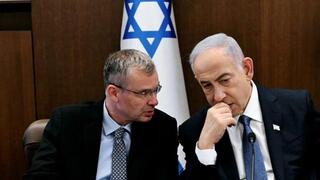 אחרי שבג"ץ קבע כי על המדינה להפסיק את הסחבת בהקמת הרחבה השוויונית, רה"מ הנחה לבטל את ישיבת ועדת השרים לחקיקה שהייתה אמורה לדון ביוזמה להנהגת תפילות לפי מנהג אורתודוקסי בלבד. בעקבות כך, שר המשפטים לוין הודיע שיתמוך בחוק של ח"כ אבי מעוז במליאת הכנסת. זו עמדת יו"ר הקואליציה
 אסטרטגיית נתניהו: יזהיר שהערבים נוהרים לקלפי, כדי שינהרו
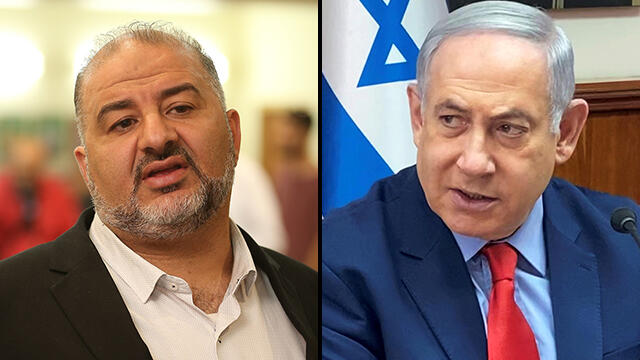 הדרך להשתלבות אמיתית של ערביי ישראל בחברה הישראלית אינה בדלנות אלא השתלבות במפלגות כלל-ישראליות. ככל שיצביעו למפלגות ערביות, אלה ממילא יישארו באופוזיציה ולא יוכלו לדאוג לאזרחים הערבים
 עוד קצינה עתרה בגלל עיכוב קידומה מצד בן גביר: "קורא תיגר על עצמאות המשטרה"
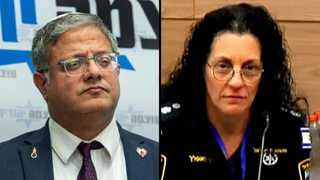 אפקט רינת סבן מטלטל את המשטרה: סנ"צ רותי האוסליך מבקשת מביהמ"ש שיורה לשר לביטחון לאומי לאשר את מינויה לתפקיד ראש מחלקת חקירות. "החלטת השר מתעלמת מהמלצות פוזיטיביות של הדרג הפיקודי-מקצועי"
 גולה איראני בריאיון לאולפן ynet: "המהפכה חיה, זה אמיץ בצורה מדהימה"
 בעוד התקיפה האמריקנית משתהה, סיפר ארמין נוואבי ממקום מושבו בקנדה כי איראנים רבים משוכנעים שההמתנה שווה: "ההבנה היא שמשהו משמעותי יותר מתרחש". המסר שלו לישראל: "זו הדרך היחידה לחיסול האויב העיקרי שלה"
 בפוליטיקה דחיית הכרעה היא טקטיקה. במלחמה היא אסון
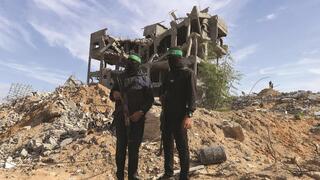 לאחר 7 באוקטובר הייתה לישראל הזדמנות לעצב מציאות אחרת. אילו כבר בימים הראשונים הייתה מוצגת תוכנית ברורה ליום שאחרי שלטון אזרחי חלופי, מעורבות אזורית ואופק מדיני, סביר שהלחימה הייתה קצרה יותר, הלגיטימציה הבינלאומית הייתה נשמרת זמן רב יותר, והלחץ להשבת החטופים היה מאוחד וחזק יותר
 היועמ"שית דרשה שקצין המשטרה הבכיר ישתתף בדיון על רוגלות - בן גביר גירש אותו
 שר המשפטים כינס ישיבה בנושא השימוש ברוגלות, אך השר לביטחון לאומי סירב לאפשר לניצב בועז בלט, ראש אגף החקירות, להשתתף בדיון לצד בהרב-מיארה. "זה דיון סרק פוליטי שנועד לצורכי הפריימריז של לוין", תקפו במערכת האכיפה. בסביבת בן גביר מאשימים את היועמ"שית, ובינתיים החקיקה החשובה תקועה
 הורשע המטפס שהשאיר את זוגתו לקפוא למוות על פסגת ההר, אמה: "הוא לא אשם"
 אוסטריה: תומס פלמברגר נידון ל-5 חודשי מאסר על תנאי וקנס של 9,600 אירו בגין גרימת מוות ברשלנות חמורה, אחרי שהתעלם מסימני האזהרה ורק כשחברתו קרסטין קרסה יצא לחפש עזרה, תוך שהוא משאיר אותה על פסגת הגרוסגלוקנר, ההר הגבוה במדינה, שם מתה מהיפותרמיה. השופט, בעצמו מטפס הרים: "אתה לא רוצח". זוגתו לשעבר: "גם אותי הוא נטש שם, בכיתי, צרחתי", אמה של קרסטין: "אל תציירו אותה כמישהי קטנה ונאיבית, הם החליטו יחד, זה לא הוגן כלפיו"
 תוכנית ההישרדות של חמינאי: ההיערכות לירושה - והיועץ שקיבל את המשימה המיוחדת
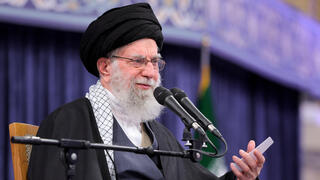 המנהיג העליון מבין שהוא על הכוונת - והעביר חלק מסמכויות ניהול המדינה למזכיר המועצה לביטחון לאומי, עלי לריג'אני. ב"ניו יורק טיימס" דווח כי המהלך נועד להבטיח את שרידות המשטר, כלקח מ"עם כלביא" ומחשש לחיסול שדרת ההנהגה. ההנחיה למנות 4 מחליפים לכל בכיר, ומי יהיה ה"דלסי רודריגז" של איראן?
 בלי חוק ובלי סדר: המשמר הלאומי שהקים בן גביר פועל בהיעדר סמכויות
 לפי דוח של הכנסת, הגוף המבצעי לחיזוק ביטחון הפנים מגייס לוחמים ומקבל תקציבים אף על פי שטרם כונסה הוועדה הממשלתית שהייתה אמורה לדון בגיבוש נהליו. בן גביר והמשטרה: "מתקיים שיח על-מנת לקדם החלטת ממשלה"
 פשיטה? רק אחרי כאוס | הקולות מ"זירת המלחמה" בצפון: "ראיתי את המוות"
 רק אחרי השלכת רימונים מרחפנים, שגרמו לפציעות והרס, פשטה המשטרה על כפר כנא ועצרה 34 חשודים. "אין לנו כלים להילחם בפשיעה", אמר ראש המועצה. בבית שנפגע מרימון נמצאו גם סימני ירי בקירות: "לא נשאר טוב בעולם". אחיו של הקשיש שנפגע: "זה יכול היה להסתיים ברצח", יו"ר הוועדה למאבק באלימות בחברה הערבית לאולפן ynet: "המשטרה רוצה שנרצח אחד את השני"
 הזרוע הישראלית במועצת השלום, וההבטחה: "חמאס יתפרק מנשק - בטוב או ברע"
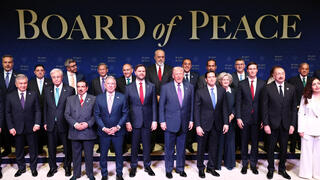 בכינוס הראשון של הבורד שהקים טראמפ נחשף הגרעין הישראלי שמאחורי חזון ה"ריביירה של עזה": יקיר גבאי, לירן טנקמן ומייקל אייזנברג. הם לא "פיסניקים", ומציבים תנאי סף ברור: "אם חמאס לא יתפרק מנשקו - לא יוזרם שקל". בכיר במועצת השלום: "מצפים שתתקבל החלטה לכאן או לכאן במרץ, ושיתחילו למסור נשק באפריל תמורת כסף וחנינה. אם לא - לישראל יש גיבוי לסיים את העבודה"
 אוגרים מזון, אוטמים חלונות - ולא ישנים | באיראן נערכים למלחמה: "מוכנים לכל תרחיש"
אבטחת לוסי אהריש הוסרה בגלל "ירידה במתיחות" | צפו במרדכי דוד בפתח ביתה
 אחרי הכניסה לבניין שבו מתגוררת המגישה והעימות עם בעלה צחי הלוי, התפרסם תיעוד חדש שבו נראה פעיל הימין ליד דלת דירתם. "באנו בקטע חיובי לזכרו של ערפאת", אמר דוד לפני שעוכב לחקירה ושוחרר. מעסיקתה של אהריש: "בתחילת השבוע צומצמה האבטחה, אך עם חידוש החשש הוחלט להשיבה באופן מיידי"
 350 שקל לגרם, סוחרים שמגלגלים מיליונים בטלגרם ולא מעט מכורים: כך הפך סם הדוסה למכת מדינה
 במועדונים ובאירועים משפחתיים, תיכוניסטים ומבוגרים, וגם סלבס: הדוסה הפך לאחד הסמים הנפוצים בישראל, משווק כ"חומר פרימיום" ומגיע במשלוח עד הבית, אבל בפועל מדובר בשאריות שנותרו לדילרים על הרצפה מסמים אחרים, וזה במקרה הטוב, שלא כולל רעל עכברים. מכורים לשעבר, סוחרים בהווה, רופאים שטיפלו במשתמשים ובכירים במשטרה מסכימים על דבר אחד: השקית הוורודה הזו אולי מפתה, אבל אין לכם מושג מה יש באבקה הזו, ואת המחיר מבינים רק כשמאוחר מדי
 הטמפרטורות יורדות, הגשם חוזר וצפויות סופות רעמים | התחזית המלאה
 הטמפרטורות יחזרו להיות רגילות לעונה, וגשם מקומי צפוי לרדת בצפון. בימים הקרובים הגשם יתחזק מצפון הארץ ועד צפון הנגב, ומגמת ההתקררות תימשך
 בממשל טראמפ אין קונצנזוס על תקיפה. וויטקוף: "הנשיא סקרן לדעת למה איראן לא נכנעה"
 בזמן שהעולם ממתין להכרעה, שליחו של הנשיא אמר כי "קשה להביא את האיראנים למקום של כניעה". במשטר האייתוללות מזהירים את ארה"ב: "מיומנים בניהול מלחמה, כל פעולה לא שקולה תתקבל בתגובה מצערת". לפי רויטרס, יועציו של טראמפ מסתייגים מתקיפה - אך ייתכן שבשלב זה הוא כבר "דחק עצמו לפינה"
 משרד הרווחה הקפיא מכרזים של נוער בסיכון: "המדינה עוצמת עיניים"
 בית הדין לעבודה קבע בהחלטה תקדימית כי חובה לשמוע את דרישותיהם של עובדי מסגרות לנוער בסיכון, ובתגובה הוקפאו כמה מכרזים - וארגוני עובדים טוענים: "המדינה בהיסטריה מופרזת". משרד הרווחה: "לומדים את פסק הדין"
 מסמכי אפשטיין: מי הוזכר, מה נחשף - והאם טראמפ יכול לנשום לרווחה?
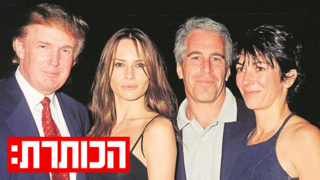 פרסום מיליוני מסמכים שנאספו במסגרת פרשת אפשטיין מחזיר לכותרות את קשריו עם הצמרת הפוליטית והעסקית. בין השמות שמוזכרים בהם ניתן למצוא את ביל קלינטון, הנסיך אנדרו, אהוד ברק, נועם חומסקי ודונלד טראמפ. עידו דמבין עושה סדר: מה באמת נחשף, מי הוזכר במסמכים והאם נשיא ארה"ב אכן יצא מזה בשלום?
 הזינוק בקנסות על חברות האוטובוסים בגלל תלונות נוסעים: "גם עשרות מיליונים לא ירתיעו"
 ynet ו"ידיעות אחרונות" חושפים כי בעקבות העלייה בתלונות הנוסעים נרשם זינוק בהיקף הקנסות למפעילות האוטובוסים, מ-159 מיליון שקל ב-2024 ל-184 מיליון שקל ב-2025. במשרד התחבורה מעודדים את הציבור להמשיך ולדווח, אבל בארגוני הנוסעים טוענים: "זה לא מספיק בשביל להוביל לשינוי אמיתי בשירות"
 התעמת עם צחי הלוי ונכנס לבניין: מרדכי דוד עוכב מול ביתה של לוסי אהריש
 דוד הפגין מול ביתה של המגישה בתל אביב, ותועד מתעמת מילולית עם בן זוגה צחי הלוי. לפי המשטרה, דוד ומפגין נוסף עוכבו בחשד שנכנסו למבנה תוך שימוש באמצעי כריזה. "לאן אתה רוצה שזה יגיע?", שאל הלוי את דוד - שהשיב: "מה תעשה לי? זכותי להפגין"
 בישראל נערכו למתקפה האמריקנית בסוף השבוע - והיא נדחתה | שינוי האסטרטגיה, ושאלת העיתוי
איבוד כיוון בעזה
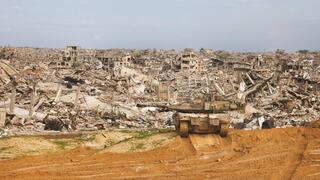 מול החתירה הבינלאומית לסדר חדש ברצועה, מציעה ישראל פתרון אחד בלבד: חזרה ללחימה. כמו לאורך כל המלחמה, גם כעת אין שום דיון מעמיק בשאלת היום שאחרי, וכרגיל פנטזיות וסיסמאות מחליפות מדיניות מפוכחת
 שאלת הרוגלות: הידיים אינן כבולות
 ב-2022 נאסר על המשטרה להשתמש ברוגלות, כלי עוצמתי וחשוב למלחמה בפשיעה. ארבע שנים אחרי, האלימות בחברה הערבית שוברת שיאים, אך חוק שיסייע בהתמודדות תקוע בגלל סכסוך בין הממשלה ליועמ"שית
 הגיע זמן הצ'רצ'יל
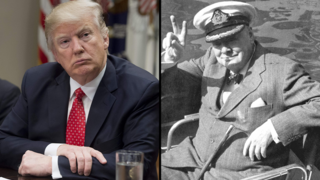 צ'רצ'יל לימד את האנושות כי אם נגזר עלינו להילחם ברשע, זה ללא פשרות. אתה לא מכיל אותו, אתה לא מבין אותו, אתה יוצא למחות אותו. למרות ההטעיות שטראמפ מפיץ, גם הוא מבין זאת במלחמתו באיראן
 Iran strike or electoral survival: the political clock pressing down on Trump
Washington's political establishment has been tracking every hint from the White House about a possible strike on Iran. President Donald Trump has signaled he is weighing further military steps, but behind the scenes, pressure has been building – both from within the administration and from his own electorate – to avoid sliding into a broad war that could shake the political landscape eight months before the November midterms.
The fear of losing CongressPresident Donald Trump is at a particularly delicate juncture vis-à-vis Congress, because Republican control of it hinges on a slim margin of seats to begin with. As of now, Republicans hold a relatively narrow majority of 218 seats against 214 Democrats, with three vacant seats set to be filled in special elections in 2026 – a dynamic that could narrow their advantage even further. On top of that, three Republican members occasionally vote against Trump's agenda on certain issues, which tightens the margin still more.
Historically, the president's party almost always loses seats in the midterms, and sometimes even control of one of the two chambers – a pattern that has recurred in recent decades and made it harder for presidents to advance their agenda in the final years of their term.
For Trump, the risk is not only legislative but personal: losing Republican control of the House could reopen the door to impeachment proceedings. Trump himself had warned previously that Democrats "are just waiting to return to power to launch another witch hunt" against him, following the two impeachment attempts he faced during his first term.
According to a Pew Research Center poll conducted at the end of January, the approval rating among Republicans and Republican-leaning voters stands at 73%. That represents a notable drop from the start of his second term, when the figure was around 84%, though it still reflects a clear majority within the Republican camp.
By comparison, the same poll found that among the general public the approval rating stands at 37%, and among Democrats and their supporters at just 5% – figures that illustrate how Trump's support base has remained almost exclusively Republican, amid deep partisan polarization.
Fox News cited Republican strategists as noting that a decision to strike Iran "carries domestic political risks heading into the midterms, where voters are far more concerned about the economy than about foreign conflicts" – precisely against this backdrop.
 Congress (Photo: AP)
The cost of living front and center
Congress (Photo: AP)
The cost of living front and center
Growth figures for 2025 showed a 2.2% expansion in GDP – a respectable pace, though slightly slower than the previous year. Yet according to recent YouGov data, 24% of Republicans and 23% of all respondents identify inflation and prices as the most important issue facing the US today, placing it at the top of the national priority list.
According to a USA Today report, Republican members of Congress have been urging Trump to convey empathy for "grocery bills, rent, and prescription drugs." Fox News warned that a prolonged confrontation and disruption to the Strait of Hormuz could spike energy prices and hurt consumers already anxious about inflation.
The tariff crisis and the Supreme Court shockThe political backdrop grew more complicated still following the Supreme Court ruling on Friday, which struck down most of the tariffs Trump had imposed under the International Emergency Economic Powers Act, known as IEEPA.
The ruling, led by Chief Justice Roberts, determined that tariff authority rests with Congress – and dealt a blow to a central tool Trump had sought to use to fund his economic agenda. Against this backdrop, opening a new military front could be perceived as a dangerous distraction.
The Epstein affair and anger among younger votersAdding to the equation is the Jeffrey Epstein affair. A New York Times report described how young Republicans are frustrated with the administration's handling of the document release, viewing it as a "betrayal."
The poll cited in the article found that more than a third of young Republican men consider the opposition to full disclosure of the files to be "very concerning." When that anger intersects with the cost of living, it creates a sense of disconnect between the populist base and the leadership.
In the middle of an election cycle, the White House can ill afford yet another source of erosion among a young audience that turned out in force in 2024.
 US President Donald Trump (L), First Lady Melania Trump, Jeffrey Epstein, and Ghislaine Maxwell (R), at a party at Mar-a-Lago, 2000 (Photo: Davidoff Studios/Getty Images)
Trump voters and the aversion to "endless wars"
US President Donald Trump (L), First Lady Melania Trump, Jeffrey Epstein, and Ghislaine Maxwell (R), at a party at Mar-a-Lago, 2000 (Photo: Davidoff Studios/Getty Images)
Trump voters and the aversion to "endless wars"
Trump was re-elected in 2024 on a promise to avoid "endless wars." The Washington Post reported that last year prominent figures in the MAGA camp warned against sliding into a broad war with Iran, arguing that the base has no interest in further military entanglements. While some of those voices quieted after the limited strikes in the summer, the fear of a prolonged campaign has remained.
At the same time, Reuters reported that Trump's advisers have been pushing him to train his attention on voters' economic worries ahead of November's midterms. A senior White House official acknowledged that despite the president's combative rhetoric, the administration has reached no consensus on military action against Iran. At a closed-door briefing last week attended by several senior administration members, those present were told that the economy is the central election issue – according to a source in the room. Trump himself was absent.
Republican strategist Rob Godfrey was unsparing in his assessment. A prolonged standoff with Iran, he said, would pose a real political threat to Trump and the party. "The president must remember that the base that carried him through three consecutive campaigns is deeply wary of military involvement abroad – ending the era of 'endless wars' was an explicit campaign promise of his," Godfrey said. For all the internal dissent, many in Trump's MAGA movement backed the operation that pushed Venezuela's president out of power last month.
Iran, however, is a far harder problem than Venezuela – militarily and diplomatically – and a war could generate real resistance from the very base Trump needs to hold together.
Republican strategist Lauren Cooley offered a narrower opening. Trump supporters could back military action against Iran, she said, but only if it were swift and decisive. "The White House will need to link any action directly to defending America's security and economic stability," she said. A White House official added that Trump "has made clear he always prefers diplomacy, and that Iran must close a deal before it is too late," and that the president has repeatedly stressed that Iran "cannot possess nuclear weapons or the capacity to build them, and must not enrich uranium."
A late-January Politico poll put support for US military action against Iran at 50% among Trump's 2024 voters – the highest figure for any target covered in the survey. Among self-identified Trump supporters and MAGA Republicans, that number climbs to 61%. But Amy Walter, editor of the Cook Political Report, drew a critical distinction: Trump's supporters differentiate sharply between targeted strikes and open-ended wars of the Iraq-and-Afghanistan kind. A limited operation, in their framing, is not a "war" – it is a contained military action. "If he were to say tomorrow that we're sending troops to the Middle East or putting boots on the ground in Venezuela, that's the kind of thing that could blow apart the coalition," she said.
 The USS Gerald R. Ford aircraft carrier (Photo: US Navy)
The internal Republican rift over Israel
The USS Gerald R. Ford aircraft carrier (Photo: US Navy)
The internal Republican rift over Israel
Running alongside all of this is a fracture inside the Republican tent over Israel. The New York Times described how "a rift over Israel is tearing MAGA apart," with prominent voices including Tucker Carlson and Candace Owens mounting sharp attacks on unconditional support for the Jewish state.
A December 2025 poll from the Manhattan Institute laid bare the divide. A solid majority of longtime Republican voters still regard Israel as a key US ally. But among "new Republicans" – younger or more recently registered party members – the picture is considerably more complicated. Roughly 24% of this group view Israel as a burden on the United States. Only about 39% call it an important ally. The poll also found that roughly 17% of Republicans overall hold a cluster of views classified as "antisemitic," including conspiracy theories and the belief that Israel pulls America into wars that do not serve American interests.
The State of the Union: the moment of reckoningAll of these pressures converge Tuesday evening – Wednesday morning, Israel time – when Trump delivers the State of the Union before a joint session of Congress. It will be the first formal State of the Union of his second term. The address he gave in March 2025, just weeks into the new administration, was a joint session speech rather than a formal State of the Union.
That speech ran for one hour and forty minutes. Trump declared that "America's golden age has only just begun," promising economic relief for working families, lower energy prices, and a tariff policy to power his economic vision. Nearly a year later, the picture looks different. The Supreme Court has struck down that tariff policy. Inflation remains the issue voters rank highest. His overall approval rating has hit a low.
Congressional Republicans are watching closely to see which version of Trump takes the podium – the one who tells the country everything is on track, or the one who shows he understands the real pressures bearing down on ordinary voters. An address that leans into further military confrontation risks reading as a leader out of touch with everyday anxieties. A balanced message – one that sidesteps any commitment to a prolonged war and keeps the emphasis squarely on American interests – could go a long way toward steadying the base.
The post Iran strike or electoral survival: the political clock pressing down on Trump appeared first on www.israelhayom.com.
IDF medics treated war wounded without Hepatitis B protection
IDF combat medics – required by military orders to be protected against Hepatitis B and who were exposed to bodily fluids through which the virus can be transmitted – were forced to serve while effectively unvaccinated, at risk of contracting the pathogen through direct exposure, Israel Hayom has learned.
Hepatitis B can lead to cirrhosis and liver cancer. As far as is known, the command echelon, responsible for ensuring immunological protection, did not intervene.
According to testimony obtained by this newspaper, a number of medics serving in regional brigades under Northern Command, who treated soldiers with severe wounds sustained in Syria and Lebanon, served throughout the war without sufficient Hepatitis B antibodies in their bloodstream.
The reports contradict the orders of the IDF's Chief Medical Officer, which require the army to administer a booster shot to soldiers as part of their service as medics – to protect their health, particularly given that they are exposed in heightened ways to blood and bodily fluids carrying various pathogens, including Hepatitis B, and face a high risk of infection.
"At the start of my service, I joined a brigade alongside two other medics who had been in my course," a female medic who recently served in one of the northern regional brigades said. "During that period, we happened to undergo an antibody blood test." The test was conducted months after she had received her booster shot.
 Evacuation of the wounded to Israel at the northern border (Photo: IDF Spokesperson's Unit)
"After the results came back, another medic and I were told we didn't have enough Hepatitis B antibodies in our blood and were notified we needed an additional vaccine. At the same time, we discovered that two other medics had also been required to get vaccinated – even though we had all received the booster shot."
This stage should have served as a warning to the brigade commanders and to medical corps professionals responsible for drafting orders in their fields. It appears, however, that the group's case was the last to be taken seriously during that period. "After our case, not a single medic who came in afterward was sent for an antibody blood test – let alone for a vaccine, since there is no need for one if there is no indication from the initial blood tests" – tests that were never conducted at all.
In accordance with Israeli lawIn most cases, the IDF administers a booster shot to soldiers designated to serve as medics during the induction process on their enlistment day, so that they arrive at Training Base 10 (the IDF's dedicated combat medic school) already able to safely practice using medical equipment. The decision is based on the Israeli approach, under which anyone born after 1992 receives three vaccine doses before the age of six months.
In practice, the IDF adopted existing Israeli law and adapted it to its needs, in a manner similar to the Health Ministry's procedure for civilian healthcare workers. The ministry's directive states, "Healthcare workers and students in healthcare professions must therefore be vaccinated against serious, important diseases" – at minimum, airborne diseases, as well as polio and Hepatitis B, which can cause severe liver damage that sometimes deteriorates into cirrhosis or even cancer.
As noted, the military adopted a similar directive, requiring that a soldier in the "healthcare worker" population receive a booster shot after age 18 to be considered vaccinated against Hepatitis B.
Alternatively, the IDF ruled that a soldier who received three vaccine doses within the decade before enlistment is considered vaccinated – a clause that is clearly relevant for new immigrants, or for those who refused the vaccine. The IDF's Chief Medical Officer went further, determining, "There is no need for an antibody test after the vaccine or the vaccine series." Receiving the booster shot alone, the officer determined, is sufficient to establish that a medic is immune to the virus.
Yet the serious testimony obtained by Israel Hayom paints an entirely different picture – one that raises sharp questions about how the army protects the health of both its treating medics and its patients.
 "The IDF adopted existing Israeli law and adapted it to its needs" (Photo: Reuters)
"Who knows how many 'vaccinated' medics got infected"
"The IDF adopted existing Israeli law and adapted it to its needs" (Photo: Reuters)
"Who knows how many 'vaccinated' medics got infected"
The implications are straightforward. A large portion of the medics who served alongside the female medic may have treated patients throughout their service without any immunological protection suited to their role – without intervention from base commanders, and in direct violation of the IDF Chief Medical Officer's order, which states, "Overall responsibility for vaccinating all those required to be vaccinated in a unit rests with the unit commander." It is not unreasonable to assume that medics currently serving at bases across the country are also effectively unvaccinated – and have no idea.
"During my service, I was posted to the brigade's field intensive care unit," the medic who spoke with Israel Hayom said. "We were the first to respond at any point in the sector and treated every type of case – from children with minor cuts to soldiers who came back from Lebanon with partial limb amputations – and I had no idea what the sterile conditions were like there.
"Some of those who boarded the ambulance with me and treated those same patients now say they did so without ever undergoing an antibody test, and I know several who were aware they didn't have sufficient antibodies in their blood but treated patients anyway – because that manpower was needed at that moment."
"As a medic in the army's field intensive care unit, you are exposed to exactly the kinds of cases through which the virus can be transmitted through bodily fluids," said another medic in whom no antibodies were found.
"This is a situation that falls entirely under commanders' responsibility, and it is absurd that these situations didn't raise a red flag for any of them, at a time when the orders state that we are protected and that there is no need to check whether we have sufficient antibodies. I don't want to know how many other bases across the country have the same situations happening right now, with nobody knowing about them," the medic concluded. "Who knows how many medics got infected while thinking they were vaccinated. This is a real danger."
The IDF had not responded by the time of publication. Its response will be included when received.
The post IDF medics treated war wounded without Hepatitis B protection appeared first on www.israelhayom.com.
'Always there for us': Jewish-Kurdish alliance grows in Europe
An extraordinary alliance between Jews and Kurds has been taking shape across Europe in recent months. Since the October 7 massacre, joint initiatives began emerging in several countries – congresses, solidarity demonstrations, and cultural events. "The Kurds were there for us after October 7," said Rebecca Laes-Kushner, one of the founders of the Jewish-Kurdish Alliance in Switzerland, known as the KJA. "I don't have to hide my identity from them. They actually encourage me to shout even louder that I'm Jewish and that I support Israel."
 Rebecca Laes-Kushner, one of the founders of the Jewish-Kurdish Alliance in Switzerland
The emergence of such initiatives simultaneously in several countries led to the organization of the first Jewish-Kurdish Congress in Berlin last September. The congress drew attention from Kurds worldwide, including from Syria and Iraq. "We looked into whether there had been any meaningful cooperation between Jews and Kurds in Europe in recent years and found nothing of the kind," said Elio Adler, founder of WerteInitiative (a German civil society organization promoting democratic values) and one of the congress's organizers.
"We had three messages: to show German society that two minorities with strong identities are loyal to Germany and to democracy, to show Jews that there are people from the Middle East who stand with them, and to show Kurds that Jews see their pain and appreciate their support."
The congress drew sharp reactions from opponents. "Our enemies called it the second Zionist conference in Berlin," said Cahit Basar, secretary-general of the Kurdish Community in Germany. "But we received an excellent response from the Kurdish community. We have a saying that Jews and Kurds are partners in fate – our right to self-determination has been denied, and we share the same enemies: radical Islam, the extreme right, the extreme left, and enemies of democracy." Following its success, a follow-up conference was held in London with representatives from across the continent to build a coordinated European network. "If our communities work only for themselves, we will always be weak," Basar explained. "We have the same enemies – we need to act together."
 Cahit Basar, secretary-general of the Kurdish Community in Germany
Basar himself visited Israel in 2007 and the experience deepened his connection to the cause. "I found an open, democratic, tolerant society," he recalled. "I met a huge number of Kurdish Jews – there are about 200,000 to 300,000 in Israel. Seeing them dance and speak Kurdish freely without feeling threatened – that impressed me. Israel is the only country in the Middle East where Kurds can express themselves freely, without torture and death." Adler added, "The Kurds have always been there for the Jews. They have never let us down. There were groups whose support came and went, but the Kurds were always there."
Yet despite the Israeli government's declaration that Kurds are "our natural allies," many Kurds have been disappointed by the absence of direct help during the massacres of Kurds in northeastern Syria. "Because of their love for Israel, they were hurt by the current government," said Laes-Kushner. "They ask why Israel does nothing for them and does not stand by their side."
Basar, too, expressed disappointment – though he directed his criticism at the world as a whole rather than at Israel specifically. "Our brothers and sisters are being slaughtered, and world public opinion couldn't care less," he said. "When it comes to Israel, everyone takes to the streets and talks about it in parliament and in the media, but when it comes to the Kurds – complete silence." He nonetheless underscored Israel's strategic interest. "Kurdish lives in Syria are an insurance policy for Israel's existence. In the Kurdish cities of northern Syria, hatred of Israel does not exist. Abandoning the only democrats in Syria to the Islamists would mean a defeat for the entire West."
Beyond politics, the alliance also offers a sense of belonging. "As a Jew, when I move to a new place and see a Jewish family name on a mailbox, it gives me a sense of security – that Jews can live here," said Adler. "It turns out Kurds feel the same way – that if a Kurd lives in the building, there's an ally who can understand you. I pray that if Jews see a Kurdish flag on a building, or if Kurds see an Israeli flag, they will feel brotherhood. I hope Israel does not forget them. We are doing everything we can to build this alliance in an institutionalized and organized way."
In Switzerland, the alliance has already made its mark on the ground – with joint Nowruz (the Kurdish New Year) celebrations, shared demonstrations and cultural events. The plans include a congress in Israel at the end of 2026.
"As far as I'm concerned, it's not only the 300,000 Kurdish Jews in Israel who represent 300,000 reasons to fight for Israel," Basar concluded. "It's also the need to fight for the survival of the Jewish homeland and the only liberal society in the Middle East."
The post 'Always there for us': Jewish-Kurdish alliance grows in Europe appeared first on www.israelhayom.com.
Report: Khamenei hands effective control of Iran to Ali Larijani
In early January, as Iran grappled with nationwide protests, Khamenei turned to a trusted deputy to steer the country through the crisis: Ali Larijani, one of the Islamic Republic's most senior national security figures.
Since then, Larijani, 67, a veteran politician and former commander in the Islamic Revolutionary Guard Corps, has been effectively running the country. He currently heads the Supreme National Security Council. His rise has pushed aside Pezeshkian, a heart surgeon turned politician, who has endured a challenging first year in office and has publicly remarked, "I am a doctor, not a politician," saying he should not be expected to solve Iran's many problems.
The account of Larijani's ascent and of the deliberations within Iran's leadership, as President Donald Trump's administration threatens war, is based on interviews with six senior Iranian officials, including one affiliated with Khamenei's office; three members of the Islamic Revolutionary Guard Corps; two former Iranian diplomats; and reports in Iranian media.
 Ali Larijani. Photo: AP AP
Khamenei instructed Larijani and several of his close allies in the political and military establishment to ensure that the Islamic Republic survives not only potential US and Israeli bombing, but also any attempt to assassinate its senior leadership, including Khamenei himself, the six officials and Guard members said.
Nasser Imani, a conservative analyst close to the government, said in a telephone interview from Tehran that Khamenei has maintained a long and close relationship with Larijani and turned to him at this critical moment of military and security crisis.
"The Supreme Leader has no doubt in his complete trust in Larijani. He believes Larijani is the right man for this sensitive juncture because of his political record, sharp intellect and knowledge," Imani said. "He relies on him for situation reports and pragmatic advice. Larijani's role will be especially prominent in wartime."
According to six senior Iranian officials, Khamenei has issued a series of directives in the event that any top-ranking official is harmed. He has designated four layers of successors for every military and governmental position that he personally appoints. He has also instructed all senior officeholders to name up to four replacements and has delegated authority to a small circle of trusted loyalists to make decisions should contact with him be severed or if he is killed.
 Supreme Leader Ayatollah Ali Khamenei meets with senior commanders of the Islamic Revolutionary Guard Corps. Photo: Reuters
While in hiding during the 12-day war with Israel last June, Khamenei selected three candidates who could succeed him. Their names have never been made public. However, it can be said with certainty that Ali Larijani is not among them, as he is not a senior Shiite cleric, a basic requirement for any potential successor.
Nevertheless, Larijani has for years been considered part of Khamenei's inner circle of loyal supporters. That circle includes his senior military adviser and former commander of the Islamic Revolutionary Guard Corps, Yahya Rahim Safavi; Mohammad Bagher Ghalibaf, a former Guards commander and current parliament speaker, whom Khamenei appointed as a kind of deputy to command the armed forces during the war; and his chief of staff, cleric Ali Asghar Hejazi.
Part of this planning stems from lessons learned from the 12-day war, which wiped out Iran's senior military chain of command in its opening hours. After the ceasefire, Khamenei appointed Larijani as secretary of the Supreme National Security Council and established a new national security council, headed by Ali Shamkhani, to manage military affairs during the war.
The post Report: Khamenei hands effective control of Iran to Ali Larijani appeared first on www.israelhayom.com.
Hostage Segev Kalfon leads 'Shema Yisrael' cry at Times Square
The moment had been waiting for months. At Chabad's flagship annual youth gathering in New York – the event that fills Times Square with the sound of a generation – hostage survivor Segev Kalfon took the stage Saturday and cried out "Shema Yisrael." Standing beside him was fellow freed hostage Matan Zangauker. The 4,578 young Jewish voices that had packed Manhattan's iconic square joined the declaration in a roar that seemed to shake the plaza.
Kalfon was abducted on October 7 and held for months before his release from Hamas captivity. He had spoken before about his intention to recite the prayer the moment he was free. Saturday night, he made good on it.
 CTeen program in Times Square (Photo: Itzik Belenitzki) Itzik Belenitski
The occasion was the opening of CTeen's 900th branch – a milestone that brought thousands of teens from 60 countries to New York. But celebration was not the only note of the evening. Young people from the Bondi community took the stage to speak about loss. Their community had been shattered by a shooting attack during last Hanukkah that killed 15 of its members, among them Rabbi Eli Shlanger – the Chabad emissary who had built the local youth branch from scratch just months before his murder.
Rabbi Shlanger's daughter, Priva, addressed the crowd, speaking about the mission her father had left unfinished but not abandoned. Footage of the Bondi teens – raw, unfiltered testimony about the moments of horror and the long road since – played on the event's giant screens. What came through, again and again, was not despair but a fierce, almost defiant pride: "We will keep being Jewish, loudly and proudly."
 CTeen program in Times Square (Photo: Itzik Belenitzki)
Rabbi Menachem Kutlarski, the chairman of Chabad Youth Worldwide, told the crowd that "darkness will not have the last word," and announced that a new youth center in Sydney would carry Rabbi Shlanger's name forward.
The youth Shabbaton, now in its 18th year, had drawn teens from 486 cities worldwide to New York. They had spent Shabbat together in Crown Heights, and the Times Square event served as the culmination of the gathering.
The post Hostage Segev Kalfon leads 'Shema Yisrael' cry at Times Square appeared first on www.israelhayom.com.
A democratic Iran could become Israel's ally, regional power
Governments across the Middle East are watching developments in Iran with mounting unease. The threat of a regional war is not the only issue, nor is the Iranian regime's threats to attack US sites and forces.
Two main scenarios worry the Arab states. The first is large scale chaos and civil war inside Iran, with spillover effects across the region. Such instability could trigger waves of refugees and disrupt shipping lanes in the Persian Gulf, a vital artery for Gulf economies.
The second scenario, seen by Israel the as optimistic one, is the rapid collapse of the Islamic Republic and the rise of a pro Western government in Tehran. Over time, that could transform Iran into a rising regional power.
 Demonstrators in Iran burn a picture of Supreme Leader Ayatollah Ali Khamenei. Photo: EPA
"In the end, Arab states want the Islamic Republic to remain," an Iranian exile told Israel Hayom. "They fear a free Iran in the future, because they know that a free and democratic Iran would become Israel's first ally in the Middle East. Their double game or the Muslim Brotherhood project would no longer have buyers."
The exile argued that the regime's threats should be put in proportion. "The Islamic Republic's ultimate power lies in threats. These are empty threats of disrupting regional order for days and harming the economy and livelihoods of billions. That is why any blow to the Islamic Republic must be severe and effective, until it falls. Otherwise the regime will become bolder and more dangerous than before."
Against this backdrop, the strategy of most Arab states becomes clearer: embrace the regime diplomatically, while assisting mediation efforts with the US.
EgyptThe head of Iran's Interests Section in Cairo, Mojtaba Ferdowsi-Pour, issued a dramatic statement Friday announcing that a final decision had been made to exchange ambassadors between Iran and Egypt, with only a formal declaration pending. If implemented, the move would fully restore relations severed after the 1979 Islamic Revolution.
Although lower level diplomatic channels have existed over the years, the announcement signals warming ties from the Egyptian side, which seeks to distance itself from a regional confrontation. The previous regional flare up following the war against the Hamas terrorist organization in Gaza led to disruptions in the Suez Canal and heavy financial losses for Egypt. Cairo has no interest in renewed Houthi attacks in the Red Sea.
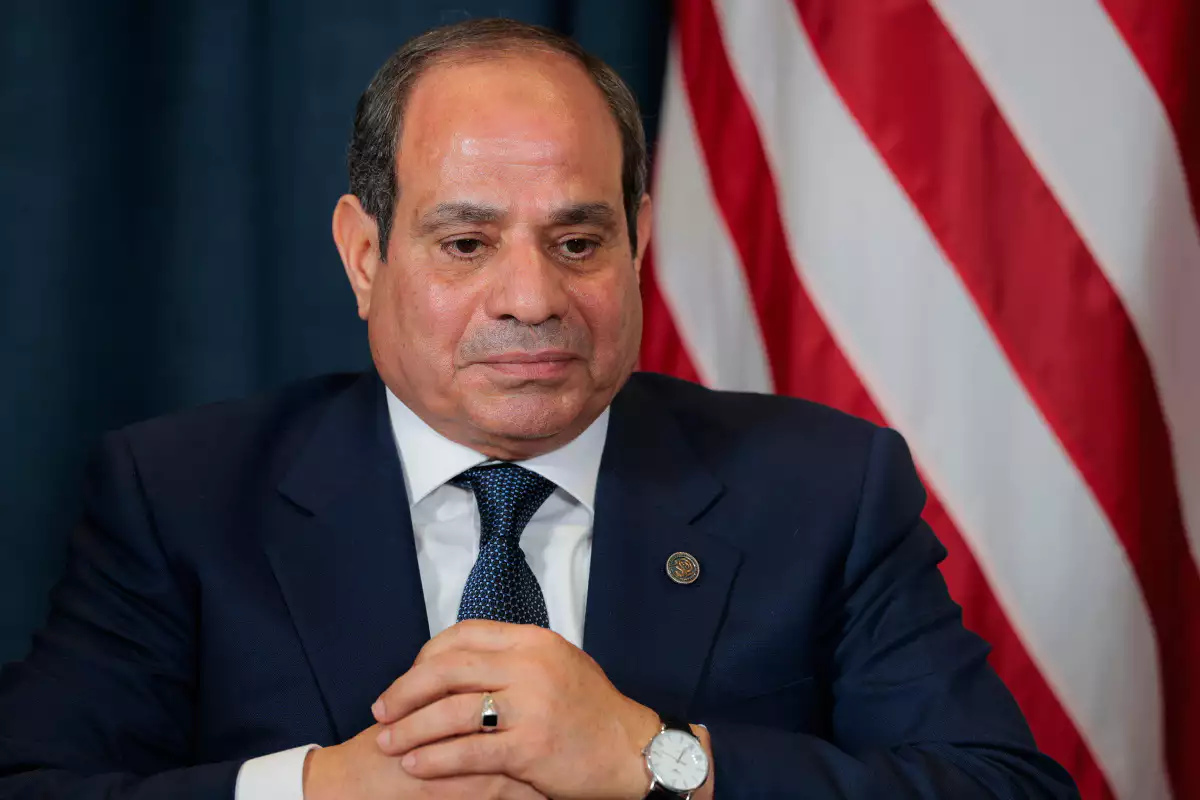 Egyptian President Abdel Fattah el-Sissi renews ties with Iran. Photo: Getty Images
Qatar
Egyptian President Abdel Fattah el-Sissi renews ties with Iran. Photo: Getty Images
Qatar
The Gulf emirate, which hosts terrorist organizations, has much to lose from a war with Iran. The Al Udeid Air Base on its territory hosts thousands of US troops. Instability in the Persian Gulf could also damage its economy, which relies heavily on gas exports shipped by sea.
Qatar is therefore operating on two tracks. Diplomatically, it is passing messages between Iran and the US in an effort to preserve negotiations aimed at preventing war. Over the weekend, Qatari Foreign Minister Mohammed bin Abdulrahman Al Thani conveyed a message to his Iranian counterpart Abbas Araghchi that talks were "still ongoing."
Militarily, Qatar is relying on US defense systems being deployed to the region, in addition to American made systems it already possesses.
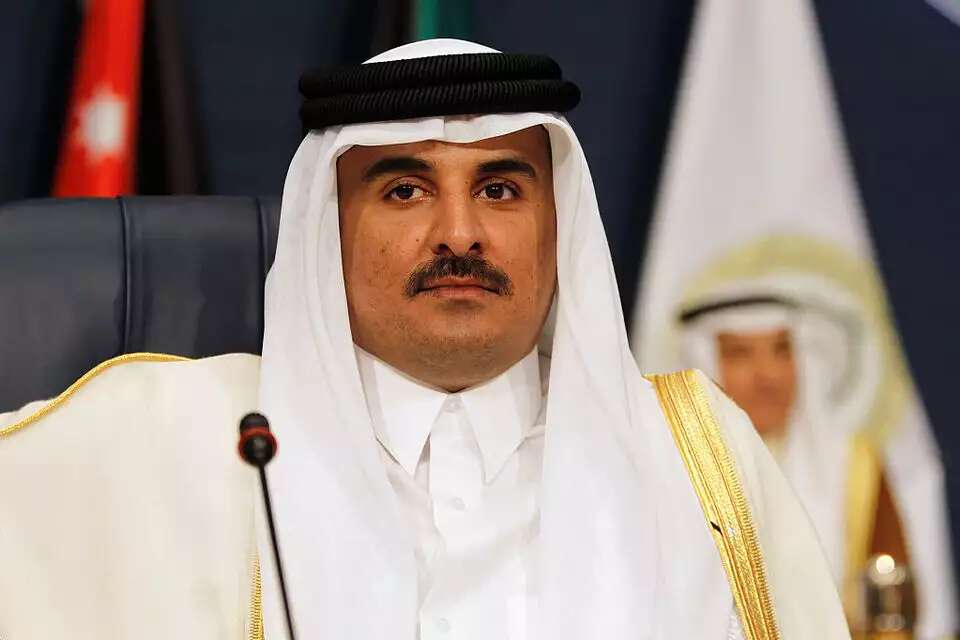 Emir of Qatar, Tamim bin Hamad Al Thani. Photo: Reuters
Saudi Arabia
Emir of Qatar, Tamim bin Hamad Al Thani. Photo: Reuters
Saudi Arabia
The kingdom is increasing coordination with Iran in hopes of preventing an attack on US forces stationed on Saudi soil. On the sidelines of an international naval exercise in India, Milan 2026, a trilateral meeting was reportedly held between senior naval officials from Saudi Arabia and Iran. Discussions focused on improving maritime cooperation, including combating piracy, securing shipping lanes and crisis management.
This follows talks several weeks ago between Saudi Crown Prince Mohammed bin Salman and Iranian President Masoud Pezeshkian. The crown prince reportedly delivered conciliatory messages and pledged that he "would not allow any action from his territory."
 Crown Prince Mohammed bin Salman. Photo: AP/Evelyn Hockstein
Oman
Crown Prince Mohammed bin Salman. Photo: AP/Evelyn Hockstein
Oman
The sultanate has emerged as the most significant Gulf mediator between Iran and the US. After the latest round of talks in Geneva, Omani Foreign Minister Badr Albusaidi said progress had been made and that the atmosphere was constructive. Still, it remains unclear whether Oman will succeed this time.
Diplomatic sources aligned with Iran said the US side raised the issues of ballistic missiles and regional involvement, while the Iranian delegation insisted on focusing solely on the nuclear file. According to a report in Al Akhbar, US envoy Steve Witkoff warned the Iranians that such insistence "would not be to their benefit."
United Arab EmiratesOfficials in Abu Dhabi, like others in the region, have made clear they will not allow any attack on Iran to be launched from their territory, possibly in the hope that the regime in the Islamic Republic will limit its response. There is also concern about the economic impact of a regional conflict on the federation.
According to Reuters, stock markets in the UAE already fell Friday after investors reacted to a US ultimatum demanding that Iran reach an agreement within days or "suffer." At the same time, Emirati commentators argue that Tehran has lost most of its leverage and is at a dead end.
 The UAE flag flies over a boat at Dubai Marina, Dubai, United Arab Emirate. Photo: Reuters / Ahmed Jadallah
Kuwait
The UAE flag flies over a boat at Dubai Marina, Dubai, United Arab Emirate. Photo: Reuters / Ahmed Jadallah
Kuwait
The emirate has also expressed concern. Earlier this month, senior Kuwaiti politician Abdullah al-Nafisi questioned why negotiations between Iran and the US could not be direct. "Wouldn't that be faster and avoid the tensions associated with indirect talks?" he asked. On another occasion, he predicted the talks would fail because President Donald Trump views the Iranian issue as the only solution to his "domestic problems."
IraqAmid the regional turmoil, Baghdad appears mired in political gridlock. The pro Iranian Shiite bloc had intended to nominate Nouri al-Maliki for prime minister. However, the US and various Iraqi actors quickly voiced opposition to a candidate seen as close to Tehran. As a result, alternative, less controversial names are now reportedly under consideration.
A US strike on Iran could plunge Iraq into chaos due to Shiite militias loyal to the Iranian regime. However, in January 2026 the US completed its withdrawal from its last major base in Iraq, Ain al-Asad. That development narrows the range of potential targets available to Tehran.
The post A democratic Iran could become Israel's ally, regional power appeared first on www.israelhayom.com.
The heavy toll of the Iran mission on USS Gerald R Ford
One sailor missed the death of his great grandfather. Another is considering leaving the Navy after spending nearly a year away from her toddler daughter. Two others said problems were discovered in the ship's sewage system. Behind the geopolitical headlines surrounding the arrival of the USS Gerald R. Ford in the Middle East lies a crew that has not seen home for months.
President Donald Trump decided to extend once again the deployment of the Ford's crew, a move that is exacting a steep personal price from sailors and their families. In interviews with The Wall Street Journal, some spoke of their longing for home and of milestones that will never be reclaimed.
 They speak of longing for home, for family, for their mother's cooking and for special moments they missed and will never get back. Photo: US Navy
The Ford, the largest warship in the US fleet, has been at sea since June last year. In October, the War Department redirected it from a planned Caribbean mission to the Middle East. The carrier had previously been part of the support infrastructure for a special operation aimed at capturing former Venezuelan president Nicolas Maduro. Earlier this year, the crew was informed that their deployment would be extended again and that they would be sent back to the Middle East in case a US airstrike against Iran is carried out.
In peacetime, aircraft carrier deployments typically last six months, with planners leaving several additional months of flexibility in case of unforeseen developments, retired Rear Adm. Mark Montgomery told the Journal. The USS Gerald R. Ford's sailors have already been away from home for eight months, and the deployment could stretch to 11 months. If that happens, it would break the US Navy's record for the longest continuous carrier deployment.
The US Navy operates 11 aircraft carriers, all functioning according to schedules planned long in advance. At any given time, some are deployed to different regions around the world, others are engaged in training and others are undergoing maintenance. In addition to the Ford, the USS Abraham Lincoln and its strike group have also been dispatched to the Middle East.
One female sailor aboard the Ford told the Journal that many crew members feel anger and frustration, and some have said they intend to leave the service once the deployment ends. She herself is seriously considering doing so. She misses her daughter, but above all, she said, the uncertainty over when she will be able to return home is the most painful part.
Extended deployments can mean missing birthdays, weddings, funerals or even the birth of a child.
Not all members of the roughly 5,000 strong crew accept the sacrifice without reservation. Many of the sailors aboard the Ford are in their early twenties and miss their parents and home cooked meals. Others are parents themselves. They try to stay in touch through phone calls and WhatsApp messages, but the secrecy surrounding aircraft carrier movements means communication is often sporadic and unpredictable.
 The aircraft carrier USS Gerald R. Ford. Phoo: AFP
Some sailors see prolonged periods away from home as an integral part of military service. One told the Journal that although the extension was difficult and fatigue is evident throughout the ship, every sailor knew what they were signing up for when they enlisted. Their mission, he said, is to ensure that war does not reach the home front, and that sometimes requires long and demanding deployments.
If anyone feels the strain acutely, it is those left behind. Rozrin McGee, whose husband is serving aboard the Ford, said she has been alone for eight months while he remains at sea. Communication is sporadic and fragmented. She regularly sends him letters and small care packages containing snacks and items to remind him of the home awaiting his return. "When I heard that Donald Trump had decided to extend the crew's deployment, my heart broke," she said.
The Ford is the newest aircraft carrier in the US Navy and the first built in the Ford class. It entered service in 2022 and first saw operational activity when it sailed to the Mediterranean to help protect Israel following the October 7 Hamas terrorist attack. Compared with the previous Nimitz class, Ford class carriers can sustain a much higher sortie rate, operate with a smaller crew and rely on significantly greater automation for launching and maintaining aircraft.
The Gerald R. Ford leads a task force that includes missile destroyers and cruisers capable of firing dozens of cruise missiles at targets hundreds of kilometers away and intercepting ballistic missiles, drones and cruise missiles with high precision. These ships could provide an additional layer of defense against Iran's missile capabilities.
The post The heavy toll of the Iran mission on USS Gerald R Ford appeared first on www.israelhayom.com.
Israel's bobsled team suspended from Winter Olympics
Israel's bobsled team has been suspended from the Winter Olympics in Milan-Cortina after an attempted unauthorized substitution of one of its athletes, the Olympic Committee of Israel announced.
The decision came after team members sought to replace a competitor in an apparent bid to improve their standing in the rankings. Under Olympic regulations, substitutions are permitted only in cases of injury or illness.
According to details released by the committee, one of the athletes reported feeling unwell, was examined by a doctor and signed a medical affidavit, enabling the Olympic Committee of Israel to submit a formal request to approve the change.
 Israel's bobsled team. Photo: Reuters
However, the athlete later admitted to the head of the Israeli delegation that he had not been ill and that the move had been improper. Following the confession, the committee rejected the substitution request and decided to suspend the entire team from further participation in the Games.
In a statement, the Olympic Committee of Israel said it had received information Saturday evening that members of the bobsled team had sought to replace one of the participants "in an improper manner that does not meet the standards expected of Olympic athletes and is not aligned with Olympic values."
"As a result, a decision was made not to allow the bobsled team to compete in the event," the statement said.
The post Israel's bobsled team suspended from Winter Olympics appeared first on www.israelhayom.com.
Israeli Muay Thai fighter Ahavat Hashem Gordon defeats Turkish rival
The victory was about far more than sport. Israeli Muay Thai fighter Ahavat Hashem Gordon delivered a dominant performance on Saturday night, forcing Turkish opponent Ali Koyuncu to retire after just two rounds in a bout charged with political tension and antisemitic provocations.
From the opening bell at the Žalgirio Arena in Lithuania, Gordon showed clear superiority in two particularly aggressive rounds, as emotions between the fighters spilled into the ring. After sustaining heavy punishment, Koyuncu withdrew, claiming he could no longer step on his foot.
The bout had been preceded by weeks of hostility. Koyuncu openly displayed political animosity toward his Israeli rival, raising his middle finger at Gordon and issuing antisemitic threats. The situation grew serious enough that the Israeli Embassy in Lithuania requested reinforced security around Gordon ahead of the fight.
In the lead-up to the match, the Turkish fighter posted a series of pro-Palestinian messages on social media, alongside harsh statements and threats directed at Gordon that drew widespread attention and numerous responses.
In videos shared to his personal accounts, Koyuncu appeared alongside a countdown clock to the fight, using inflammatory language and speaking of the "bloodshed" he expected his Israeli opponent to suffer. In one post, he wrote that on February 21 he would face an Israeli fighter and called on the entire Turkish nation to support him.
Tensions were also evident during the pre-fight face-off event, when Koyuncu attempted to choke and kick Gordon. The Israeli fighter stood his ground, proudly draped in an Israeli flag.
The post Israeli Muay Thai fighter Ahavat Hashem Gordon defeats Turkish rival appeared first on www.israelhayom.com.
Is Iran stalling? Tehran floats flexibility as US signals strike readiness
Iran has sent another message to the US through Oman indicating it is prepared to show flexibility on its nuclear program, provided it is allowed to keep its uranium enrichment facilities and centrifuges on its own soil. Under the proposal, the facilities would not be activated until after an interim period and would operate under strict supervision by the International Atomic Energy Agency. Tehran insists the enrichment would be for civilian purposes only.
According to Western sources familiar with the negotiations, the message followed US dissatisfaction with the Iranian proposal presented in Geneva. The new offer is being examined in Washington but is still far from meeting American demands. If Iran does not move closer to those requirements, the US is considering a series of limited strikes to prove the seriousness of the threat.
 Massive US military buildup in the Middle East. Photo: INSS/AP/EPA
The same sources said some senior figures in the Iranian regime believe the US will ultimately refrain from attacking, despite the significant concentration of American forces in the region. Limited strikes, they assess, could send a message while avoiding a full scale conflict.
Details obtained by Israel Hayom indicate that part of the Geneva meeting was devoted to what participants described as a US reprimand of the Iranian delegation. Washington accused Tehran of violating its commitment to discuss all issues, including its ballistic missile program and support for its proxy terrorist organizations. Israel Hayom previously revealed that the first round of talks in Oman had been scheduled, in part, on the basis of an Iranian pledge to address those subjects as well.
 Iranian Foreign Minister Abbas Araghchi. Photo: AP, AFP
However, in Oman the Iranian delegation announced it would agree to discuss those issues only after a nuclear agreement was reached and sanctions were lifted. In Geneva, Iranian officials reiterated that position and demanded that any talks on other matters take place without ultimatums and with the participation of regional countries, which they argue are relevant to the discussion. The US team rejected the demand and lodged a strong protest over what it described as a breach of prior understandings. Despite this outcome, Iranian Foreign Minister Abbas Araghchi issued a positive statement after the meeting, prompting contradictory briefings from US officials.
In Israel, officials assess that Iran will attempt to stall by floating additional proposals on the nuclear issue but will not be able to bridge the gaps with the US. "The spring is coiled, and the readiness of US forces for a full strike is high, but an order to proceed will not be given in the coming days," an Israeli source said.
The post Is Iran stalling? Tehran floats flexibility as US signals strike readiness appeared first on www.israelhayom.com.
מרכז מחקר ייעודי לחקר ההשלכות הפוסט-טראומתיות של המלחמה יקום בבר-אילן
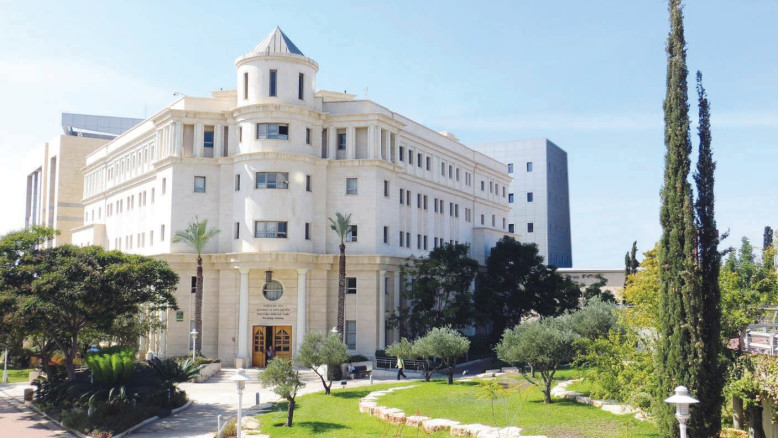
במסגרת המרכז יתקיימו מחקרים על האוכלוסיות השונות שנפגעו במסגרת המלחמה, בראשן החטופים ובני משפחותיהם, כשאחת המטרות היא להבין את ההשלכות הפסיכולוגיות, הביולוגיות-פיזיולוגיות והחברתיות של חוויית השבי
דרמה בביתו של טראמפ: השירות החשאי הרג אדם שניסה לפרוץ למאר-א-לאגו

צעיר בשנות ה-20 נורה למוות בידי השירות החשאי לאחר שניסה לחדור למתחם המאובטח במאר-א-לאגו שבפלורידה. טראמפ לא שהה במקום, והחקירה נמשכת
בעקבות חשיפת מסמכי אפשטיין: שרה פרגוסון התאשפזה במוסד פסיכיאטרי יוקרתי
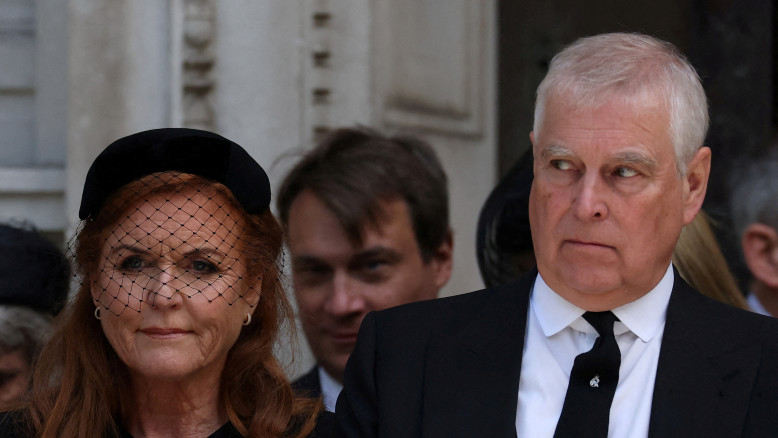
שרה פרגוסון, אשתו לשעבר של הדוכס לשעבר אנדרו מאונטבאטן-וינדזור, אשפזה את עצמה באחת ממרפאות בריאות הנפש היקרות בעולם לאחר פרסום האי מיילים בינה לבין ג'פרי אפשטיין, ועוד בטרם מעצרו של אנדרו
800 שנים לאחר מותו - המאמינים רוצים לראות את שרידיו של הקדוש הנוצרי

לציון 800 שנה למותו, שלדו של פרנציסקוס הקדוש הוצג לראשונה לתקופה ממושכת בבזיליקה באסיזי. מאות אלפי עולי רגל נרשמו, והשרידים נשמרים במארז מאובטח תחת אמצעי הגנה קפדניים
אלפי שנים בצלחת: ההיסטוריה שמאחורי המאכל המפורסם במזה"ת

הפול המצרי, מאכל לאומי וכוכב הסח’ור ברמדאן, שורשיו עוד במצרים העתיקה. ממספוא לבעלי חיים למנה עממית אהובה שהתפשטה בעולם הערבי – סיפור קולינרי בן אלפי שנים
"ציקלון פצצה": סופת שלגים היסטורית מכה בארה"ב - מצב חירום הוכרז בניו יורק

מיליוני תושבים בחוף המזרחי של ארצות הברית נערכים לפגיעתה של סופת חורף היסטורית ומסוכנת, אשר הובילה לפרסום אזהרות סופת שלגים בעיר ניו יורק לראשונה מאז שנת 2017
בן גביר שוב מסרב לקדם קצינה - בית המשפט נכנס לאירוע
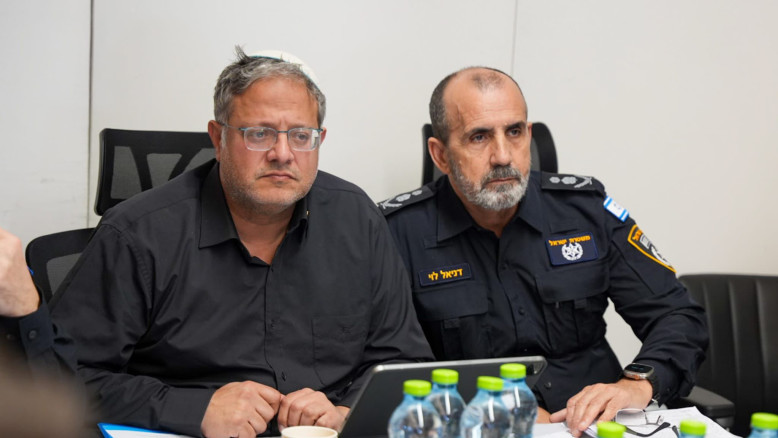
סגן ניצב רותי האוסליך הגישה לבית המשפט המחוזי בירושלים את עתירתה נגד השר לביטחון לאומי, איתמר בן גביר, לאחר שזה סירב לקדם אותה לתפקיד בכיר בראש אגף חקירות
השייח' האנטי ישראלי שמונה לאימאם המסגד השני בחשיבותו באיסלאם שבסעודיה
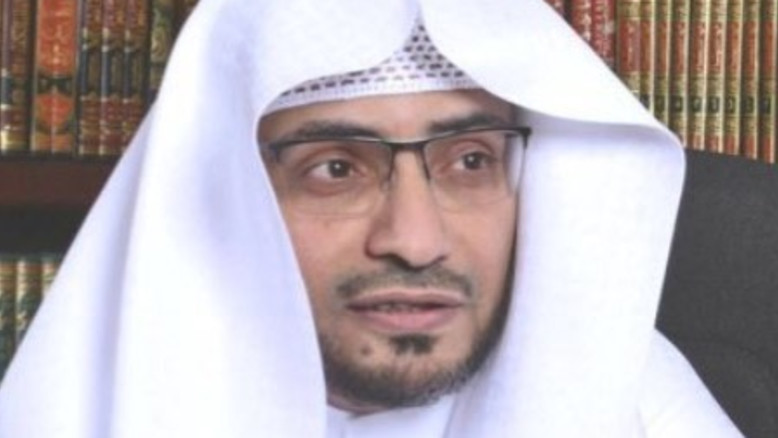
השייח' סאלח אל-מע'אמסי מונה לאימאם ולדרשן של מסגד הנביא באל-מדינה. אל-מע'אמסי נחשב לאיש דת מתון ומוערך אך מינויו מעורר עניין מחודש בשל משנתו התיאולוגית וההיסטורית בנוגע ליהודים ולעתידה של מדינת ישראל
גל תקיפות AI נגד תשתיות חיוניות - והתגובה הדרמטית של האמירויות

שורת מתקפות סייבר מאורגנות בעלות "אופי טרוריסטי" סוכלו במהלך סוף השבוע באיחוד האמירויות הערביות. על פי הדיווח, התקיפות כללו בין השאר ניסיונות לחדור לרשתות תקשורת רגישות
כל הסימנים מעידים על תקיפה: הפרט הקטן שלא שמתם לב בצבא ארה"ב

פרופ' רוברט פייפ, חוקר מדע המדינה מאוניברסיטת שיקגו ומומחה לענייני ביטחון, אמר שמעולם לא הייתה פריסה כזו של צבא ארה"ב שלא הסתיימה בסוף בתקיפה
הירח מתכווץ: יותר מאלף סדקים חדשים מדאיגים את המדענים

מחקר מדעי חדש חושף כי הירח ממשיך להשתנות באיטיות - והרחק מעיני בני האדם. חוקרים גילו כי לוויין כדור הארץ מתכווץ בהדרגה, תהליך שמותיר אחריו רשת הולכת וגדלה של סדקים, שעשויה להשפיע על העתיד
מודי נוחת בישראל: נתניהו חושף “משושה בריתות אזוריות"
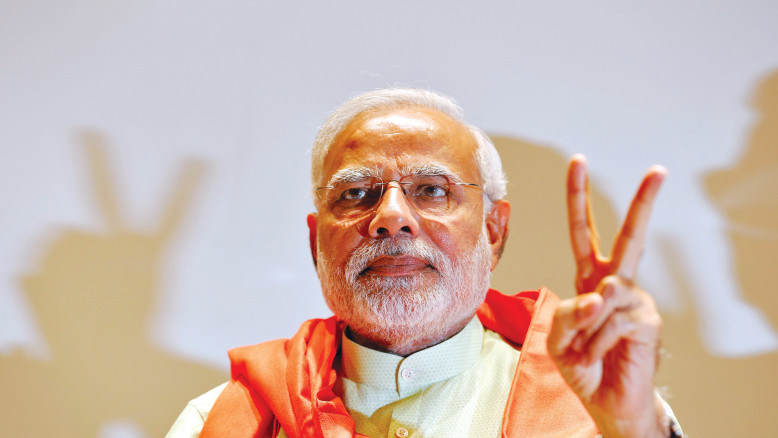
השבוע ינחת בישראל ראש ממשלת הודו, נרנדרה מודי, לביקור עם חשיבות אסטרטגית. במקביל אישרה הממשלה החלטה מיוחדת שתרחיב את השיתוף בין המדינות בתחומי דיגיטל וביטחון
"כולנו סובלים ואף אחד לא יודע מה זה": ריח חריף ומסתורי התפשט באיזור המרכז

עשרות אלפי משפחות מאזור, פתח תקווה, ראש העין, גבעת שמואל, קריית אונו וגני תקווה, נחשפו בשבת האחרונה לריח חריף שפקד את אזור מגוריהם ונעלם בתוך מספר שעות
הלו גלי, הלו דני: האם המפכ"ל והיועמ"שית שכחו מי הבוס במדינה? | ינון מגל
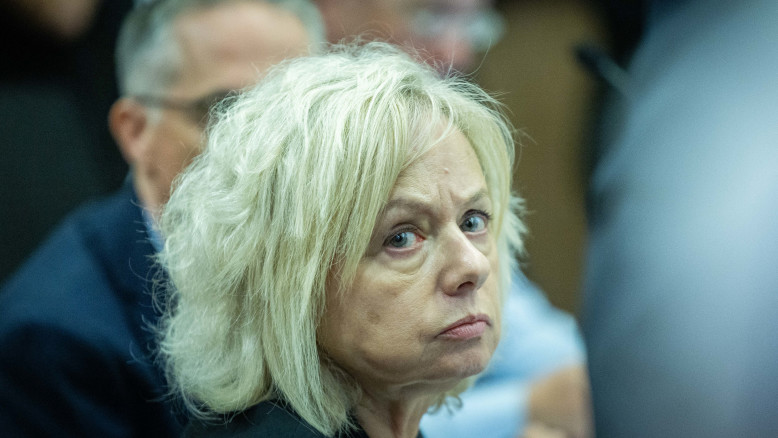
הלו גלי, הלו דני, התבלבלתם. בדמוקרטיה העם שולט, לא המשטרה או הפרקליטות. החרמת דיוני הממשלה ועיכוב בדיקת הרוגלות הם פגיעה חמורה בכללי המשחק. תנשמו עמוק ותחזרו לעבוד בשבילנו
"לא מחרימים את נתניהו": ח"כ מיש עתיד מתייחס למצב האופוזיציה
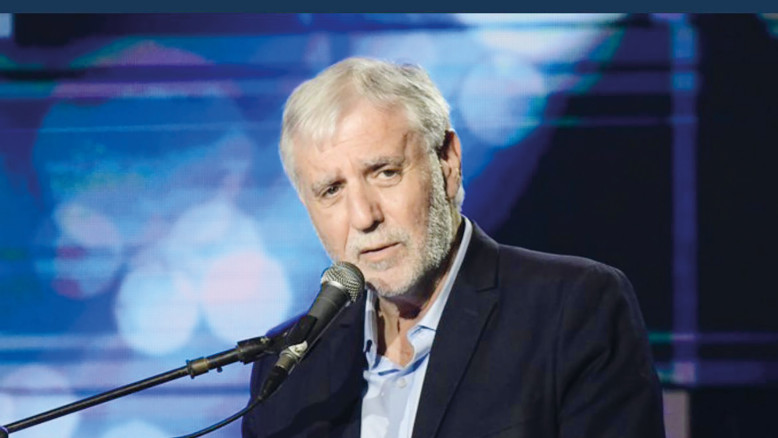
ח"כ מאיר כהן מיש עתיד הסביר לרדיו 103fm מדוע לא ישב עם נתניהו, והכריז: "נבנית תודעה שמי שיכול להרכיב ולפרק זה מישהו אחד - יאיר לפיד"
"אפילו טריליון דולר לא יעזרו": ד"ר משה אלעד מזהיר מהאשליה סביב עזה
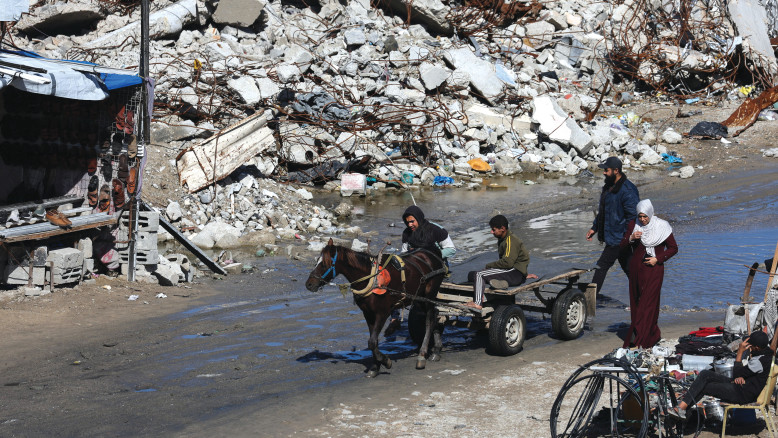
אחרי שמועצת השלום התכנסה לראשונה בשבוע שעבר, ד"ר משה אלעד מזהיר מהאשליה לגבי הצלחת השיקום של רצועת עזה: "התוכנית עלולה להישאר בגדר סיסמה שאינה נטועה בקרקע המציאות"
עתירה לעליון: מורים עם תואר מאוניברסיטה פלסטינית יוכלו ללמד בישראל
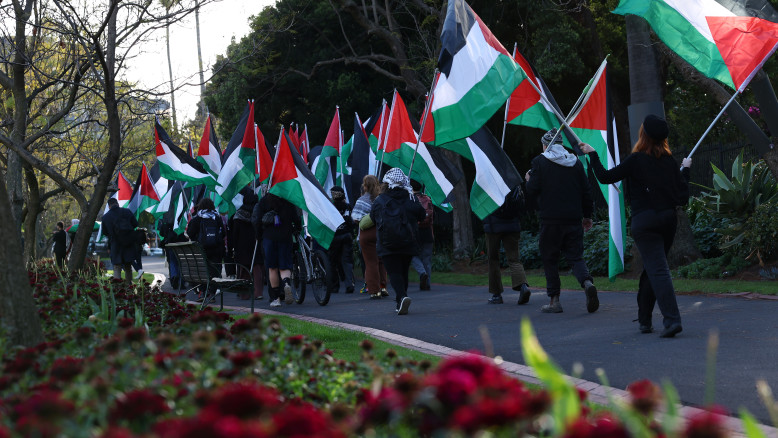
הוגשה עתירה נגד החוק שאוסר העסקת מורים במערכת החינוך אם הם מחזיקים בתואר אקדמי ממוסד להשכלה גבוהה של הרשות הפלסטינית. הטענה: חקיקה הפוגעת בעקרונות הצדק והשוויון
ארה"ב ואיראן לא רוצות מלחמה - אבל מתקרבות אליה | איתן גלבוע

שליח ארה"ב חשף כי טראמפ מתקשה להבין את עמדת איראן, אך לדבריו המטרה היא הסכם גרעין ולא מלחמה. למרות זאת, פערים עמוקים בערכים ובתפיסת המציאות דוחפים את הצדדים לעבר עימות
ראש מועצת מטולה מפתיע: "אנחנו במצב הרבה יותר טוב מלפני 7 באוקטובר"
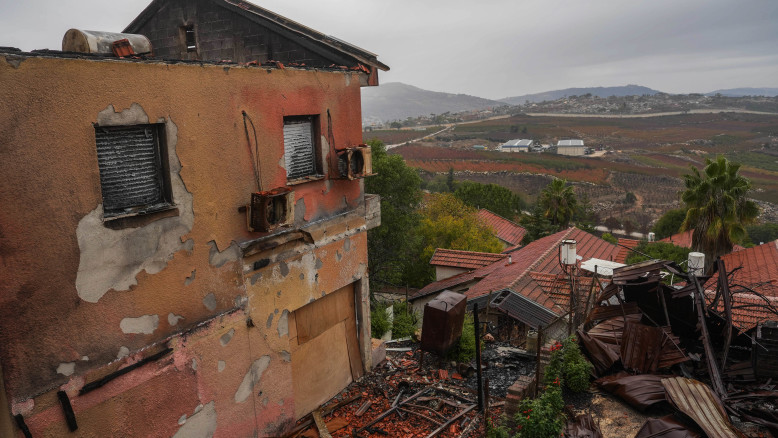
דוד אזולאי ראש המועצה המקומית הצפונית ביותר בגליל העליון שוחח עם ברק סרי ואלי אוחנה ב103FM והפתיע כשאמר שהמצב במטולה הרבה יותר טוב ממה שחוו תושבי המושבה הוותיקה לפני השבעה באוקטובר
משבר אמון בבית הלבן? הסקר שמראה את המצב העגום של טראמפ ומפלגתו

נשיא ארה"ב יפנה לעם האמריקאי בנאום "מצב האומה" השבוע, אך הסקרים חושפים צניחה ניכרת בתמיכה הציבורית שהוא מקבל. חוסר שביעות הרצון ניכר בענייני הפנים של המדינה - וגם התדמית שלו נפגעה
Europe’s last Jewish haven? Inside a 1,000-year-old community’s fight to survive
President Herzog to visit Ethiopia
Bereaved Father: 'Judge Kabub must be killed!'
Israel to to accelerate building of an AI server farm
Five-month-old infant dies in Jerusalem daycare, police investigating
Like the worst criminal: Nova security officer questioned over Binyamin operation
Are the Oslo Accords returning? 5,000 Palestinian Arab policemen on way to Gaza
Screenshot battle and blame game between Netanyahu and Gantz
Captivity survivor fulfills a dream: 'Thank God, Who has kept us alive'
Following antisemitic article in Kuwait: The Shadow backs Dagan
I asked my Jewish readers if they’re Zionists. Here’s what they told me.
The recent survey conducted by the Jewish Federations of North America on American Jews’ attitudes toward Israel and Zionism has sparked more than its share of debate. Headlines highlighted the declining number of self-identified Zionists and the ambivalence among younger Jews toward Israel, as well as the persistence among a large majority of Jews who consider their attachment to Israel integral to their Jewish identities.
I also wrote a piece on an intriguing finding: Only about a third of those surveyed over the age of 75 identified as “Zionists.”
As always, numbers can tell only part of the story.
Curious about the narrative side of the issue, I turned to readers of JTA’s weekly Ideas newsletter and asked two questions from the JFNA survey: Do you believe Israel has the right to exist as a Jewish, democratic state? and Do you identify as a Zionist? And I added a third: If one but not the other, why not both? That was my way of asking, why would a supporter of Israel resist using the term “Zionist”?
The responses, over 60 in all, arrived quickly. Nearly all came from older American Jewish readers (60 and up) but even within this group there was disagreement about what Zionism means, and ambivalence about the political direction Israel has taken in recent years.
Across the spectrum, a pattern emerged, reflected in the JFNA study: Many older Jews affirm their support for Israel as a Jewish state and homeland but hesitate to embrace the label “Zionist.” They offered a variety of reasons, from believing it suggests an intention to move to Israel that they don’t share, to the conviction that it has come to mean too many things — to Zionists and anti-Zionists alike — and as a result is no longer useful. (“I think the state of Israel certainly has as much right to exist as any other state [and] I’d prefer to see it be a democracy,” as a reader from Philadelphia put it. However, “I don’t identify myself in any way with the term ‘Zionist’ because it’s become such a flame word, and people seldom bother to clarify what someone means.”)
Others embrace the term “Zionist” as a badge of honor, continuity and even defiance. Their various answers suggested “Zionism” can mean many things, from a religious conviction to an expression of peoplehood to a political program that hasn’t lost its relevance.
“Of course I am a Zionist!” wrote Jeanne Korsh, who didn’t share her age. “After much probing and questioning, Ancestry.com admitted that 100% of my DNA is at least partially HEBREW from ancient Israel. Israel is the origin of us.”
“Yes, I am a Zionist and I do believe Israel has a right to exist,” wrote a reader from New Jersey. “I am 68 years old and the daughter of 2 Holocaust survivors from Poland (both deceased). My parents were ardent Zionists.”
“Yes, I am a Zionist and d**ned proud of it,” wrote Nomi. “I am also an Israeli and live in the eternal capital of the Jewish people: Jerusalem. I do not need to justify the existence of a Jewish state in our ancestral homeland or apologize for it. Any Jew who does, regardless of their age, needs a serious reality check.”
Living in Israel, however, is no guarantee that a reader calls herself a Zionist. “I do not identify as a Zionist. I am an Israeli,” wrote Anita Steiner, 82, who has lived in Israel since 1975. “My children served honorably in the IDF. We are proud of our country, but horrified by this government’s treatment of Palestinians and Arab Israelis.”
Michael Ward, 75, who lives in England, supports Israel as a Jewish, democratic state but distinguishes that from self-identifying as a Zionist, explaining that he has never emigrated to Israel nor served in its military. “I am a dedicated supporter of Israel — which does not make me a Zionist,” he said.
Several correspondents wrestled with the term “Zionism” itself, reflecting how it has been redefined in large part by Israel’s harshest critics.
Daniel J. Julius wrote that “I can identify as a very strong supporter of Israel as a Jewish state without calling myself a Zionist because the term does not seem applicable to me at this time.” He added that the term “Zionism” is “either dated to the late 1800’s or weaponized by the left and of course the Muslim groups that were and remain extremely hostile to Israel.”
Lee Pronin of New York said Israel’s critics use “Zionist” to describe supporters of “a white, colonial occupier apartheid nation.” But he remains a Zionist according to one of its historic definitions: “the right of the Jewish people to self-determination in their ancestral homeland.”
Among the responses, one theme emerged clearly: Support for Israel does not necessarily equal support for the government in power. Multiple respondents, including Rabbi Jack Nusan Porter, argued that Zionism can coexist with criticism of Israeli policy. “Critiquing Israeli politics is not anti-Zionism,” he wrote. “All Zionists believe in a democratic Jewish state with tolerance and civil rights for all.”
Miriam Eisenstein, also in her late 80s, calls herself a Zionist despite the fact that she “deplores” almost everything the Israeli government does today.

A protester holds a sign at a “rally for Gaza” in Columbus, Ohio, Nov. 12, 2023. The term “Zionism” has been “weaponized by the left,” said a reader. (Becker 1999/Wikimedia Commons)
One group of responses expressed Zionism as conditional — that is, their commitment to Zionism was tied to a vision of Israel as a democratic state. Neal Ross Attinson, 63, a Hebrew school teacher in California, wrote, “If Zionism means supporting a Jewish state as a refuge and a light unto the nations — yes. If it means picking fights with defenseless civilians — no. I fully support Israel’s existence but not its current government.”
Ben Gerson cautioned against uncritical attachment to any political definition: “If Zionism has come to mean a biblical claim to the lands of Judea and Samaria, I fully reject it… Israel would not face the conundrum of being both Jewish and democratic if a Palestinian state could come into being.”
For a reader from Charlotte, North Carolina, such concerns have led to profound disillusionment. “I was raised with the usual trope about Israel that every Jewish kid of my generation grew up with,” she wrote. “However, after several trips over many years there and much research several years prior to Oct. 7, I concluded Israel is not a democratic state, that every sign of apartheid is evident since its founding in 1948…. I never considered myself either a Zionist or anti-Zionist. I used to believe in the existence of the State of Israel, now [I’m] not so sure based on the behavior and beliefs of its government.”
By contrast, several respondents separated politics from history, saying the latter affirmed Israel’s claim on the land and Jewish solidarity apart from the perceived failings of any of its governments. “Of course I am a Zionist,” wrote Jack Zohar, 87, who described himself as “American born and raised, and with dual citizenship following 15 years living in Israel.” “After 4,000 years of Hebrew/Jewish living in our land, why would I not support our right to be there, and for Israel to be our nation? No contest.”
Susan, in her 70s, described her Zionism as a safeguard: “The world has taught me historically…that Jews are never really going to be fully integrated into any society in the diaspora. A Jewish state has to exist.”
Others shared this view of Israel as a refuge for the world’s Jews, or what the Harvard scholar Derek Penslar calls “cataclysmic Zionism.” Doris, 86, cited the Evian Conference, the 1938 gathering of world leaders that failed to offer refuge to Jews under Nazi rule. “History has taught me that, inevitably, there will be a rise of antisemitism, vicious enough for me to have to leave my comfortable U.S. home,” she wrote. “Where will I go? History has shown that the only nation that will receive me is Israel. So, you bet I’m a Zionist!”
Finally, there were those who said more Jews would embrace the “Zionist” label if they had a better understanding of what it meant. “For many years I did not identify as a Zionist,” wrote Lee B. Kass, in his late 70s. “But after educational classes with my rabbi, I now understand it as meaning supporting Israel as an independent state, thus providing the only place in the world where a Jew can feel welcome.”
Kathy Grosz, 72, also noted the importance of education: “I am fearful that many in my age group are NOT educated enough about our peoplehood…. And as for these younger ones, they truly have not been educated. Or if they are, then they need to learn the difference between having a country that exists, and being critical of that land’s government.”
In the end, Zionism may mean many things to these readers, but for most Israel’s existence remains central to their identity as Jews. Whether as a refuge, a historical homeland or a democratic Jewish state, the country evokes deep emotions that can’t always be defined by a simple label.
A longtime pulpit rabbi and a “lover of the idea of and the existence of the State of Israel” questioned the usefulness of the JFNA survey itself.
“I think asking people if they are Zionist is not a frame of reference that we have used over the last 50 years,” he wrote. “The Jewish people have contributed to Israel, visited Israel, invested in Israel, sent their children to tour Israel [and] are for the most part proud of Israel but [I am] not sure that the average American Jew who cares about Israel speaks of themselves as ‘Zionist.’”
--
The post I asked my Jewish readers if they’re Zionists. Here’s what they told me. appeared first on Jewish Telegraphic Agency.
Tucker Carlson interview with Mike Huckabee sparks antisemitism clash and diplomatic backlash
Within 24 hours of going online late Friday, Tucker Carlson’s nearly three-hour interview with U.S. Ambassador to Israel Mike Huckabee had elicited multiple rebuttals of antisemitic conspiracy theories from Huckabee, prompted Carlson to issue an apology and sparked an international incident.
The foreign ministers of 14 Arab and Muslim governments jointly condemned Huckabee’s comments about Israel’s claim to the Middle East, which they called “dangerous and inflammatory” and a violation of international law.
Carlson had asked Huckabee, the first evangelical Christian ambassador to Israel, what he thought of the Biblical passage in which God grants Abraham’s children the land “from the Euphrates to the Nile, and that would include basically the entire Middle East.”
Huckabee’s answer: “It would be fine if they took it all.”
He elaborated: “They don’t want to take it over. They’re not asking to take it over.” When Carlson asked if such a takeover would be “legitimate,” Huckabee responded, “I’m not sure that it would be.” He added, “If they end up getting attacked by all these places and they win that war and they take that land, then OK, that’s a whole other discussion.”
The comments and backlash, which come as the region braces for a potential U.S. attack on Iran, represented just one explosive element among many during the interview, filmed at Israel’s Ben Gurion airport last week.
For Carlson and Huckabee, two powerful Christian conservatives with deeply divergent opinions on Israel who both hold direct channels to the White House, the conversation offered a window into the divide over Israel and antisemitism among conservatives. Huckabee, an evangelical Christian who sees Israel as an important U.S. ally in the Middle East, represents a more traditional Republican outlook, while Carlson, who has amplified antisemitic voices and opposes U.S. support for Israel, represents an ascendant far-right flank.
In recent months, the rift on the right has been flung open, largely following Carlson’s friendly interview last fall with the avowed antisemite Nick Fuentes. He has conducted similarly combative interviews with other pro-Israel conservatives, including Texas Sen. Ted Cruz, who has since become one of the right’s loudest voices speaking out against antisemitism among conservatives. While President Donald Trump has expressed distaste for antisemites in the Republican ranks, Vice President JD Vance has said he does not believe right-wing antisemitism is a problem.
Tensions between Huckabee and Carlson — and the question over whose view will win out — were palpable.
“Honestly, I think you’ve probably got more access to the White House sometimes than I do,” Huckabee told Carlson at one point.
At another, Carlson sought to argue that his criticism of Israel reflects only care for Gaza, saying, “I’m not against Israel. I’m against the total destruction—” Huckabee interjected with a zinger: “You hide that very well.”
Indeed, Carlson used the interview to air a host of anti-Israel views, including several associated with antisemitic conspiracies.
He opened with a monologue in which he called Israel “probably the most violent country in the world” and insinuated that he believed the Israeli government could be targeting him.
During the conversation, Carlson pressed Huckabee extensively on the question of whether Ashkenazi Jews including Prime Minister Benjamin Netanyahu have a true connection to Israel.
“Why don’t we do genetic testing on everybody in the land and find out who Abram’s descendents are?” he asked at one point, using the name that the patriarch Abraham used before accepting the covenant with God that made him the first Jew. “Bibi’s family, we know they lived in Eastern Europe. There’s no evidence they ever lived here.”
Huckabee later denounced Carlson’s questions on social media as reflecting an antisemitic conspiracy theory which claims that Ashkenazi Jews are descended from the Khazars, a Turkic minority, rather than from Jews who lived in ancient Israel.
Carlson also claimed that Israel had sheltered a suspected sex offender from consequences after a sting operation in Nevada and that the late sex offender Jeffrey Epstein, whose dealings are roiling governments across the globe, had ties to Israel’s Mossad security service.
Carlson claimed that Israeli President Isaac Herzog visited Epstein’s private island, an allegation that had not previously surfaced and that Herzog categorically rejected. He later apologized for the accusation on X, saying it had been based on a reference to an unspecified “Herzog” in one of Epstein’s emails. (The recently released files have fueled a slew of antisemitic conspiracy theories.)
Carlson also apologized, as he has before, to Christian Zionists for disparaging them over their views about Israel. He repeatedly asserted that Christians in Israel are mistreated, a view that Huckabee has espoused but emphasized in the conversation that he has not personally experienced.
Carlson also accused Huckabee of being more loyal to Israel than to the United States. After Huckabee praised Israel for dropping leaflets on intended targets in Gaza, noting that the U.S. military doesn’t take the same step, Carlson, in a fiery moment, accused him of calling the Israel Defense Forces a more moral military than the United States’.
The pair found one point of unlikely alignment when Huckabee backed a Carlson hypothetical: a freeze of all U.S. funding to Israel unless the country outlaws abortions. “I would be OK with it because I hate abortion. I think it’s horrible,” he told Carlson. (Israel, which recently loosened abortion restrictions as the United States tightened them, has the highest birth rate among industrialized nations.)
The interview proved controversial before it aired, as Carlson asserted that his staff had been detained by Israeli airport security and Huckabee and Israel denied the claims. (The interview was conducted in the Tel Aviv airport, which Carlson never left during his hours-long stay in Israel.)
It remained so after launching, with Yoram Hazony, an Israeli who is an architect of the national conservatism movement, commenting extensively on Carlson’s claim that he had refused to broker a conversation between Carlson and Netanyahu. Saying that Carlson had told him Trump wanted him to end the antisemitism rift on the right, Hazony said he had demurred because he was not the right person to make the ask and did not see how Netanyahu would benefit.
He also said that he sometimes learns in private conversations that people with whom he disagrees are more nuanced in their views but that no such revelation had come in his dealings with Carlson.
“In Tucker’s case, the private person turns out to be exactly who we’ve been seeing in public,” Hazony wrote, adding, “Whatever his motives for turning his podcast into what seems to be a circus of anti-Jewish messaging, right now that project is clearly more important to him than helping the administration keep its coalition together so it can govern effectively and win elections in 2026 and 2028.”
Huckabee and Carlson did not discuss Fuentes, the Hitler apologist and avowed white nationalist whose friendly interview with Carlson last fall broke open the widening rift over antisemitism on the right. But Huckabee did push back on a different interview Carlson had conducted: with Tony Aguilar, a former U.S. Special Forces officer who became a whistleblower against what he said were inhumane conditions at Gaza humanitarian sites.
“Tony Aguilar is a liar,” the ambassador told Carlson. “You platformed a guy. You had him on your show.”
Carlson responded with a brisk articulation of his approach that could have been intended for Huckabee himself. He retorted: “I don’t platform anyone.”
--
The post Tucker Carlson interview with Mike Huckabee sparks antisemitism clash and diplomatic backlash appeared first on Jewish Telegraphic Agency.
Long overlooked, Soviet Jewish stories written after the Holocaust emerge in new translation
The usual perception of Soviet Jewish literature after World War II is that there was none. The conversation around the decades after the Holocaust usually focuses on the refuseniks and large waves of emigration away from a place with a history of suppressing its Jewish minority.
A new collection of translated short stories by Soviet Jewish writers, originally published in the USSR in Russian and — mind-blowingly — in Yiddish, challenges that view. For someone who grew up in Ukraine and Russia not knowing much about my roots because my Jewish grandfather remained silent on the subject of anything Jewish, I read “In the Shadow of the Holocaust” with a thirst I didn’t know I had.
In these 10 stories by seven authors, Jewish survivors are dealing directly with the ruins of a world that is no more. Unlike their American counterparts, however, they continue making a life in the proximity of the tragedy, among cemeteries and unmarked ravines. And despite the whims of their socialist empire, they don’t stay silent.
I sat down with the book’s translators — Sasha Senderovich, a professor in the Slavic department of the University of Washington, and Harriet Murav, professor emerita at the University of Illinois — to ask them what these texts reveal about our understanding of the Jewish experience.
Join Sasha Vasilyuk in conversation with JTA’s Philissa Cramer on Tuesday, Feb. 24, for a conversation marking four years of war in Ukraine. Register here.
What inspired this project?
Harriet Murav: There is a perception in the educated reading audience that there’s really nothing about the Holocaust from the former Soviet Union. Unless you give people something to chew on, it’s hard to convince people. Our motivation was to provide the general reading audience and the college undergraduate audience with something to read.
Sasha Senderovich: Part of the project of the book was to show this was in plain sight. In several cases, the stories that were originally published in Yiddish were also published in the Russian translation, which further tells us they were accessible not just to Yiddish readers, but to a broader public.
I too had been under the wrong impression that Yiddish, both spoken and oral, disappeared entirely in the post-war period. Did you know about the existence of Yiddish writing in the USSR growing up or did you discover it as academics?
SS: Growing up, I don’t think I had much awareness of spoken Yiddish. The last person in my family to be a native speaker was my great-grandmother. She died when I was 13, but I don’t remember her speaking Yiddish to me. But then in the late 1980s-early ’90s, there was quite a bit in the general cultural sphere. I remember going to the movie theater in Ufa to watch a two-part film on “Wandering Stars,” Shalom Aleichem’s novel. I have a distinct memory of seeing the title card where the Russian letters are stylized to look like Hebrew. Another strong memory from the early 90s is watching “Ladies’ Tailor” on TV in Russia with bits of dialogue in Yiddish.
What about you, Harriet?
HM: My father was a native speaker of Yiddish. I didn’t grow up speaking it in northern New Jersey, but it was part of our world. In terms of the former Soviet Union, through Russian translations of Yiddish works held at the University of Illinois in the Bank Champaign Library, I became aware of the proliferation of Yiddish literature in the Soviet Union and its translation into Russian. I wandered around the stacks and there were all these little signs “translated from Jewish.”
In the opening story by David Bergelson, an old Jew recounts his sole survival in an extermination camp near Lviv to a Yiddish-Russian translator and says, “The suffering was in Yiddish.” Can you paint a picture of how the slaughter of Jews was or wasn’t talked about in the USSR?
HM: Pravda and Izvestiya [Soviet newspapers] reported on the Nuremberg trials in excruciating detail every single day. You could read about all the horrors of the death camps, with huge long articles with photographs. It’s true that [perished] Jews were called “peaceful Soviet citizens”, but I’m convinced that after you see that 10 times and it’s about a ravine somewhere outside a city, you know that it means Jews. So there was literature published in Russian about death camps and ravines and shootings and perpetrators and collaborators. But you sort of had to have eyes to look.
Even if it wasn’t in a Soviet school textbook, it wasn’t in my U.S. school textbook either. When I was in high school in the 1970s, there were four lines about the Holocaust. We did not read “The Diary of Anne Frank.” We did not discuss the murder of Jews.
SS: In the 1920s and ’30s, there were many Yiddish journals in the USSR. There was a period of repression starting in the late ’40s and then things came back around in the late ’50s with the publication of Ilya Ehrenburg’s short novel “The Thaw” that’s very specifically about Jews and the centennial of Shalom Aleichem, with the publication of the famous six-volume edition of his work that every Jewish family had on their bookshelves. The Yiddish journal Sovetish Heymland, which published many of the stories we chose, came out of this revival and became a monthly in 1965.
HM: It didn’t just have articles. Inside the cover it had lessons on how to learn Yiddish. Also, every issue had English language summaries of the contents because people subscribed to it in the U.S. and Israel.
Fascinating! What do you think is different about capturing the Holocaust when you’re in the safety and remove of other continents versus when you’ve remained living nearby, where cemeteries and mass graves became part of the landscape, but where life also continued and brought with it new problems?
HM: I don’t know how I would be if I continued to live in the places in which these things happened. When I was researching something in Kyiv, I went to the cinema and photography archive and they said, “Oh you’re interested in the genocide? We have a film you can watch.” And it was a graphic depiction of the act of killing of a very pregnant woman. I ran out of there and went home and must have taken 10 showers and started scouring how fast can I get out of here? So there is a huge difference between being at home and crying because you’re immersed in this literature and actually living there. White Americans don’t live with history the way most of the rest of the people in the world live. And I don’t know how I would do it.
SS: The strangeness and the uniqueness of these stories is that sense that you cannot be far from where the atrocities have occurred and life goes on in some way that incorporates those ruins.
HM: I also think that the American way of life and death is quite distinct. We are very separated from death. For [Itsik] Kipnis, for example, in his earlier work published in the 1920s, going to visit the cemetery was just part of daily life. So there is a way in which the presence of the dead, not the murdered dead, but the dead who died of their own deaths, was much more vivid, even in traditional Jewish life, than it ever was in this country. And we particularly isolate ourselves from suffering and death, let alone mass violence.
In your recent essay for LitHub, you argue that “to insist on the Holocaust’s uniqueness as a shield against comparison risks turning it into an exception that cannot illuminate anything beyond itself, and that cannot, therefore, speak meaningfully to the present.” How did the recent wars in Ukraine and Israel/Gaza influence your work on this book?
HM: What we have is another book about what happened to Jews a long time ago. Another book about the Holocaust. And I feel badly about that because I don’t want to be saying that this is the only mass violence of our time and that somehow it’s paradigmatic and exceptional. In some ways it’s paradigmatic, but only because people use the propaganda and the devices of mass killing in their own genocides. What happened under German occupation? The ways in which resources were drained away from localities, the ways in which locals were gang-pressed into collaboration, the really powerful propaganda, the incompetence – these are all things we can observe today.
I mean, we are not scholars of genocide. We’re not historians. Scholars of genocide who’ve spent their entire careers working on genocide have called what’s happened in Gaza genocide. We won’t even speak of what’s happening in Sudan. So I think we both feel very strongly that relativization does not necessarily follow from rendering these events in terms that invite comparison.
SS: To the extent that these stories deal with continuing to live where destruction happened, the same question is on my mind as I watch Gaza and the discussions about what happens to the people who live there. These are not hypothetical questions. And they were not for the people who were writing these stories.
--
The post Long overlooked, Soviet Jewish stories written after the Holocaust emerge in new translation appeared first on Jewish Telegraphic Agency.
South Africa pulls out of Venice Biennale — because its selected artist wanted to focus on Gaza
South Africa will not participate in this year’s Venice Biennale following a dispute between its culture ministry and the artist it had selected, whose planned installation focused on Gaza.
Gabrielle Goliath, a South African artist selected to represent the country at the international culture exhibition, had planned to showcase a performance piece titled “Elegy” that would include a memorial for the Palestinian poet Hiba Abu Nada, who was killed in an Israeli airstrike in 2023.
Goliath’s selection to represent South Africa at the biennale by Art Periodic, a nonprofit that was running the pavilion on behalf of the country, quickly drew the scorn of Gayton McKenzie, the South African culture minister, who called her work “highly divisive.”
While South Africa has long been among the most vocal critics of Israel, and diplomatic ties between the countries have frayed over the course of the war in Gaza, McKenzie has stood out for his staunch support of the Jewish state.
In January, McKenzie terminated the agreement with Art Periodic, writing in a letter that he would instead feature art in Venice that gave “a positive message” about South Africa, according to the New York Times.
In a January Facebook post, McKenzie claimed that an unnamed “foreign country” had endeavored to fund the South African installation at the Biennale, adding that it had been alleged that “South Africa’s platform was being used as a proxy by a foreign power to endorse a geopolitical message about the actions of Israel in Gaza.”
He continued, “South Africa’s position on Israel and Gaza is clear. Maybe this country’s position should also be stated clearly – by them, and not indirectly through another country’s platforms.”
Following the announcement, Goliath filed a lawsuit against McKenzie seeking to be reinstated as the country’s artist. The lawsuit was dismissed on Tuesday.
“We believe this ruling sets a dangerous precedent, jeopardizing the rights of artists, curators, and creatives in South Africa to freedom of expression—freedom to dissent,” Goliath and her legal council said in a statement. “It goes without saying that we will be contesting this ruling through an appeal.”
The ministry had initially tried to find a replacement for Goliath but announced on Friday that it will not have an installation in Venice this year.
South Africa’s decision is not the first time the Venice Biennale has courted controversy over the Israeli-Palestinian conflict. In 2024, Israel’s representative at the exhibition shut down her exhibit to call for a ceasefire in Gaza and the release of hostages.
This year, Israel is slated to potentially return to the biennale, though its inclusion has been met with boycott calls from the pro-Palestinian group Art Not Genocide Alliance.
--
The post South Africa pulls out of Venice Biennale — because its selected artist wanted to focus on Gaza appeared first on Jewish Telegraphic Agency.
Robin Kelly, running for Senate in Illinois, says Israel committed ‘genocide’
An Illinois congresswoman who is running for U.S. Senate said during a debate Thursday night that she believed Israel committed a genocide in Gaza, in the latest sign of a sea change in Democratic sentiment about Israel.
“It may not have started off being like that, but I believe that is what it turned into,” said Rep. Robin Kelly, who is running to replace the retiring Sen. Dick Durbin.
Following the debate, Kelly took to X to hammer the point that neither Lieutenant Gov. Juliana Stratton nor Rep. Raja Krishnamoorthi were willing to match her accusation.
“Every candidate on stage tonight had the opportunity to condemn genocide in Gaza,” she wrote. “I’m the only one who did.”
The debate came a month after Scott Wiener, the Jewish politician running to replace Rep. Nancy Pelosi in California, drew fire after initially declining to answer a debate question about whether Israel committed genocide in Gaza, then said he had decided it had.
It also came just a year after Kelly received a donation from AIPAC, the pro-Israel lobby — then adopted more critical stances on Israel since declaring her Senate candidacy last May.
The three candidates’ responses to the question about Gaza underscored just how present Israel remains in electoral politics months after a U.S.-brokered ceasefire sent the two-year-old Israel-Hamas war into a new era. During the war, Democratic voters’ approval of Israel plummeted to the single digits, according to some polls, and an array of politicians who had never before been vocal critics of Israel adopted harshly critical stances.
Kelly has traveled to Israel multiple times on congressional delegations and sought to curry support within the Chicago Jewish community in the past. Now, as she carves out a position among the three frontrunners in the Senate race as the one most critical of Israel, her success in the primary could be a measure of how heavily Democratic voters are weighing the issue.
None of the candidates offered a straightforwardly pro-Israel view on the debate floor. Asked whether she would support Rep. Rashida Tlaib’s resolution to recognize “the genocide of the Palestinian people in Gaza,” Stratton said that “the devastation and suffering that we have seen is terrible” and that “we must do everything we can” to provide humanitarian aid to Gazans.
Krishnamoorthi said he is concerned that people are “extremely divided” in determining “what exactly happened.”
“My concern is this: division getting in the way of progress right now in this fragile ceasefire,” he said. “If that gets in the way of progress, then we’re going to go back to war. And we can’t let that happen.”
Kelly added that she had not actually read Tlaib’s resolution. “But as I just said, I think it was genocide,” she said.
Kelly first took office in 2013. Since announcing her Senate run last year, she has adopted harsher stances on Israel.
In August, she said she would have voted in favor of a pair of Bernie Sanders-led resolutions in the Senate that would block certain arms sales to Israel. And in the House, Kelly cosponsored the Block the Bombs Act that would withhold the transfer of offensive weapons to Israel.
“Israelis and Palestinians must work to secure a path forward where both peoples can live in peace, safety and security,” Kelly said in a statement at the time regarding Sanders’ resolutions. “I have supported Israel, but in this moment, I cannot in good conscience defend starving young children and prolonging the suffering of innocent families. Now is the time for moral leadership in the U.S. Senate.”
At a candidates’ forum in October, several candidates referred to Israel’s campaign in Gaza as a “genocide,” the Daily Northwestern reported.
Kelly was not among them. But she pledged during the forum that she would not accept funds from AIPAC. That was a new position for Kelly, who accepted contributions from AIPAC’s PAC in March and April 2025, according to FEC filings. She was endorsed by the liberal pro-Israel group J Street in her 2024 reelection campaign.
At the forum, Stratton was the only candidate who recognized the upcoming two-year anniversary of Hamas’ Oct. 7, 2023, attack on Israel. Stratton and Krishnamoorthi did not swear off AIPAC contributions.
The Democratic primary, set for March 17, is seen as a three-person race among Kelly, Stratton and Krishnamoorthi. Kelly has garnered endorsements from a number of politicians including Sens. Cory Booker and Chris Murphy. Stratton’s endorsements include Sen. Elizabeth Warren and Illinois Gov. JB Pritzker, while Krishnamoorthi has been endorsed by Bill Daley, who was Obama’s White House chief of staff, and a number of state and U.S. representatives.
Unlike a handful of House elections in the state, this race has not seen any reported spending by pro-Israel groups including AIPAC or its super PAC, the United Democracy Project. Jewish Insider reported last year that votes from Chicagoland’s sizable Jewish community are “up for grabs” because no candidate has particularly deep ties to the community.
Kelly has previously traveled to Israel as a member of Congress. In 2016, Kelly met with leaders from Chicago’s Jewish United Fund and Jewish Community Relations Council to discuss her trip, which was her second to Israel. “She backs a two-state solution and supports Israel’s ongoing security needs,” the JUF wrote after the meeting.
--
The post Robin Kelly, running for Senate in Illinois, says Israel committed ‘genocide’ appeared first on Jewish Telegraphic Agency.
Pro-Palestinian vandalism of London bakery with Jewish roots draws outcry from British Jewish groups
A newly opened chain of a popular London bakery was vandalized on Wednesday following a pro-Palestinian protest that accused the company of “funding Israel.”
Gail’s Bakery, which operates roughly 170 locations throughout the United Kingdom, opened its new location in north London where it was met by a small group of protesters holding a large sign reading “Boycott Israel For Genocide And War Crimes in Gaza.” Another sign claimed the bakery was “funded by investors in apartheid,” according to a video of the protest posted online.
In the video posted on X, a Jewish bystander confronted the protest presence, asking, “Why are you protesting a U.K.-based business saying ‘Boycott Israel’? Is it because they’ve got Jewish directors?”
In response, a protester responded that the bakery’s profits were “going to private equity owners and investors” who had invested in Israeli “war tech.”
I’m not a fan of Gail’s because it’s not kind towards people who are gluten free but protesting a British company for ‘genocide’ because it was started by a Jew absolutely stinks.
This was Archway today. pic.twitter.com/TQuxzj0P84
— Nicole Lampert (@nicolelampert) February 19, 2026
Following the protest, red paint was splattered on the bakery’s signage and facade along with the words “Boycott Gails, funds Israeli tech.”
London’s Metropolitan Police said that no arrests had been made in connection to the vandalism, and that police were “continuing to review other footage to identify any lines of enquiry that might help to identify the suspects.”
Gail’s was founded as a wholesale bakery by a team of Israeli bakers, including Gail Mejia and Ran Avidan, in the 1990s, and opened its first storefront bakery in 2005.
In 2021, the company was acquired by the American investment firm Bain Capital, which has invested in Israeli tech companies.
“We are a British business with no specific connections to any country or government outside the U.K.,” a spokesperson for Gail’s told the Jewish News. “Our focus right now is on working with the authorities and making sure our people feel safe and supported.”
Gail’s is not the first bakery with Israeli founders to be targeted by pro-Palestinian protesters in recent years. In the United States, the Israeli-inspired chain Tatte has drawn protests both in person and online, while the New York City Israeli bakery chain Breads recently faced unionization efforts that centered on the establishment’s “support of the genocide happening in Palestine.”
The vandalism of the new Gail’s quickly drew condemnation from Jewish leaders and groups in the U.K., who said it reflected a broader trend of hostility towards Jewish businesses.
“Targeting a business on the basis of alleged or perceived Israeli and or Jewish connections reflects a very worrying trend. Across the UK, companies and individuals are increasingly singled out by reference to their association real or otherwise to Israel, with an inevitable disproportionate impact on the Jewish community,” said a spokesperson for the Board of Deputies of British Jews. “That is not legitimate protest; it is creating an atmosphere of intimidation for Jewish businesses, staff and customers. And is part of a wider trend to try and drive Jews out of wider civil society.”
The European Jewish Congress called the vandalism “deeply concerning” in a post on X.
“Targeting a local business because of perceived Jewish or Israeli associations reflects a troubling normalization of hostility that must be firmly rejected,” the post read. “Such acts have no place in our societies and must be unequivocally condemned.”
British Labour party lawmaker David Taylor also decried the protest, writing in a post on X, “This is pure anti-semitism, no ifs, no buts.”
--
The post Pro-Palestinian vandalism of London bakery with Jewish roots draws outcry from British Jewish groups appeared first on Jewish Telegraphic Agency.
Mamdani’s NYC community safety office, part of plan to fight antisemitism, remains in limbo
A version of this piece first ran as part of the New York Jewish Week’s daily newsletter, rounding up the latest on politics, culture, food and what’s new with Jews in the city. Sign up here to get it in your inbox.
 Mamdani’s community safety office, part of plan to fight antisemitism, remains in limbo
-
Mayor Zohran Mamdani’s proposed Department of Community Safety, discussed as a key part of his plan to counter antisemitism during his campaign, was absent from the preliminary city budget he unveiled on Tuesday.
-
“I’ve proposed a public safety plan that keeps Jewish New Yorkers safe,” Mamdani told JTA in October. “Our Department of Community Safety (DCS) will increase funding to combat and prevent hate crimes by 800% with an emphasis on preventing antisemitic hate crimes.”
-
Funding for the department is expected to be included as the budget process continues through negotiations with the City Council up to July 1, the start of the fiscal year.
-
Jewish City Council Speaker Julie Menin has objected to the preliminary budget, in which Mamdani proposed raising property taxes by 9.5% if the state government does not approve raising taxes on high-income New Yorkers and corporations.
-
Mamdani is seeking to hire a new deputy mayor to run the community safety agency by this spring, reported The New York Times.
 Menin’s interview with Sid Rosenberg sparks friction
-
Menin debuted Wednesday on the radio show of right-wing host Sid Rosenberg, who is Jewish, to air her grievances with Mamdani’s tax proposal.
-
Rosenberg — who was a top Jewish Trump surrogate in the city — took a friendly tone with Menin, calling her “sweetheart” and “the last one who can save us” from Mamdani. Last year, he called Mamdani a “terrorist” who would “be cheering” another 9/11-style attack on New York.
-
After Menin faced online criticism for the interview, her spokesperson Jack Lobel told Politico that she “vehemently disagrees with Sid Rosenberg on a whole range of topics” and “strongly condemns his Islamophobic rhetoric.”
-
Mamdani’s Jewish police commissioner Jessica Tisch was also recently scrutinized for having dinner with Rosenberg, who called her a “great friend.”
-
When a Politico reporter asked Mamdani on Thursday whether he found Menin’s appearance on Rosenberg’s show offensive, he responded, “I will let the speaker answer about the radio show.”
 DSA member grills progressive councilmember over her condemnation of Hamas
-
City Councilmember Shahana Hanif, a staunch Israel critic, was questioned about having condemned Hamas during a recent Democratic Socialists of America meeting, reported Jewish Insider.
-
Hanif, who has accused Israel of genocide and previously faced backlash from Jewish constituents for not denouncing Hamas until months after the attacks of Oct. 7, 2023, appeared before the NYC-DSA Socialists in Office committee to seek the party’s formal endorsement.
-
One participant said to Hanif, “Something that concerned me is the comparison of protesters who chanted support of Hamas to neo-Nazi protests, equating them both as antisemitism. Many of us, with 60% of Gen Z supporting Hamas against Israel, many of us are realizing now that we’ve been lied to all our lives.” They went on to ask, “Will you fight back against that effort to repress us, or will you take part in it yourself?”
-
The speaker did not cite a source. But a Harvard-Harris poll from August 2025 found that 60% of respondents ages 18-24 said they supported Hamas more than Israel, while majorities in every other age group said they supported Israel more than Hamas.
-
Hanif did not directly comment on Hamas, but said, “The propaganda on antisemitism and what is antisemitism has certainly hurt our city in many, many ways.”
-
Last month, she condemned the chants of protesters who said “We support Hamas” outside a Queens synagogue as “antisemitic and deeply harmful.”
-
NYC-DSA told Jewish Insider that all dues-paying members had access to the forum and it did not vet questions in advance. “Individual participants and members do not reflect the positions of the organization,” said Vice Chair Grace Mausser. “We have long been on the record in condemning all war crimes and massacres.”
 Jewish teacher sues U.N. school
-
Nadine Sébag, a Jewish former French teacher, sued the United Nations International School in Manhattan last week for antisemitic harassment and a hostile work environment, reported The Jerusalem Post.
-
The National Jewish Advocacy Center is supporting Sébag’s lawsuit, which alleges that the school ignored eight formal complaints about discriminatory treatment between 2022 and 2024, and retaliated against her for reporting it.
 Israel hockey comes to NYC
-
The Israel Elite Hockey League, Israel’s premier professional hockey league, is coming to the UBS Arena on Sunday. The IEHL’s USA Challenge Cup will feature HC Tel Aviv and the Jerusalem Capitals, drawing local Israeli and Jewish fans.
-
Long Island-born HC Tel Aviv player Jonny Lazarus told AmNY, “I think the more Jewish hockey players younger kids see, the more they feel that they belong, and they can achieve great things within the game.”
--
The post Mamdani’s NYC community safety office, part of plan to fight antisemitism, remains in limbo appeared first on Jewish Telegraphic Agency.
Isaiah Zagar, renowned Jewish mosaic artist who created Philadelphia’s Magic Gardens, dies at 86
Isaiah Zagar, the famed Jewish mosaic artist whose shimmering, kaleidoscopic installations transformed streets and buildings across Philadelphia and founded the city’s Magic Gardens, has died.
Zagar died on Thursday of complications from heart failure and Parkinson’s disease at his home in Philadelphia. He was 86.
“The scale of Isaiah Zagar’s body of work and his relentless artmaking at all costs is truly astounding,” Emily Smith, the executive director of the Magic Gardens, told The Philadelphia Inquirer. “Most people do not yet understand the importance of what he created, nor do they understand the sheer volume of what he has made.”
Born Irwin Zagar in Philadelphia in 1939, Zagar grew up in Brooklyn, New York, where he received his bachelor’s in painting and graphics at the Pratt Institute of Art. “When you’re a Jew growing up in Brooklyn, they don’t name you Isaiah,” he told the Philadelphia Inquirer in 1980. “They name you Ira, or Irving or Irwin.”
In 1959, when Zagar was 19, he received a summer art scholarship to go to Woodstock, New York, where he encountered the works of famed “outside artist” Clarence Schmidt who would later become his mentor. During that summer, he also studied Jewish religious texts which later inspired him to change his first name to Isaiah, according to the Daily Mail.
In 1963, Zagar met artist Julia Zagar and the pair were married three months later and joined the Peace Corps as conscientious objectors to the Vietnam War.
Zagar and his wife moved to South Philadelphia in 1968, where she opened the Eye’s Gallery on South Street and he created his first art installation by embellishing the building’s facade.
Over the following decades, Zagar used broken tiles, mirrors and bottles to adorn roughly 50,000 square feet of walls and buildings across Philadelphia with his iconic mosaic art. In the late 1990s, transformed two empty lots near his South Philadelphia home into an immersive mosaic and sculpture installation that would later become the iconic Magic Gardens.

Teens with BBYO visit the Magic Gardens in Philadelphia on Feb. 15, 2026. (Courtesy of BBYO)
Zagar’s works are featured in the permanent collections of the Philadelphia Museum of Art and the Pennsylvania Academy of the Fine Arts. More than 200 of his mosaic pieces can also be found across several states and in Mexico and Chile.
In 2008, Zagar’s son, the filmmaker Jeremiah Zagar, released the documentary “In a Dream,” an intimate portrait of his father’s struggles with mental health and drive to build the Magic Gardens. He worked with a producer whom he met while in Hebrew class at the Jewish day school now known as Jack M. Barrack Hebrew Academy, according to a 2022 profile in the Philadelphia Jewish Exponent.
“Isaiah was more than our founder; he was our close friend, teacher, collaborator, and creative inspiration,” wrote the Magic Gardens in a post on Facebook. “He was unlike anyone we have ever met and will ever meet. Above all things, he was an artist. In his lifetime, he created a body of work that is unique and remarkable, and one that has left an everlasting mark on our city.”
Zagar is survived by his wife and two sons, Jeremiah and Ezekiel.
--
The post Isaiah Zagar, renowned Jewish mosaic artist who created Philadelphia’s Magic Gardens, dies at 86 appeared first on Jewish Telegraphic Agency.
Jan Schakowsky withdraws support for congressional candidate over AIPAC funding
Rep. Jan Schakowsky withdrew her endorsement of a congressional candidate in a neighboring Illinois district on Thursday, citing the AIPAC pro-Israel lobby as a reason.
Schakowsky endorsed Donna Miller, the Cook County commissioner, in the 2nd Congressional District last month. Now, she said, she cannot let her endorsement stand.
“Illinois deserves leaders who put voters first, not AIPAC or out-of-state Trump donors,” said Schakowsky, who herself was an AIPAC stalwart early in her tenure. “I cannot support any candidate running for Congress who is funded by these outside interests.”
Schakowsky’s comments reflected the increasing toxicity of AIPAC’s brand in Democratic politics — and an acknowledgment that the pro-Israel group is in fact playing a role in the district ahead of next month’s primary election.
Like two other candidates in different Illinois races, Miller has received contributions from a number of AIPAC-affiliated donors. She has also gotten boosts from ads paid for by brand-new local groups that have been accused of being AIPAC shell organizations.
But AIPAC has not endorsed her, and it has not put its name, or that of its affiliated super PAC, United Democracy Project, on any of the ads.
The dustup comes as AIPAC prepares to hold a major convening behind closed doors.
Back in early 2020, nearly 20,000 people attended AIPAC’s policy conference in Washington, D.C. When the group resumed in-person gatherings post-pandemic in 2023, it stuck with much smaller, closed-door affairs.
This week, after several years in which the lobby grew increasingly radioactive, fueled by backlash against the war in Gaza, the only public sign of its conference came from acknowledgement in Israeli media that Prime Minister Benjamin Netanyahu had canceled his plans to attend in person.
An AIPAC source confirmed late Thursday that a conference was taking place Sunday to Tuesday and said it would feature U.S. politicians from both parties as well as Israeli officials, including Netanyahu and opposition leader Yair Lapid, by video. The gathering would focus on “the evolving threats facing Israel; the negotiations with Iran; solidarity with the Iranian people seeking freedom from a brutal regime; continued U.S. security assistance; and expanding joint defense cooperation,” according to the source, who said the conference was meant “to further accelerate the community’s political efforts this election cycle.”
Even before that cycle got underway, AIPAC was looming large. Having targeted progressive politicians like “Squad” members Jamaal Bowman and Cori Bush in 2024, AIPAC drew the ire of many on the left. And its public image has become increasingly scrutinized as it has supported unconditional military aid to Israel throughout its war in Gaza.
This month’s primary in New Jersey’s 11th Congressional District was a coming-out party for AIPAC’s current strategy. There, it spent more than $2 million to attack a progressive Democrat, Tom Malinowski, who had joined dozens of his colleagues in saying he would support conditions on military aid to Israel under certain circumstances. An anti-Israel progressive prevailed.
Now, the group has shifted its energies to Illinois, one of the next states to hold primaries, scheduled for March 17.
The United Democracy Project has so far spent more than $750,000 in support of Chicago City Treasurer Melissa Conyears-Ervin in the 7th Congressional District, according to its federal filings.
Conyears-Ervin, a former state representative, is up against a crowded field that includes state Rep. La Shawn Ford, who said he turned down support from UDP because he would not support unconditional military aid to Israel; Jason Friedman, a longtime Jewish federation leader and real estate developer; and Kina Collins, who protested for a ceasefire in Gaza in November 2023 with anti-Zionist groups Jewish Voice for Peace and IfNotNow.
In three other races, the group has been accused of covertly backing candidates. Former Rep. Melissa Bean, state Sen. Laura Fine and Miller have not been formally endorsed by AIPAC, but have all received contributions from a number of donors who have also given to AIPAC. Fine raised $1.2 million last quarter — $1 million of which came from donors who’ve given to AIPAC-affiliated groups, according to the Washington Post, mostly from outside Illinois. Bean and Miller have reported more than $400,000 and $875,000 in donations from AIPAC donors, respectively.
They’ve also gotten boosts from ads paid for by Elect Chicago Women and Affordable Chicago Now, a pair of new organizations that have been accused of being AIPAC shell organizations. Like the Malinowski attack ads and others from the UDP playbook, the ads did not mention Israel.
The Democratic Majority for Israel PAC, another pro-Israel advocacy group, jumped in on Thursday, endorsing both Bean and Miller.
Fine’s opponents include Kat Abughazaleh, a progressive 26-year-old Palestinian-American who has called for an end to U.S. weapons sales to Israel and accuses Israel of committing genocide; and Daniel Biss, the Jewish mayor of Evanston who is the grandson of Holocaust survivors and supports the Block the Bombs Act that would limit some weapons from being sold to Israel.
One of Bean’s opponents in the 8th district, Junaid Ahmed, spoke against AIPAC at a joint press conference with Biss, plus candidates from the two other races where AIPAC is thought to have been spending. Ahmed’s platform includes ending all military aid to Israel and a right of return for Palestinians.
First elected in 1998, Schakowsky, who is Jewish, was once an AIPAC acolyte herself. Back in 2010, facing a challenger from the right who made Israel an issue in their campaign, she boasted of having a 100% record of voting with AIPAC; the lobby, meanwhile, said that it did not endorse candidates but noted that Schakowsky “has an excellent record on issues important to the pro-Israel community.” Over time, though, she emerged as a senior leader among the pro-Israel progressives, becoming a headliner at conferences of the liberal pro-Israel lobby J Street and protesting against Israeli government actions. She announced last year that she would not run again.
Responding to Schakowsky’s endorsement reversal, Miller did not mention AIPAC. Noting that she and Schakowsky had been friends for decades, she said her campaign would continue to focus on affordability issues.
Schakowsky added that she would continue to endorse Biss, who’s been outspoken against AIPAC amid reports of its involvement in Illinois’ congressional races, to replace her.
Biss responded enthusiastically on Thursday. “Proud to be endorsed by @RepSchakowsky,” he tweeted, “and proud to NOT be endorsed by AIPAC and MAGA donors.”
--
The post Jan Schakowsky withdraws support for congressional candidate over AIPAC funding appeared first on Jewish Telegraphic Agency.
In JFNA’s first ‘State of the Jewish Union’ address, security and antisemitism loom large
Speaking from Washington, D.C., on Thursday, the president and CEO of the Jewish Federations of North America, Eric Fingerhut, laid out his assessment of the state of Jewish life in America.
“The state of the Jewish union in America is strong, but it is being tested,” said Fingerhut. “We are united in our commitment to America and to Jewish life, even as we worry about the real threats of violence and the growing acceptance of antisemitic rhetoric.”
During his remarks, which was billed as JFNA’s inaugural “State of the Jewish Union” address ahead of President Donald Trump’s State of the Union address next week, Fingerhut issued six recommendations to Congress which centered on increasing security for Jewish communities.
They included providing federal support for security personnel, expanding FBI capabilities to counter domestic terrorism, increasing support for local and state law enforcement, prosecuting hate crimes aggressively and holding social media companies accountable for amplifying antisemitic rhetoric.
“Jewish children and teens are facing growing risks online, including antisemitic harassment, bullying and extremist content,” said Fingerhut. “We recognize the difficulty of legislating in this field, but states are moving forward, and it’s time for Congress to move forward as well.”
Fingerhut also called on Congress to increase funding for the Nonprofit Security Grant Program to $1 billion annually, and “make the program more flexible and simpler to use.” (This year, the program is requiring recipients to support federal immigration enforcement and avoid programs advancing diversity, raising concern among many Jewish groups, including JFNA.)
At the beginning of his address, Fingerhut also emphasized the ties between the American Jewish community and Israel, which have come under scrutiny since JFNA published a survey earlier this month which found that only one-third of American Jews say they identify as Zionist.
“The focus of today’s talk will be about the state of Jews in America, but it is not possible to have that conversation without acknowledging and addressing the emotional, familial and religious connection between the American Jewish community and the people of Israel,” said Fingerhut.
Fingerhut’s remarks come shortly after Bret Stephens, the right-leaning Jewish New York Times columnist, argued during his 92NY’s annual “The State of World Jewry” speech that groups devoted to combating antisemitism, including the Anti-Defamation League, should abandon their strategy and instead focus on bolstering Jewish education and communal infrastructure.
During Fingerhut’s address, which largely centered on the security burdens placed on Jewish communities and concern for changes to social services funding, he also pivoted to a broader vision of Jewish life beyond the need for protection alone.
“It is important for the Congress to know that Jewish life is not only what we are protecting, but what we are building,” said Fingerhut. “It is Jewish education and Jewish experiences, but it is also human services, dignity and belonging.”
--
The post In JFNA’s first ‘State of the Jewish Union’ address, security and antisemitism loom large appeared first on Jewish Telegraphic Agency.
Israel’s highest court rebukes government for blocking egalitarian prayer at Western Wall
Israel’s highest court has delivered a unanimous rebuke to state and municipal authorities over long-stalled plans to upgrade the Western Wall’s egalitarian prayer section, intensifying a dispute that has come to symbolize broader tensions over religious pluralism in Israel.
In a decision issued Thursday, an expanded seven-justice panel of the High Court of Justice ordered the national government and the Jerusalem Municipality to move forward with building permits needed for repairs and infrastructure improvements at the Ezrat Israel prayer platform, the area designated for mixed-gender and non-Orthodox worship south of the main Western Wall plaza.
The ruling imposes strict procedural deadlines aimed at ending what the justices described as years of exceptional delay following a 2016 deal to permit egalitarian prayer at the holy site. Acceding to pressure from haredi Orthodox politicians, Prime Minister Benjamin Netanyahu froze the deal the following year, triggering a legal petition by Judaism’s Reform and Masorti/Conservative movements, Women of the Wall and Israeli religious pluralism advocacy groups.
Today, the groups say, area remains difficult to access, lacks adequate facilities, and does not provide meaningful proximity to the Wall’s stones — conditions they view as discriminatory toward non-Orthodox worshippers.
“For nine years, the state and the municipality have been dragging their feet and refusing to promote an egalitarian, respectful, and accessible alternative in the Ezrat Israel,” Attorneys Ori Narov and Orly Erez-Likhovski, who represent the Reform Movement in Israel, one of the petitioners, said in a statement to Times of Israel. “Now, the court is ordering an end to the foot-dragging.”
The court did not revisit legal questions surrounding prayer rights at the site, emphasizing that the decision focused on the “practical implementation” of matters already litigated. Instead, the justices targeted bureaucratic obstacles that have repeatedly slowed or blocked construction, particularly disputes involving planning approvals and the Israel Antiquities Authority.
The court ruled that existing government approvals are still valid and that any remaining sign-off from the Antiquities Authority must be decided within 14 days, removing key grounds for further delays. After that, the state must file new building permit requests within 14 days. If officials don’t respond within 45 days, it will count as a rejection and the state must appeal. The state and city must also update the court within 90 days.
The decision arrives amid renewed friction at the Western Wall, Judaism’s holiest site and a focal point of Israel’s long-running struggle over religious authority. It also comes just one day after Israeli police detained two leaders of Women of the Wall during the group’s monthly Rosh Chodesh prayer service marking a new Jewish month.
The activists were briefly held after conducting a Torah reading near the site. Women of the Wall, which campaigns for expanded women’s prayer rights, has clashed for years with authorities over practices permitted under non-Orthodox traditions but restricted in the gender-segregated main plaza.
Pluralism advocates hailed the court’s intervention as a significant victory, noting both the unanimity of the decision and the ideological diversity of the judicial panel.
“An expanded panel of the Supreme Court, including conservative jurists, has unanimously ruled that the Government of Israel and the Jerusalem Municipality must put an end to their foot dragging and get to work,” said World Zionist Organization Vice Chairman Yizhar Hess, a senior representative of the Masorti/Conservative movement, in a statement.
Hess accused authorities of maintaining an “endless, creative litany of excuses” to block repairs necessary to ensure direct access to the Wall’s stones at the egalitarian platform. “This is a victory for those who believe in Jewish pluralism in Israel and that every Jew from every stream should have the equal opportunity to pray according to their custom at our holiest site,” he said.
--
The post Israel’s highest court rebukes government for blocking egalitarian prayer at Western Wall appeared first on Jewish Telegraphic Agency.
U2’s new album includes Yehuda Amichai poem and a song about the slain Palestinian activist Awdah Hathaleen
U2 frontman Bono delivered sharp criticism of Israeli Prime Minister Benjamin Netanyahu and lavish praise on Jewish tradition in an interview released Wednesday alongside the band’s new EP, titled “Days of Ash.”
The album — the first from U2 in years — includes a song memorializing Palestinian activist Awdah Hathaleen, who was killed by an Israeli settler in the West Bank in July as well as a recitation of the anti-war poem “Wildpeace” by Israeli poet Yehuda Amichai.
“As with Islamophobia, antisemitism must be countered every time we witness it. The rape, murder and abduction of Israelis on Oct. 7 was evil,” Bono said. “But self-defense is not defense for the sweeping brutality of Netanyahu’s response, measured but the deaths of tens of thousands of Palestinians.”
Bono’s criticism of Netanyahu alongside the EP’s release comes months after the Irish artist broke his silence on the war in Gaza in August, writing at the time on social media that “the government of Israel led by Benjamin Netanyahu today deserves a categorical and unequivocal condemnation.”
In the immediate aftermath of Oct. 7, Bono had struck a different tone, standing out among other artists for paying tribute to the hundreds of “beautiful kids” murdered at the Nova music festival during a performance.
The new politically charged EP comprises six songs that address a series of high-profile deaths in recent years, including the killing of Sarina Esmailzadeh by Iranian security forces in 2022 and the fatal shooting of Renee Good by a U.S. Immigration and Customs Enforcement agent last month.
The Amichai recitation comes immediately before the song memorializing the death of Hathaleen, titled “One Life at a Time.”
In a wide-ranging interview about the band’s latest EP that accompanied its release, Bono lamented that Judaism was “being slandered by far-right fundamentalists from within its own community.”
He added, “While I’m someone who is a student of, and certainly reveres, the teachings in many of the great faiths, I come from the Judeo-Christian tradition and so I feel on safe ground when I suggest: There has never been a moment where we needed the moral force of Judaism more than right now, and yet, it has rarely in modern times been under such siege.”
Bono noted that another song on the EP, titled “The Tears of Things,” takes inspiration from a book of the same title by Richard Rohr, which Bono said made the case that “the greatest of the Jewish prophets found a way to push through their rage and anger at the injustices of the day … until they ended up in tears.”
Critiquing Netanyahu’s prosecution of the war in Gaza, Bono then cited the words of prominent Israeli historian Yuval Noah Harari, who has described the war in Gaza as a “spiritual catastrophe for Judaism itself.”
“As if all Jews are to blame for the actions of Netanyahu, Smotrich and Ben Gvir. … It’s insane, but the waters get even muddier when anyone criticizing the lunacy of the far right in Israel is accused of antisemitism themselves,” continued Bono.
--
The post U2’s new album includes Yehuda Amichai poem and a song about the slain Palestinian activist Awdah Hathaleen appeared first on Jewish Telegraphic Agency.
Staffers’ anti-Israel posts continue to haunt NYC Mayor Zohran Mamdani
A version of this piece first ran as part of the New York Jewish Week’s daily newsletter, rounding up the latest on politics, culture, food and what’s new with Jews in the city. Sign up here to get it in your inbox.
 Mamdani fights the ghosts of anti-Israel posts
-
Mayor Zohran Mamdani continues to be haunted by past anti-Israel posts from his City Hall staff, and he has yet to find a consistent strategy for confronting them.
-
Álvaro López, the Brooklyn borough director in Mamdani’s Office of Mass Engagement, responded to people tearing down posters of Israeli hostages in a now-deleted post that said, “All I see are heroes.”
-
Mamdani has not fired López, though the director of the Office of Mass Engagement said the online comment “does not reflect the beliefs or values of the administration,” according to Politico. Mamdani’s spokesperson Dora Pekec declined to answer whether the mayor would denounce the rhetoric himself.
-
Pekec also refused to comment on a post by Achmat Akkad, a longtime city health department staffer, that said “1 Israeli left in this world would be one too many.” Pekec did not say whether Akkad still works for the city.
-
In December, Mamdani showed a harsher stance when his director of appointments Catherine Almonte Da Costa came under fire for resurfaced posts about “money hungry Jews.” He called her comments “reprehensible” and accepted her resignation.
-
The mayor’s approach toward anti-Israel and antisemitic posts also recently came under scrutiny after Kaif Gilani, who co-founded the “Hot Girls for Zohran” canvassing effort, was found by Jewish Insider to spread conspiracy theories about Israel playing a role in 9/11 and JFK’s assassination. When Mamdani was asked about interacting with Gilani, Politico reported that he “ran away.”
 JVP backs Columbia encampment organizer for Congress
-
Darializa Avila Chevalier, who is challenging Upper Manhattan Rep. Adriano Espaillat for Congress and helped organize the pro-Palestinian encampment at Columbia University, has been endorsed by Jewish Voice for Peace Action.
-
“Get ready because we are about to defeat AIPAC in NYC – AGAIN,” the anti-Zionist group said in a post advertising a campaign event for Chevalier in Brooklyn tonight.
-
Meanwhile, Espaillat is receiving an endorsement from state Attorney General Letitia James today. “Adriano Espaillat is a fighter — for working people, for immigrant families, and for communities that too often get ignored,” James said in a statement to Politico.
 Israel drone supplier booted from Brooklyn Navy Yard
-
Easy Aerial, a New York City manufacturer that sends drones to Israel, was dropped from a lease by the city-owned Brooklyn Navy Yard six weeks after Mamdani took office, reported The New York Post.
-
The company has long been targeted by protests, and Jewish city councilman Lincoln Restler celebrated its departure last week. “This public asset should not be leasing space to companies producing drones that are being transformed into weapons of war,” he said on X.
-
Assemblyman Kalman Yeger, who is also Jewish, rebuked the decision. “Chasing good jobs out of New York because Mr. Mamdani and his friends hate Jews is probably not a very good economic development program,” he told The Post.
-
The village of Lawrence on Long Island has formally invited Easy Aerial to relocate to its community, where it said “businesses of all backgrounds are welcomed and supported.”
Former Jersey City mayor turns his attention to antisemitism in NYC
-
Steve Fulop, a Jewish Democrat and the former mayor of Jersey City, told Jewish Insider his new focus is countering antisemitism in New York’s business community.
-
Fulop, a former yeshiva student and the grandson of Holocaust survivors, became head of the business advocacy group Partnership for New York City after leaving the mayor’s office last month.
-
Fulop said that an uptick in antisemitism contributed to a hostile environment for businesses. “If you continue on a trend where it feels like antisemitism is increasing and quality of life is decreasing, that is a trigger for people to leave very, very fast,” he told JI.
 Chabad teen summit
-
The 18th annual Chabad teen summit, drawing thousands of Jewish teenagers from around the world, starts today, lasting through Sunday City Council speaker Julie Menin and Comptroller Mark Levine will be among the Jewish speakers addressing the summit, while Gov. Kathy Hochul is set to speak to the teens on Sunday.
--
The post Staffers’ anti-Israel posts continue to haunt NYC Mayor Zohran Mamdani appeared first on Jewish Telegraphic Agency.
Trump’s Board of Peace convenes on Gaza as prospect of U.S. war with Iran surges
The Board of Peace convened by President Donald Trump to administer Gaza’s reconstruction is meeting for the first time in Washington, D.C., on Thursday.
At the same time, signs are mounting that Trump could launch a long-threatened war on Iran imminently, which would throw the Middle East back into turmoil. U.S. warships are amassing in the region, Israeli Prime Minister Benjamin Netanyahu canceled a planned trip to the United States this week and Trump met Wednesday with his top Iran advisors.
Trump surprised Israel by opening direct negotiations with Iran last year to limit its nuclear program. The ongoing talks, including this week, have reportedly left a wide gap in the two sides’ positions.
“There are many arguments one can make in favor of a strike against Iran,” White House Press Secretary Karoline Leavitt said on Wednesday while maintaining that Trump would still like to make a deal.
Israeli media is reporting that a war could begin as soon as this weekend; Axios is reporting that U.S. officials view the end of the month as a significant deadline before making a final decision.
Iranian officials have said they would consider all Israeli and U.S. positions as legitimate targets as they respond to any U.S. attack, meaning that Israelis could soon find themselves once again racing to bomb shelters with Iranian missiles incoming.
Unlike after last year’s U.S. strike on Iranian nuclear sites that brought to an end a 10-day war between Israel and Iran, any U.S. campaign against Iran now could last months, according to reports.
Trump and Vice President JD Vance are scheduled to address the Board of Peace directly. Netanyahu joined the board only reluctantly, citing misgivings about sharing membership with Qatari and Turkish leaders who have supported Hamas in Gaza.
--
The post Trump’s Board of Peace convenes on Gaza as prospect of U.S. war with Iran surges appeared first on Jewish Telegraphic Agency.
Tucker Carlson draws scorn for claiming he was ‘detained’ at Israeli airport after Mike Huckabee interview
Tucker Carlson had just barely wrapped his interview with U.S. Ambassador to Israel Mike Huckabee before the two were already disagreeing on a basic fact.
Carlson, the influential conservative commentator, flew to Tel Aviv on Wednesday to conduct the interview with Huckabee at Ben Gurion Airport, departing hours later without leaving the airport. But before leaving, he told the British tabloid Daily Mail, Israeli authorities confiscated his passport, dragged his executive producer into an interrogation room “and then demanded to know what we spoke to Ambassador Huckabee about.’
Not so, says the ambassador: What Carlson’s team experienced was simply a routine security measure.
“EVERYONE who comes in/out of Israel (every country for that matter) has passports checked & routinely asked security questions,” Huckabee wrote on X, refuting his former Fox News colleague before their conversation could go live.
Israel’s airport authority also denied the allegations, saying Carlson’s team “were politely asked a few routine questions, in accordance with standard procedures applied to many travelers.” A longer statement from the U.S. Embassy in Israel also said Carlson’s decision to stay in Israel only a few hours without leaving the airport was his alone.
Carlson’s complaints drew withering reactions from Jews and others who said they recognized the intense security practiced at Ben Gurion. The conservative commentator John Podhoretz, for example, recounted on X how he had been questioned for 20 minutes because he was couriering a dress for a relative. “I’ve known Tucker was an asshole for 30 years but this takes the f–king cake,” he wrote.
The back-and-forth was a preview of the hotly anticipated interview between the two divergent flanks of the Christian MAGA coalition, whose public disagreements on Israel have paralleled a larger fissure in the Republican party. Carlson, the influential GOP kingmaker, has increasingly embraced anti-Israel talking points on his show at the same time as he has platformed conspiracy theorists and antisemites including Nick Fuentes. A growing number of young right-wing influencers and candidates are lining up behind his views.
Huckabee, meanwhile, is a leading evangelical Christian Zionist who has argued in favor of Israeli sovereignty over the West Bank. He publicly lobbied Carlson for a sit-down after Carlson used his podcast to criticize him for what Carlson described as a failure to intervene in Israeli demonization of Christians. Carlson agreed to a talk, and posted a picture of himself arriving Wednesday prior to the interview.
“Greetings from Israel,” Carlson posted to X, captioning a photo of him posing outside near an Israeli flag with his arm around business partner Neil Patel. (“Sell out,” Sneako, a livestreamer and Internet personality with a long streak of antisemitic and anti-Israel comments, wrote in reply.)
Greetings from Israel. pic.twitter.com/1uBWvqBNST
— Tucker Carlson (@TuckerCarlson) February 18, 2026
To some seasoned travelers, the location was obvious.
“That’s the walkway to the private jet terminal for VIP entry,” tweeted David Friedman, who was U.S. ambassador to Israel during President Donald Trump’s first term.
“After the Western Wall, the Temple Mount, the City of David, the Church of the Holy Sepulcher, the Garden of Gethsemene, Capernaum, the Sea of Galilee, Nazareth, Bethlehem, Yad Vashem, the Knesset and about 2 million other places, this walkway is an important site (but only if you fly on private jets),” he continued. “Too bad Tucker stayed in the airport in the face of so many invitations to see so many wonderful places. A huge and obviously intentional missed opportunity.”
Trump, an ally of both Carlson and Huckabee, may have also played a hand in arranging the interview, according to a former Fox News reporter who told the Times of Israel that Trump wanted to prevent an intra-party spat over Israel that could benefit Democrats. The source, Melissa Francis, also described the interview as “emotional” and said Carlson’s team had tried and failed to also arrange an interview with Prime Minister Benjamin Netanyahu.
Little about the interview process had been straightforward. The week before Carlson touched down in Israel, according to local reports, Israeli authorities had indeed briefly discussed whether to bar Carlson from entering the country over his past comments — something they routinely do for non-Jewish critics of Israel, even for prominent figures. They ultimately decided to avoid a diplomatic incident, according to reports.
In the days since agreeing to an interview with Huckabee, Carlson has posted new interviews with Ryan Zink, a pardoned Jan. 6 rioter and Texas congressional candidate; billionaire hedge-fund manager Ray Dalio; conspiracy theorist Ian Carroll; and former U.S. Rep. Ron Paul.
Carlson has not yet published his interview with Huckabee. But late Wednesday, he shared an interview about Israel, continuing the vendetta that started their exchange. “How does Israel treat Christians? We spoke to one whose family has lived there since Jesus. His story is shocking,” Carlson wrote to promote the video.
For Carlson’s Jewish critics, the whole day offered yet more evidence that whatever he ultimately says about Israel should be discounted.
“Tucker Carlson is a chickens–t. The guy who’s been spouting lies about Israel for the past two years, landed today at Ben Gurion airport, took a quick picture in the logistics zone, tweeted it to pretend he’s actually IN Israel (so he can later claim that he’s a serious reporter who toured Israel), didn’t even step foot in country, then made up a story that he’s being supposedly harassed by our security (didn’t happen), whined about it, got back into the private jet and flew off,” tweeted Naftali Bennett, the Israeli politician. “Next time he talks about Israel as if he’s some expert, just remember this guy is a phony!”
--
The post Tucker Carlson draws scorn for claiming he was ‘detained’ at Israeli airport after Mike Huckabee interview appeared first on Jewish Telegraphic Agency.
Les Wexner testifies that he was ‘conned’ by Jeffrey Epstein and did not know of his crimes
Leslie Wexner, the Ohio retail billionaire whose association with Jeffrey Epstein has shadowed his philanthropic legacy, spent six hours Wednesday answering questions in a closed-door congressional deposition that Democrats later derided as implausible and evasive.
Wexner, 88, appeared before staff of the House Committee on Oversight and Government Reform at his home in New Albany, Ohio, where he sought to rebut years of scrutiny tied to Epstein, the disgraced financier and convicted sex offender who once managed Wexner’s personal finances.
In a prepared opening statement submitted to the committee, Wexner cast himself as a victim of deception.
“I was naive, foolish, and gullible to put any trust in Jeffrey Epstein,” Wexner said. “He was a con man. And while I was conned, I have done nothing wrong and have nothing to hide.” He added: “I completely and irrevocably cut ties with Epstein nearly twenty years ago when I learned that he was an abuser, a crook, and a liar.”
Wexner’s testimony comes amid renewed attention to his relationship with Epstein following the release of previously redacted federal investigative records. Wexner, long celebrated across the Jewish communal world for his business achievements and billion-dollar philanthropy, has never been charged with a crime connected to Epstein’s sex-trafficking operation and has consistently denied knowledge of Epstein’s misconduct.
In his statement, Wexner presented that denial in unequivocal terms. “Let me be crystal clear: I never witnessed nor had any knowledge of Epstein’s criminal activity,” he said. “I was never a participant nor co-conspirator in any of Epstein’s illegal activities.” He continued, “At no time did I ever witness the side of Epstein’s life for which he is now infamous.”
Wexner also addressed the emotional toll of the scandal and expressed sympathy for survivors. “Before going any further, though, I want to acknowledge the survivors of Epstein’s terrible crimes and the devastation that each of them has endured,” he said. “The pain he inflicted upon them is unfathomable to me. My heart goes out to each of them.”
Throughout the document, Wexner portrayed Epstein as a master manipulator who carefully curated an image of elite credibility. “Epstein lived a double life. He was clever, diabolical, and a master manipulator,” Wexner said, describing how Epstein “revealed to me only glimpses into the life in which he was a sophisticated financial guru.”
Wexner reiterated longstanding claims about the unraveling of their relationship, saying that after Epstein’s legal troubles surfaced, his wife Abigail Wexner reviewed financial records and concluded Epstein had misappropriated “vast sums” from the family. “Once I learned of his abusive conduct and theft from my family, I never spoke with Epstein again. Never,” he said.
But Democrats who participated in the deposition emerged sharply skeptical.
“He’s claiming there was no friendship with Jeffrey Epstein,” Rep. Robert Garcia of California, the committee’s top Democrat, told reporters during a press conference outside Wexner’s residence, calling the claim “bogus.”
Garcia went further, arguing that Epstein’s wealth and influence were inseparable from Wexner’s patronage. “There would be no Epstein island, there’d be no Epstein plane, there would be no money to traffic women and girls … without the support of Les Wexner,” he said.
Rep. Stephen Lynch of Massachusetts struck an even harsher tone. “There’s no question in my mind, given the evidence so far, that Les Wexner knew about this and failed to stop it,” Lynch said.
Other Democrats questioned the credibility of Wexner’s repeated assertions that he had neither seen nor suspected misconduct. Rep. Yassamin Ansari of Arizona said his claims of not recalling key details about Epstein strained belief. Rep. Dave Min of California summarized the testimony as a case of “see no evil, hear no evil,” calling it “really just not credible.”
Committee Republicans did not attend the deposition, citing a medical procedure for Chairman James Comer. A committee spokeswoman said Wexner “answered every question asked of him” and pledged that video and transcripts would be released.
For Wexner, the proceeding marked another chapter in a saga that has complicated his public image and tarnished his name in the Jewish world, where countless rabbis and other professionals have received fellowships bearing his name. In his statement, he framed the deposition as an opportunity for to help the Epstein’s victims.
“I hope you are successful in uncovering the truth and bringing closure to all survivors,” Wexner said. “If I am able to assist you in that effort by answering your questions, I am grateful for the opportunity to do so.”
--
The post Les Wexner testifies that he was ‘conned’ by Jeffrey Epstein and did not know of his crimes appeared first on Jewish Telegraphic Agency.
International social workers group rejects measure to expel Israeli union amid pressure from Jewish groups
An international federation of social workers has voted not to expel the Israeli Union of Social Workers following weeks of debate and opposition from Jewish groups over their potential ban.
“After careful deliberation, IFSW members voted against this motion,” the National Association of Social Workers, the U.S. affiliate of the International Federation of Social Workers, said in a statement.
The vote to suspend or expel the Israeli union on Wednesday would have required 75% of the union’s 67 voting member nations to vote for the measures. Out of 50 member unions who cast a vote Wednesday, 16 voted in favor and 34 voted against expelling the Israeli union, while 27 voted in favor and 23 voted against suspending them.
The vote stemmed from a complaint issued by the Irish, Spanish and Greek affiliates of the federation, who accused the Israeli union of failing to seek an exemption from mandatory military service for its members.
The chair of the Israel Union of Social Workers, Inbal Hermoni, welcomed the outcome of the vote in a statement shared with the Jewish Telegraphic Agency.
“We succeeded in conveying that the Israel Union of Social Workers is committed to peace and dialogue as a means of resolution, and that it reflects the political complexity and polarization of Israeli society in which it operates,” said Hermoni. “We welcome the confidence placed in us to continue being part of the global social work community, and we hope for a just peace for all residents of the region.”
Wednesday’s decision marked the end of weeks of internal debate within the federation, during which the proposed expulsion drew mounting scrutiny from the Israeli union and Jewish groups who warned that the measure would single out Israeli, and Jewish, professionals for discriminatory treatment.
On Tuesday, 12 prominent Jewish organizations, including Hadassah, the American Jewish Committee, the Anti-Defamation League and the Jewish Federations of North America, sent a letter to the American and Canadian members of the international federation calling on them to voice their opposition to the vote.
“Hadassah is alarmed by this blatantly antisemitic maneuver to isolate and exclude Jewish and Israeli professionals solely based on their ethnic and religious identity,” said Carol Ann Schwartz, the national president of Hadassah, in a statement. “We call on the National Association of Social Workers and the Canadian Association of Social Workers to reject this outrageous and grossly discriminatory proposal.”
The same day, the U.S.-based National Association of Social Workers voiced their opposition to the vote for the first time, calling on the other voting members to “uphold the profession’s core values of unity, dialogue, and compassion.”
The motion to expel the Israeli union “directly contradicts IFSW’s mission of promoting international cooperation, unity, and constructive engagement,” wrote the American union in a statement. “Rather than fostering hope and harmony, expulsion would sow division and disharmony, eroding the trust and solidarity that are essential to our global community.”
The Jewish Community Relations Council of Greater Washington, which also signed onto Tuesday’s letter, hailed the vote Wednesday as a “victory for inclusion over discrimination.”
“While it is disappointing that the IFSW even considered such exclusionary motions, we are hopeful that this closes the door on any effort to isolate Israeli social workers initiated by international bodies that should be supporting and lifting them up,” said Guila Franklin Siegel, the chief operating officer of the Jewish Community Relations Council of Greater Washington, in a statement.
JFNA suggested that the vote could have long-lasting ramifications even though the measure did not pass.
“Israeli social workers have been at the forefront of the mental health crisis that has gripped the country since the October 7, 2023, Hamas-led attacks. They provide critical support for vulnerable populations, including the elderly, Arab Israelis, and at-risk youth, often requiring mental health support themselves. Efforts to exclude the IUSW compounded the traumatic mental and emotional strain its members already experience,” it said in a statement. “We are grateful that, so far, these attempts have failed.”
--
The post International social workers group rejects measure to expel Israeli union amid pressure from Jewish groups appeared first on Jewish Telegraphic Agency.
Dan Goldman, in heated NY-10 primary, defends his pro-Israel stance as consistent with his ‘progressive values’
Visiting a synagogue in his district for a recent Shabbat, Rep. Dan Goldman regaled the congregation with stories about the early days of his marriage, when he and his wife had to decide how to approach Judaism in their home.
He grew up secular in an Ashkenazi family. Her Sephardic family maintained Orthodox customs. What would they do together? They settled, he told members of the Downtown Minyan, on keeping kosher at home but not maintaining a traditional observance of Shabbat.
The story offered a window into the centrist approach Goldman has sought to maintain as a member of Congress. It also left out a detail that might have implications for his stance in the Democratic Party right now: that Goldman and his wife met at an AIPAC conference.
Some Democrats who have previously accepted the pro-Israel lobby group’s backing have distanced themselves as the AIPAC brand has soured alongside perceptions of Israel during the war in Gaza. Goldman isn’t among them: He accepted an AIPAC endorsement again this year, as he faces down a Jewish challenger who is much more harshly critical of Israel.
Now, AIPAC has turned into a line of attack against him by supporters of Brad Lander, the former New York City comptroller who is an ally of Mayor Zohran Mamdani.
In an interview, Goldman suggested that he understood some aspects of the critique of AIPAC while also saying that he believed something else was driving its emergence as an electoral boogeyman.
“I do think there is an undercurrent of antisemitism in the degree to which AIPAC seems to be vilified,” Goldman said.
“I have personally pushed AIPAC very much to recognize that it is an organization that supports first and foremost the State of Israel and the US-Israel relationship, but that does not mean that they should be unwavering in their support for the Israeli government,” he added. “And that it is important for them to draw that distinction and be critical of the Israeli government when it is appropriate.”
Between his AIPAC endorsement, and his status as a millionaire and Levi Strauss heir who calls himself a “proud Zionist,” Goldman is, in a number of respects, outside the bounds of the progressive movement in 2026 as defined by the left and many of his critics. Goldman bristles at the “moderate” label, however, noting that he is hellbent on fighting Donald Trump. Some of Goldman’s biggest priorities, like fighting ICE and tackling wealth inequality, also fit the model of a progressive politician. Goldman has been taking on Trump since before joining Congress in 2023, when he served as lead counsel in Trump’s first impeachment.
Goldman insisted that he is a progressive — and argued that his views on Israel are consistent with his progressive values, rather than an exception.
“I think I have a very progressive approach to Israel, and to my support for the U.S.-Israel relationship,” Goldman said.
Goldman outlined his beliefs: He supports Israel as a Jewish and democratic state and U.S. ally, while also supporting Palestinian self-determination and a two-state solution. People “should speak out” against the Netanyahu government, he said, comparing it to the Trump government in that both are “acting against the best interest of the people of their countries.”
And Palestinian civilians should be “receiving as much aid as possible,” Goldman said, while the United States should be “putting pressure” on Israel to “significantly rein in any violence that is ongoing in Gaza.”
“Those are progressive ideals,” he said.
Goldman has earned the imprimatur of J Street, the liberal pro-Israel lobby, as well as AIPAC. “My view is that I will work with both, I will challenge both, and I will continue to work based on my independent and knowledgeable view of what I believe is best for the survival and thriving of the State of Israel,” he said.
But as more left-wing politicians increase their distance from Israel and take harsher stances against it, progressive voters may see Goldman’s criticism of Netanyahu as too weak a response to Israel’s military action in Gaza. And they may see Goldman, if not as a moderate, as a “progressive except for Palestine” politician, a term used to deride people not seen as critical enough of Israel.
“It’s a common insult, being lobbed at not only Goldman, but our members are also called ‘progressive except for Palestine,’” said Rudi Weinberg, founder of a group called Progressives for Israel.
“I reject the term,” said Goldman. “I think my same progressive approach to unrig the system here in the United States and lift up our working families is directly applicable to how I view Israel and the Israeli-Palestinian situation.”
A recurring progressive criticism of Goldman is that he doesn’t label Israel’s actions in Gaza as a genocide and won’t say whether war crimes were committed pending an independent investigation. Asked whether those criticisms have led to his specific positions being oversimplified, Goldman said it is “difficult in this day and age, across the board, to have a nuanced opinion on issues.”
He pointed to his record, such as the letter he co-authored with Sen. Cory Booker a month after Hamas’ Oct. 7, 2023, attack on Israel asking Biden to press Israel to crack down on settler violence in the West Bank. He has criticized Netanyahu for allowing his personal interests to guide Israel’s actions in Gaza, and condemned the Israeli prime minister’s West Bank expansion plan.
But for a number of progressives, Goldman’s pushback against Netanyahu doesn’t move the needle.
“Being against Bibi doesn’t change anything,” said Arlene Geiger, coordinator of the Upper West Side Action Group, a progressive group supporting Lander.
Lander has gone farther in his criticism of Israel, suggesting why he’s earned support from progressives like Geiger and alienated some pro-Israel constituents .
Unlike Goldman, he refers to Israel’s actions in Gaza as a “genocide.” Lander stumped for Mamdani, an anti-Zionist, during the mayoral election; Goldman refused to endorse Mamdani, saying he needed to see the now-mayor take “concrete” action to ease Jewish New Yorkers’ fears about antisemitism. Goldman does not support the Block the Bombs Act, which would limit weapons sales to Israel; Lander said he would co-sponsor the bill.
Their race to represent New York’s 10th Congressional District, which covers Lower Manhattan and parts of Brooklyn, may test just how big a role Israel plays for Democratic voters in the upcoming midterm primaries. The district includes a number of progressive neighborhoods that went heavily to Mamdani in the mayoral election, and has a large Jewish population. Some saw Goldman’s initial primary victory in 2022, which he won with 26% of the vote, as the result of three more progressive candidates splitting the vote. This year, Alexa Aviles, a City Council member who belongs to the Democratic Socialists of America, decided not to run to avoid repeating that situation with Lander.
Now, in a district that has historically leaned progressive, Goldman’s critics and Lander’s campaign have put his AIPAC ties front and center. In his launch video, Lander said he wouldn’t be “doing AIPAC’s bidding” if elected. Progressives coming out in support of Lander have cited Goldman’s support from AIPAC, which was his biggest donor in the last election cycle.
“@bradlander running against AIPAC-backed Rep. Dan Goldman in NY-10 comes out in support of Block the Bombs and calls Israel’s violence in Gaza a genocide,” Josh Ruebner, an academic at Georgetown who has worked for the US Campaign for Palestinian Rights, wrote on X. “Pretty clear choice here between those who support human rights and those who support genocide.”
A group called “Dump Dan” calls him an “A1P@C‑backed oligarch” in its Instagram bio. Track AIPAC, an X account with more than 400,000 followers, posts images of politicians, including Goldman, with dollar figures of their donations from AIPAC and other pro-Israel groups.
Goldman, who accepted AIPAC’s endorsement, said he is not taking “any corporate PAC money,” including from AIPAC’s or J Street’s affiliated PACs, or other pro-Israel PACs like Democratic Majority for Israel. (AIPAC, a 501(c)(4) nonprofit, makes endorsements, but not direct political contributions. Those are handled by AIPAC PAC, ostensibly a distinct operation, as well as AIPAC’s affiliated super PAC, the United Democracy Project.)
“But I certainly am not going to say that individual donations from American Jews who support Israel is money that I will not accept, as if ‘Jewish money’ is somehow different than contributions from anybody else,” he said.
Goldman pushed back on the idea that his views on Israel are influenced by AIPAC, J Street or any other group, even when they align with AIPAC, as in his opposition to conditioning military aid to Israel.
(AIPAC spent $2.3 million in attack ads against Tom Malinowski, a pro-Israel congressional candidate in central New Jersey who said he was open to placing conditions on U.S. aid to Israel. When Malinowski lost the Democratic primary to progressive Analilia Mejia, moderates blamed and progressives thanked AIPAC.)
At Downtown Minyan, Goldman talked about the experience of being awoken by sirens at a Tel Aviv hotel on the day of Hamas’ Oct. 7, 2023 attack on Israel.
Goldman said after the service that he planned on visiting synagogues in his district every week or two, while also placing an emphasis on mobilizing young voters.
Though he declined to endorse Mamdani throughout the general election, Goldman said he is “encouraged” by him retaining the Mayor’s Office to Combat Antisemitism, and that he is “hopeful that he understands the impact that he has on the permission structure to allow or encourage people to engage in antisemitic hate crimes.”
Goldman is co-chair of the House Bipartisan Task Force to Combat Antisemitism. He said he wants to increase funding for the Nonprofit Security Grants Program, which dispenses funds to hundreds of synagogues across the country, among other institutions.
Goldman said there needs to be more education about the Holocaust and Jewish persecution, but also about “the positive contributions that Jews have made to society writ large” — a belief that Goldman has apparently held since law school, when he wanted to become the next Jack Greenberg, a prominent American civil rights lawyer and scholar, and wrote his senior thesis on Jewish involvement in the civil rights movement.
Goldman traces his fascination with Greenberg back to his own upbringing, in a family that strongly believed in the Jewish value of tikkun olam, or social action. Now, Goldman said, those values are compelling him “to fight for the vulnerable communities who need more allies.”
Goldman has racked up a slew of high-profile endorsements, including from Rep. Nancy Pelosi, House Minority Leader Hakeem Jeffries, New York Gov. Kathy Hochul, and New York City Comptroller Mark Levine.
Meanwhile, major figures from the Democratic Party’s progressive wing, like Bernie Sanders, Elizabeth Warren and Mamdani have backed Lander.
Whether or not he’s embraced by that progressive wing, Goldman said he plans to continue engaging with them in his goal of achieving Israeli security and Palestinian self-determination.
“And I won’t give up making that case to anyone,” he said.
--
The post Dan Goldman, in heated NY-10 primary, defends his pro-Israel stance as consistent with his ‘progressive values’ appeared first on Jewish Telegraphic Agency.
Quietly sold by Jewish library, letter by famed 18th-century rabbi surfaces at auction, fetching $400,000
A decade ago, amid a financial crisis, the Jewish Theological Seminary turned to its assets, selling real estate as well as rare books from its world-renowned library. The book sales were private, and the institution has never detailed what was sold or for how much.
Now, a lost treasure from the library has once again emerged at auction: this time, a letter written and autographed by the 18th-century Jewish luminary Moshe Chaim Luzzatto, also known as the Ramchal.
When it was housed at the library, the letter belonged to a Ramchal collection numbering hundreds of pages. Removed from the collection and marketed to the auction house’s Orthodox clientele as a profound text by “a great and holy Kabbalist,” the letter sold on Sunday for nearly $400,000. The identities of the seller and buyer are not publicly known.
The price reflects the massive appeal of heritage items in a newly affluent Orthodox market, where rare texts and autograph material are increasingly treated as both status symbols and investment vehicles. It is a market the auction house, Genazym, has helped supercharge by selling not just books, but proximity to revered rabbinic figures.
Born in 1707, Luzzatto was an Italian Jewish thinker, mystic and writer whose influence far exceeded his brief life. His best-known work, “Mesillat Yesharim,” became a cornerstone of Jewish ethical literature and remains widely studied today. Though his mystical teachings stirred suspicion among some contemporaries, later generations regarded him as a major figure of Jewish thought.
In a famous 1928 essay titled “The Boy from Padua,” the Hebrew poet Hayim Nahman Bialik offered one of the most enduring modern interpretations of Luzzatto’s legacy. Bialik described Luzzatto as a forerunner of three great streams of modern Jewish history: the Lithuanian rabbinic tradition, Hasidism and the Enlightenment.

Screenshot showing part of a handwritten 1731 letter by Rabbi Moshe Chaim Luzzatto (the Ramchal), sold by Genazym for $392,700. (Courtesy)
The auctioned letter, spanning two handwritten pages and addressed to his mentor, captures Luzzatto engaged in a detailed discussion of mystical concepts. He uses the space to explain his reasoning and mentions additional writings then in progress.
For scholars like David Sclar, the quiet removal of Luzzatto’s writings from the JTS library and their transfer to private hands suggests a cultural decline.
“It’s a scandal within the world of scholarship and American Jewish institutions,” Sclar, a librarian at a Modern Orthodox high school in New Jersey, said in an interview. Sclar wrote his dissertation on Luzzatto using primary sources such as the auctioned letter.
He is also a former employee of the special collections division at JTS who left the institution years before the crisis that precipitated the sell-off. He sees the outcome of the auction as evidence of not only wrongdoing but incompetence.
“This is one of the items that they sold through the back door, which means they sold it for probably virtually nothing,” Sclar said. “And the tragedy in all of this, besides JTS sort of destroying cultural heritage, is that it’s also stupid, because if they had decided that they were desperate for money then just do an auction. Don’t do it through the back door.”
The librarian at JTS, David Kraemer, declined a request for an interview, directing questions to the institution’s spokesperson, who offered a brief emailed statement.
“Decisions were made at the time with careful consideration of what was in the best interest of the institution,” the spokesperson wrote.
In 2021, amid earlier revelations of the library’s sell-off, Kraemer told the Jewish Telegraphic Agency that he had been ordered to sell items of his choosing to raise a specified amount of money, which he did not disclose.
In their defense of the sales, Kraemer and other JTS officials said at the time that the deaccessioned materials had been digitized and were deemed to have limited research value, allowing scholars to access their contents even after the originals left the collection. Seminary leaders described the decisions as financially prudent and of minimal impact on the library’s core mission.
Critics, however, argue that digitization does not replace the scholarly and cultural value of original manuscripts.
--
The post Quietly sold by Jewish library, letter by famed 18th-century rabbi surfaces at auction, fetching $400,000 appeared first on Jewish Telegraphic Agency.
Israeli police detain Women of the Wall leaders a day after high-stakes court hearing
JERUSALEM — Israeli police detained two Women of the Wall activists on Wednesday morning after their monthly Rosh Chodesh prayer service at the Western Wall was disrupted by demonstrators, escalating tensions at the Jerusalem holy site a day after the High Court of Justice heard petitions accusing the government of stalling upgrades to its egalitarian prayer section.
Police said the women — Yochi Rappaport, Women of the Wall’s chief executive, and Tammy Gottlieb, vice chair of its board — were detained on suspicion of obstructing access at a security checkpoint, an allegation Women of the Wall denied.
The detentions came a day after a rare, seven-justice hearing at Israel’s High Court of Justice in response to petitions by the Masorti Movement, the Reform Movement and Women of the Wall that have been pending for years. The groups are challenging the government’s delay of promised infrastructure work to the egalitarian prayer section known as Ezrat Yisrael.
The case has become a proxy battle over who controls prayer at Judaism’s holiest site, whose main plaza is essentially run under strict Orthodox supervision, and whether Israel will deliver on the decade-old compromise meant to accommodate non-Orthodox worship.
Judge Dafna Barak Erez questioned why, if tensions persist at the main northern plaza, authorities have not ensured that the egalitarian section is properly developed. Lawyers for the state and the Jerusalem Municipality blamed each other for years of delays of the promised compromise. Government representatives argued that certain planning and construction steps fall under municipal authority, while city officials pointed to the state’s role in advancing and funding the project.
The petitioners alleged discrimination at the site, saying that dozens of Torah scrolls are made available for use in the men’s section while none are accessible to women. The Western Wall Heritage Foundation, which oversees the plaza under Orthodox guidelines, bars visitors from bringing private scrolls into the compound. Women of the Wall’s monthly services have long drawn confrontations, both from protesters and from Western Wall Heritage Foundation staff, including efforts to intercept Torah scrolls the group brings in, sometimes carried discreetly in bags.
Yizhar Hess, vice chairman of the World Zionist Organization and a senior representative of the Masorti movement, accused the state and the municipality of “mudslinging” at the hearing.
“They are playing a game. Each one is taking this hot potato and pushing to the other. They could have solved it in one telephone call between the prime minister and the mayor,” he said.
Hess said the delays were not bureaucratic but political, arguing that the government has avoided implementing the compromise to preserve a fragile coalitionand avoid confrontation withharedi Orthodox parties that oppose formal recognition of non-Orthodox prayer at the site.
“It never happened because of a reason,” he said. “They prefer the extremists of the government.”
Hess said the Reform and Conservative movements had made a “huge concession” in accepting the 2016 arrangement that left the main Western Wall plaza under Orthodox control, in return for a formalized egalitarian section, but that the state has reneged on its commitments.
The impasse is widening Israel’s rift with Jewish communities abroad, he said. “Instead of celebrating the fact that so many millions outside of Israel, millions that are associated with the two liberal movements, are yearning to celebrate Jerusalem, the government of Israel is doing whatever it can to create damage and not to solve something that so easily could be solved.”
The justices did not issue an immediate ruling at the conclusion of the hearing but are expected to do so within the next few days.
--
The post Israeli police detain Women of the Wall leaders a day after high-stakes court hearing appeared first on Jewish Telegraphic Agency.
Tucker’s Ideas About Jews Come from Darkest Corners of the Internet, Says Huckabee After Combative Interview

US Ambassador to Israel Mike Huckabee looks on during the day he visits the Western Wall, Judaism’s holiest prayer site, in Jerusalem’s Old City, April 18, 2025. Photo: REUTERS/Ronen Zvulun
i24 News – In a combative interview with US Ambassador to Israel Mike Huckabee, right-wing firebrand Tucker Carlson made a host of contentious and often demonstrably false claims that quickly went viral online. Huckabee, who repeatedly challenged the former Fox News star during the interview, subsequently made a long post on X, identifying a pattern of bad-faith arguments, distortions and conspiracies in Carlson’s rhetorical style.
Huckabee pointed out his words were not accorded by Carlson the same degree of attention and curiosity the anchor evinced toward such unsavory characters as “the little Nazi sympathizer Nick Fuentes or the guy who thought Hitler was the good guy and Churchill the bad guy.”
“What I wasn’t anticipating was a lengthy series of questions where he seemed to be insinuating that the Jews of today aren’t really same people as the Jews of the Bible,” Huckabee wrote, adding that Tucker’s obsession with conspiracies regarding the provenance of Ashkenazi Jews obscured the fact that most Israeli Jews were refugees from the Arab and Muslim world.
The idea that Ashkenazi Jews are an Asiatic tribe who invented a false ancestry “gained traction in the 80’s and 90’s with David Duke and other Klansmen and neo-Nazis,” Huckabee wrote. “It has really caught fire in recent years on the Internet and social media, mostly from some of the most overt antisemites and Jew haters you can find.”
Carlson branded Israel “probably the most violent country on earth” and cited the false claim that Israel President Isaac Herzog had visited the infamous island of the late, disgraced sex offender Jeffrey Epstein.
“The current president of Israel, whom I know you know, apparently was at ‘pedo island.’ That’s what it says,” Carlson said, citing a debunked claim made by The Times reporter Gabrielle Weiniger. “Still-living, high-level Israeli officials are directly implicated in Epstein’s life, if not his crimes, so I think you’d be following this.”
Another misleading claim made by Carlson was that there were more Christians in Qatar than in Israel.
Pezeshkian Says Iran Will Not Bow to Pressure Amid US Nuclear Talks

Iranian President Masoud Pezeshkian attends the Shanghai Cooperation Organisation (SCO) Summit 2025, in Tianjin, China, September 1, 2025. Iran’s Presidential website/WANA (West Asia News Agency)/Handout via REUTERS
Iranian President Masoud Pezeshkian said on Saturday that his country would not bow its head to pressure from world powers amid nuclear talks with the United States.
“World powers are lining up to force us to bow our heads… but we will not bow our heads despite all the problems that they are creating for us,” Pezeshkian said in a speech carried live by state TV.
Italy’s RAI Apologizes after Latest Gaffe Targets Israeli Bobsleigh Team

Milano Cortina 2026 Olympics – Bobsleigh – 4-man Heat 1 – Cortina Sliding Centre, Cortina d’Ampezzo, Italy – February 21, 2026. Adam Edelman of Israel, Menachem Chen of Israel, Uri Zisman of Israel, Omer Katz of Israel in action during Heat 1. Photo: REUTERS/Athit Perawongmetha
Italy’s state broadcaster RAI was forced to apologize to the Jewish community on Saturday after an off‑air remark advising its producers to “avoid” the Israeli crew was broadcast before coverage of the Four-Man bobsleigh event at the Winter Olympics.
The head of RAI’s sports division had already resigned earlier in the week after his error-ridden commentary at the Milano Cortina 2026 opening ceremony two weeks ago triggered a revolt among its journalists.
On Saturday, viewers heard “Let’s avoid crew number 21, which is the Israeli one” and then “no, because …” before the sound was cut off.
RAI CEO Giampaolo Rossi said the incident represented a “serious” breach of the principles of impartiality, respect and inclusion that should guide the public broadcaster.
He added that RAI had opened an internal inquiry to swiftly determine any responsibility and any potential disciplinary procedures.
In a separate statement RAI’s board of directors condemned the remark as “unacceptable.”
The board apologized to the Jewish community, the athletes involved and all viewers who felt offended.
RAI is the country’s largest media organization and operates national television, radio and digital news services.
The union representing RAI journalists, Usigrai, had said Paolo Petrecca’s opening ceremony commentary had dealt “a serious blow” to the company’s credibility.
His missteps included misidentifying venues and public figures, and making comments about national teams that were widely criticized.
Iran Prepares Counterproposal as Trump Weighs Strikes

U.S. President Donald Trump speaks with members of the media on board Air Force One en route to Palm Beach, Florida, U.S., January 31, 2026. REUTERS/Nathan Howard
Iran’s foreign minister said on Friday he expected to have a draft counterproposal ready within days following nuclear talks with the United States this week, while US President Donald Trump said he was considering limited military strikes.
Two US officials told Reuters that US military planning on Iran had reached an advanced stage, with options including targeting individuals as part of an attack and even pursuing leadership change in Tehran, if ordered by Trump.
Trump on Thursday gave Tehran a deadline of 10 to 15 days to make a deal to resolve their longstanding nuclear dispute or face “really bad things” amid a US military buildup in the Middle East that has fueled fears of a wider war.
THREATS OF ATTACK FOLLOW CRACKDOWN ON MASS PROTESTS
Asked on Friday if he was considering a limited strike to pressure Iran into a deal, Trump told reporters at the White House: “I guess I can say I am considering” it. Asked later about Iran at a White House press conference, Trump added: “They better negotiate a fair deal.”
Iranian Foreign Minister Abbas Araqchi said after indirect discussions in Geneva this week with Trump’s Special Envoy Steve Witkoff and son-in-law Jared Kushner that the sides had reached an understanding on main “guiding principles,” but that did not mean a deal was imminent.
Araqchi, in an interview on MS NOW, said he had a draft counterproposal that could be ready in the next two or three days for top Iranian officials to review, with more U.S.-Iran talks possible in a week or so.
Military action would complicate efforts to reach a deal, he added.
After the US and Israel bombed Iran’s nuclear facilities and some military sites in June, Trump again began threatening strikes in January as Tehran crushed widespread protests with deadly force.
Referring to the crackdown on Friday, Trump said there was a difference between the people of Iran and the country’s leadership. He asserted that “32,000 people were killed over a relatively short period of time,” figures that could not immediately be verified.
“It’s a very, very, very sad situation,” Trump said, adding that his threats to strike Iran had led the leadership to abandon plans for mass hangings two weeks ago.
“They were going to hang 837 people. And I gave them the word, if you hang one person, even one person, that you’re going to be hit right then and there,” he said.
The US-based group HRANA, which monitors the human rights situation in Iran, has recorded 7,114 verified deaths and says it has another 11,700 under review.
Hours after Trump’s statements on the death toll, Araqchi said that the Iranian government has already published a “comprehensive list” of all 3,117 killed in the unrest.
“If anyone doubts the accuracy of our data, please speak with evidence,” he posted on X.
ARAQCHI SAYS DEAL POSSIBLE IN ‘VERY SHORT PERIOD’
Araqchi gave no specific timing as to when Iranians would get their counterproposal to Witkoff and Kushner, but said he believed a diplomatic deal was within reach and could be achieved “in a very short period of time.”
United Nations spokesperson Stephane Dujarric reiterated concerns about heightened rhetoric and increased military activities in the region.
“We encourage both the United States and the Islamic Republic of Iran to continue to engage in diplomacy in order to settle the differences,” Dujarric told a regular news briefing at the U.N.
During the Geneva talks, the United States did not seek zero uranium enrichment and Iran did not offer to suspend enrichment, Araqchi told MS NOW, a US cable television news network.
“What we are now talking about is how to make sure that Iran’s nuclear program, including enrichment, is peaceful and would remain peaceful forever,” he said.
He added that technical and political “confidence-building measures” would be enacted to ensure the program would remain peaceful in exchange for action on sanctions, but he gave no further details.
“The president has been clear that Iran cannot have nuclear weapons or the capacity to build them, and that they cannot enrich uranium,” the White House said when asked about Araqchi’s comments.
Israeli Strikes in Lebanon Kill at Least 10, Including Senior Hezbollah Official

People inspect the damage at the site of an Israeli strike on Friday, in Bednayel, Bekaa valley, Lebanon, February 21, 2026. Photo: REUTERS/Mohamed Azakir
At least 10 people were killed and 50 wounded in Israeli strikes in Lebanon’s Bekaa Valley, two security sources told Reuters, after the Israeli military said it had targeted Hezbollah sites in the Baalbek area.
The strikes on Friday were among the deadliest reported in eastern Lebanon in recent weeks and risk testing a fragile US-brokered ceasefire between Israel and Shi’ite Islamist group Hezbollah, which has been strained by recurring accusations of violations.
The Israeli military said in a statement that it struck Hezbollah command centers in the Baalbek area, part of eastern Lebanon’s Bekaa Valley.
In a separate statement on Saturday, it said it had “eliminated several terrorists of Hezbollah’s missile array in three different command centers … recently identified as operating to accelerate the organization’s readiness and force build-up processes, while planning fire attacks towards Israel.”
Hezbollah said on Saturday that eight of its fighters, including a commander, Hussein Mohammad Yaghi, were killed in Friday’s strikes in the Bekaa area.
CEASEFIRE BROKERED IN 2024
Israel and Hezbollah agreed to a US-brokered ceasefire in 2024 intended to end more than a year of cross-border exchanges of fire that culminated in Israeli strikes that weakened the Iran-aligned group. Since then, the sides have traded accusations of ceasefire violations.
US and Israeli officials have pressed Lebanese authorities to curb Hezbollah’s arsenal, while Lebanese leaders have warned that broader Israeli strikes could further destabilize the country already battered by political and economic crises.
Separately, the Israeli military said it also struck what it described as a Hamas command center from which militants operated in the Ain al-Hilweh area in southern Lebanon. Ain al-Hilweh is a crowded Palestinian refugee camp near Sidon.
Lebanese President Joseph Aoun condemned the overnight Israeli strikes on the Sidon area and towns in Bekaa as a “new violation” of Lebanon’s sovereignty and a breach of U.N. obligations, urging countries backing regional stability, including the United States, to press for an immediate halt to avert further escalation, the presidency said.
Hamas condemned in a statement the Israeli strike on Ain al-Hilweh and rejected Israeli assertions about the target, saying the site belonged to the camp’s Joint Security Force tasked with maintaining security.
China Signals Increased Support for Iran as US Prepares Potential Strike

An Iranian newspaper with a cover photo of an Iranian missile, in Tehran, Iran, Feb. 19, 2026. Photo: Majid Asgaripour/WANA (West Asia News Agency) via REUTERS
As the United States ramps up its military presence in the Persian Gulf amid rising tensions over Iran’s nuclear program, a symbolic move by China has fueled speculation that Beijing could arm Tehran with cutting-edge stealth aircraft, potentially challenging the US and Israel’s regional dominance.
Last week, a Chinese military attaché in Tehran — a senior official handling defense and military relations — presented Brigadier General Bahman Behmard, commander of the Iranian Air Force, with a scale model of China’s J-20 stealth fighter.
Even though no official contract has been announced, experts interpreted the Chinese gesture as a sharp warning to the US and close ally Israel amid mounting fears of renewed conflict in the Middle East.
If China were to supply fifth-generation jets to Iran, it would not only strengthen Tehran’s deterrence but also break Beijing’s previous stance of neutrality and limited diplomatic support, signaling a direct challenge to US sanctions.
However, it remains unclear whether China actually intends to sell the J-20 to Iran or if presenting its mockup was meant mainly to signal Washington that Beijing is prepared to support Tehran politically, technologically, and otherwise militarily.
While China has publicly urged de-escalation and restraint from both sides in the US-Iran dispute, its latest symbolic move sends a stark signal that Beijing may be prepared to directly challenge US influence in the region.
China’s advanced AI-driven satellites could also give Tehran a strategic advantage by providing the regime with precise intelligence on US military assets in the region, the Eurasian Times reported.
After repeated attempts at nuclear talks between the US and Iran have failed to yield meaningful results, Washington has deployed large numbers of troops and assets to the region in a bid to pressure Tehran back to the negotiating table more willing to make concessions.
With at least a dozen F-22s from Langley Air Force Base in Virginia and F-16s from bases in Italy, Germany, and South Carolina deployed to the Gulf, along with a significant fleet of fighter, surveillance, and intelligence aircraft, the US is marking the fastest military buildup in the region seen over the past month.
According to media reports, F-35 jets from the United Kingdom are also headed to Muwaffaq Salti Air Base in Jordan — a recent hub of US air operations — while a dozen US Navy warships are already active in the area.
Meanwhile, the USS Gerald R. Ford, the world’s largest aircraft carrier, entered the Mediterranean Sea on Friday, joining the USS Abraham Lincoln and the attendant ships that form its carrier strike group.
Advanced air defenses and radar systems have also been deployed to the region to help counter a potential Iranian response to any US military action.
Iranian Foreign Minister Abbas Araqchi said on Friday he expected to have a draft counterproposal ready within days following nuclear talks with the US this week.
US President Donald Trump said he was considering a limited military strike on Iran but gave no further details.
Asked if he was considering such a strike to pressure Iran into a deal on its nuclear program, Trump told reporters at the White House on Friday, “I guess I can say I am considering” it.
The US president was asked later about Iran at a White House press conference and added, “They better negotiate a fair deal.”
Two US officials told Reuters that American military planning on Iran has reached an advanced stage, with options including targeting individuals as part of an attack and even pursuing leadership change in Tehran.
Amid mounting regional tensions, Washington could launch military strikes as soon as Saturday, CBS News reported.
On Thursday, Trump warned that the Islamist regime must reach a “meaningful deal” in its negotiations with the White House within the next 10-15 days, or “bad things will happen.”
US and Israeli officials have argued that a deal should go beyond Iran’s nuclear program and include limits on its ballistic missiles and a cessation of support for terrorist groups across the Middle East. Iranian officials have said that both issues are firm red lines and that they only seek to strike a deal over the country’s nuclear program, although Tehran has publicly rejected a US demand of forgoing all enrichment of uranium.
In the past, particularly during last June’s 12-day war when the US and Israel struck the Iranian regime’s nuclear facilities, China — despite being a close ally and strategic partner of Iran — remained notably on the sidelines, offering only diplomatic support and statements of condemnation rather than any tactical or material assistance.
A key diplomatic and economic backer of Tehran, China has moved to deepen ties with the regime in recent years, signing a 25-year cooperation agreement, holding joint naval drills, and continuing to purchase Iranian oil despite US sanctions.
China is also the largest importer of Iranian oil, with nearly 90 percent of Iran’s crude and condensate exports going to Beijing.
Last week, the two allies — along with Russia — took part in the Maritime Security Belt 2026 joint naval drills in the Strait of Hormuz, delivering yet another symbolic show of force as regional tensions climb.
According to some media reports, China may be even helping Iran rebuild its decimated air defenses following last year’s 12-day war.
The Iranian regime has reportedly acquired China’s HQ-9B long-range surface-to-air missile systems and YLC-8B radar units, along with thousands of tons of sodium perchlorate, a chemical used to produce fuel for solid-propellant mid-range ballistic missiles.
Iran’s growing ties with China come at a time when Tehran faces mounting economic sanctions from Western powers, while Beijing itself is also under US sanctions.
Pro-Israel Group Issues Slate of Democratic Endorsements in US Congressional Races

Supporters of Democratic Majority for Israel. Photo: Screenshot
A leading pro-Israel Democratic organization is stepping into a series of competitive US House primaries, aiming to bolster candidates who it says can both defend the US–Israel alliance and help Democrats reclaim the majority in 2026.
The Democratic Majority for Israel’s political action committee, DMFI PAC, on Thursday unveiled its first slate of endorsements this 2026 election cycle, targeting nearly a dozen open-seat and battleground contests across the country. The move underscores how support for Israel remains a defining issue within a party navigating internal divisions over Middle East policy.
Among the most closely watched races are several swing districts seen as pivotal to Democratic hopes of flipping the House from Republican control. In Colorado’s 8th District, state lawmaker Shannon Bird secured the group’s backing. In Pennsylvania, endorsements went to Scranton Mayor Paige Cognetti in the 8th District and former television anchor Janelle Stelson in the 10th.
The PAC also threw support behind former Rep. Elaine Luria in Virginia’s 2nd District, a perennial battleground seat, and Texas candidate Johnny Garcia in the 35th District.
In addition to those high-profile contests, the organization endorsed a group of candidates running in open or crowded Democratic primaries, including Cook County Commissioner Donna Miller in Illinois, former Rep. Melissa Bean also in Illinois, Maryland candidate Adrian Boafo, Michigan state Sen. Jeremy Moss, New York contender Cait Conley, and New Hampshire Democrat Maura Sullivan.
DMFI leaders say the endorsements reflect a dual strategy: reinforcing Democratic support for Israel as a key democratic ally in a volatile region, while elevating candidates viewed as broadly electable in general elections. The group argues that backing Israel’s security and right to defend itself against terrorist threats is consistent with Democratic values and national security priorities.
“These endorsements reflect our belief that supporting Israel and winning elections go hand in hand,” said Kathy Manning, former congresswoman and DMFI PAC board member. “The US–Israel relationship has long been a bipartisan pillar of American foreign policy because it’s critical to our security and intelligence capabilities – and it remains a view shared by the majority of Democratic voters. DMFI PAC is proud to support candidates who reflect those values and who can help strengthen the Democratic caucus in Congress.”
The announcement comes as debates over US policy toward Israel and Gaza continue to animate Democratic primaries. While some progressive lawmakers have pushed for new conditions on US aid and have condemned Israel’s military operations in Gaza, pro-Israel advocates maintain that steadfast support for Israel strengthens both American strategic interests and the party’s standing with moderate and swing voters.
In the two years following the Hamas-led Oct. 7, 2023, massacre in Israel, the relationship between the Jewish state and the Democratic Party has deteriorated dramatically. Overwhelming numbers of Democrats indicate a negative perception of Israel in polling. Moreover, recent surveys have shown a supermajority of Democrats claim that Israel has committed a “genocide” in Gaza, a narrative that Israel vehemently rejects and of which there is little substantiation.
Further, the cratering support for Israel among Democratic voters has caused many liberal politicians to distance themselves from Israel-aligned organizations such as DMFI and AIPAC, the preeminent pro-Israel lobbying group in the US.
“Winning back the House requires Democrats to nominate candidates who can build broad coalitions and win in November,” said Brian Romick, chair of DMFI PAC. “These endorsements reflect that reality. DMFI PAC is the only organization focused on electing Democrats to the majority while also ensuring pro-Israel Democrats can win in competitive primary and general elections.”
France Moves to Criminalize Anti-Zionism Amid Surging Wave of Antisemitism Targeting Jews, Israelis

French Prime Minister Sebastien Lecornu delivers a speech at the National Assembly in Paris, France, Jan. 20, 2026. Photo: REUTERS/Sarah Meyssonnier
The French government is moving to criminalize anti-Zionism in a sweeping bid to confront a deepening surge in antisemitism targeting Jews and Israelis across the country, as officials warn of a growing climate of fear and intimidation nationwide.
Speaking at the annual gathering of the Representative Council of Jewish Institutions of France (CRIF), the main representative body of French Jews, Prime Minister Sébastien Lecornu announced that the government would introduce a bill criminalizing anti-Zionist expressions, signaling a move to tackle antisemitism in all its forms, not just traditional manifestations.
“To define oneself as anti-Zionist is to question Israel’s right to exist. It’s a call for the destruction of an entire people under the guise of ideology,” the French leader said.
“There is a difference between legitimate criticism of the Israeli government and rejecting the very existence of the Jewish state. This ‘blurring’ must stop,” he continued.
“Calling for the destruction of the State of Israel is calling to endanger the lives of a people and cannot be tolerated any longer,” Lecornu added. “Hatred of Jews is hatred of the Republic and a stain on France.”
The European Jewish Congress (EJC) commended Lecornu’s announcement, praising him “for his clear and principled commitment to criminalize calls for the destruction of any state, including Israel.”
“Calling for the destruction of the State of Israel is calling to endanger the lives of a people and cannot be tolerated any longer”
We commend  PM @SebLecornu for his clear and principled commitment to criminalize calls for the destruction of any state, including Israel. pic.twitter.com/dvCd2iMtUB
— European Jewish Congress (@eurojewcong) February 20, 2026
During the ceremony, CRIF president Yonathan Arfi warned that Jewish communities in France are under mounting threat, stressing the urgent need for action against the country’s rising antisemitism.
“Antisemitism knows no truce. The conflict in the Middle East has acted as a catalyst. But the hatred growing in our country is a French problem, and there is no reason to expect a rapid decline,” Arfi said.
In April, the French government is expected to endorse a private bill proposed by Jewish Member of Parliament Caroline Yadan, who represents French citizens abroad — including thousands living in Israel — with backing from right-wing parties likely ensuring the majority needed to pass the legislation.
Yadan explained that the bill is designed to combat emerging forms of antisemitism, emphasizing the urgent need for stronger legal measures to protect Jewish communities in France.
“This is a clear statement: Our Republic will not become accustomed, will not look the other way, and will never abandon the Jews of France,” the French lawmaker said.
« Il faut une étape supplémentaire : appeler à la destruction d’Israël, c’est appeler à la mise en danger de tout un peuple. »
Je remercie le Premier ministre @SebLecornu d’avoir annoncé, ce soir, lors du dîner du @Le_CRIF, l’examen, en avril prochain, de ma proposition de loi… pic.twitter.com/hruoRSP5iE
— Caroline Yadan (@CarolineYADAN) February 19, 2026
Like most countries across Europe and the broader Western world, France has seen a rise in antisemitic incidents over the last two years, in the wake of the Hamas-led invasion of and massacre across southern Israel on Oct. 7, 2023.
According to the French Interior Ministry’s annual report on anti-religious acts, antisemitism in France remained alarmingly high last year, with 1,320 incidents recorded across the country.
Although the total number of antisemitic outrages in 2025 fell by 16 percent compared to 2024’s second highest ever total of 1,570 cases, the report warned that antisemitism remains “historically high,” with more than 3.5 attacks occurring every day.
The most recent figure of total antisemitic incidents represents a 21 percent decline from 2023’s record high of 1,676 incidents, but a 203 percent increase from the 436 antisemitic acts recorded in 2022, before the Oct. 7 atrocities.
Even though Jews make up less than 1 percent of France’s population, they accounted for 53 percent of all religiously motivated crimes last year.
Between 2022 and 2025, antisemitic attacks across France quadrupled, leaving the Jewish community more exposed than ever.
Hamas Invokes Oct. 7 Conspiracies Blaming Israel in English — While Openly Taking Credit for the Attack in Arabic

The personal belongings of festival-goers are seen at the site of an attack on the Nova Festival by Hamas terrorists from Gaza, near Israel’s border with the Gaza Strip, in southern Israel, Oct. 12, 2023. Photo: REUTERS/Ronen Zvulun
As the US-backed peace plan for Gaza moves toward reconstruction, members of Hamas have invoked conspiracy theories to blame Israel for the Palestinian terrorist group’s Oct. 7, 2023, invasion of the Jewish state — a different story than the one that Hamas has told in Arabic celebrating its role in leading the massacre.
In a Feb. 9 interview, Hamas media representative Osama Hamdan alleged that “the real attack was by the Israeli forces, and they were shot by the helicopters, and there were missile strikes against them under the slogan that there were Hamas militants [among them].”
The interview was conducted in English for the Norwegian Broadcasting Company (NRK) by Afghan-Norwegian anchor Yama Wolasmal. Following Hamdan’s comments, Wolasmal appeared in disbelief, pressing Hamdan in connection to videos published by Hamas’s armed wing, the Qassam Brigades, that show insignia-wearing militants shooting civilians at the Nova music festival in southern Israel.
“If these [Palestinian men donning Qassam Brigades headbands] were not your fighters, then who were they?” the anchor asked.
Hamdan repeatedly claimed they were Israeli forgeries, even when asked to clarify for the record.
The comments echo conspiracy theories that have circulated primarily in English-language activist spaces, which claim that most Israeli civilian casualties in the Oct. 7 onslaught were either self-inflicted or the result of Israeli fire, while Hamas fighters targeted only soldiers.
Coming from a senior Hamas official, the claim marks a departure from the organization’s usual messaging. In Arabic media, Oct. 7 is a major source of pride for Hamas’s leadership, and one of the main triumphs of its ruling tenure in Gaza. In video of a speaking engagement commemorating the one-year anniversary of the Oct. 7 attack, Hamdan himself commended the “1,400 fighters who chose to enter” and attack Israel.
Other prominent Hamas officials have referred to the success of the Oct. 7 invasion and used the attack as a rallying cry. In one of many such instances, the chairman of the Hamas Political Bureau, Khalil al-Hayya, bragged that the Islamist group was planning a “new Oct. 7” against Israel. In a propaganda pamphlet published by Hamas titled “Al-Aqsa Flood: Two Years of Perseverance and Wishing for Liberation,” the Oct. 7 massacre was described as “a blessed moment of rebirth.”
In contrast, the message that Hamas and allied militant factions were responsible for few civilian casualties is far more prevalent among Western pro-Palestinian audiences. While Hamas attempts to project an image of military might, daring, and resilience to its domestic and Arab audience —positioning itself as the leader of a historical assault and ensuing national war — it has also made use of the media to project weakness and victimization to its Western audience.
In order to sustain the latter image in Western media spaces, Hamas has denied or recast documentation of its fighters’ actions on Oct. 7. To this end, Western sympathizers of the organization have pushed claims that minimize and deny the actions of Hamas terrorists and attribute them to Israeli misinformation. They insist that Qassam Brigades fighters killed only Israeli military personnel and did not participate in wanton violence and sexual cruelty, despite extensive documentation from Israeli investigations, survivor testimony, and statements by Hamas fighters themselves.
Proponents of this narrative, including Hamdan in his interview earlier this month, frequently point to an article published in Haaretz in November 2023, which claimed that Israeli helicopters accidentally opened fire on some festivalgoers at Nova amid operational chaos. Another line from the investigation mentioned that pilots at one point “fired indiscriminately,” although this referred to shooting at the gap in the border fence to prevent the passage of fighters to and from Gaza.
Even as the initial report was preliminary, it was quickly picked up by numerous anti-Israel media figures and decontextualized to imply that Israeli helicopters had been the chief killers at Nova and elsewhere — committing a “false flag” massacre that could then be blamed on Hamas to justify the ensuing Israel–Hamas war in Gaza.
Some proponents of this theory often invoke the so-called “Hannibal Directive” — an Israeli military protocol introduced in 1986 to prevent the capture of Israel Defense Forces personnel by terrorist groups. It was abandoned by the military’s top brass in 2016. The protocol reportedly sanctioned use of force to prevent soldiers from being taken hostage, even if it resulted in increased civilian and military casualties.
Critics of Israel have cited the Hannibal Directive to falsely imply that Israeli forces deliberately fired on kidnapped civilians to prevent them being taken hostage. Figures across the political spectrum, from far-left journalist Max Blumenthal to far-right internet personality Nick Fuentes, have amplified such claims. Variations of these arguments have also appeared in coverage by outlets such as Al Jazeera and Middle East Eye, which have highlighted the helicopter-fire allegations and questioned Israeli casualty narratives.
Hamas diplomat Bassem Naim made similar claims to Hamdan’s on Oct. 9, 2023, when he alleged that “Hamas have not killed any civilians” in an English interview with Sky News.
New Location of London Bakery Founded by Israeli Vandalized With Anti-Israel, ‘Free Gaza’ Graffiti

April 4, 2025, London, England, United Kingdom: Exterior view of a Gail’s bakery in Covent Garden. Photo: ZUMA Press Wire via Reuters Connect
A newly opened London branch of a popular bakery founded by an Israeli baker was vandalized on Wednesday night with anti-Israel graffiti as the chain was accused of funding “Israeli tech.”
Photos and videos shared on social media show that the new Gail’s Bakery location, which opened this week near the tube station in the Archway neighborhood, had splattered red paint on its walls and graffiti that read “Free Gaza,” along with another message that said “Boycott Gail’s Funds Israeli Tech.”
More thuggery from so-called activists.
Pro-Palestine thugs have vandalised the newest Gail’s branch in Archway.
Targeting businesses with Jewish roots belongs in the dustbin of history.@MetPoliceUK must ensure the perpetrators face consequences.pic.twitter.com/vZ8Au7cgHv
— Campaign Against Antisemitism (@antisemitism) February 19, 2026
Police were called to the scene on Wednesday night, but the vandals had fled before officers arrived, according to a spokesperson for the Metropolitan Police.
“Our bakeries are places for the community, and no one – whether that’s our bakery teams or our customers – should feel targeted or unsafe,” a spokesperson for Gail’s told The Algemeiner following the vandalism. “We are a British business with no specific connections to any country or government outside the UK. Our focus right now is on working with the authorities and making sure our people feel safe and supported.”
An anti-Israel demonstration also took place at the same Gail’s location this week, according to multiple reports. Videos online show protesters standing outside Gail’s holding signs including a massive banner that said, “Boycott Israel for Genocide and War Crimes in Gaza.” Another sign held by a protester read “No to Gail’s” and accused the American investment firm Bain Capital, which acquired a majority stake in Gail’s parent company Bread Holdings in 2021, of having “links to Israeli war-tech.”
First the vandals, then the harassment. Another scene today at Gail’s in Archway, London, the city that we all know is a “shining beacon of hope” where “everyone is loved and wanted”. pic.twitter.com/zd25zMucqR
— habibi (@habibi_uk) February 19, 2026
Bain Capital was among the more than 200 venture capital funds that signed an open letter in support of Israel following the Hamas-led massacre in southern Israel on Oct. 7, 2023. The company has investments in Israel, including in cybersecurity, artificial intelligence, and software companies. In October 2025, CTech reported that Bain Capital had invested more than $150 million into Israeli companies over the past year.
Gail’s was founded by Israeli baker Gail Mejia in the 1990s and serves freshly handmade bread, pastries, and cakes. Its first store opened in 2005 in London’s Hampstead High Street with the help of Israeli entrepreneur Ran Avidan, and today, there are hundreds of locations in and around London. Gail’s was voted the best bakery chain in Britain last year. Meija and Avidan no longer have any involvement in the company.
The European Jewish Congress condemned the “deeply concerning” anti-Israel graffiti found on Gail’s Bakery. “Targeting a local business because of perceived Jewish or Israeli associations reflects a troubling normalization of hostility that must be firmly rejected,” the EJC wrote in a post on X. “Such acts have no place in our societies and must be unequivocally condemned.”
In a statement given to The Algemeiner, the Campaign Against Antisemitism called on London’s Metropolitan Police to ensure those responsible for the vandalism are punished for their actions.
“In case anyone required further proof that this is not a peaceful movement, here it is. This is yet more blatant thuggery from pro-Palestine extremists trying to pass off intimidation and vandalism, driven by a blind hatred for the world’s only Jewish state, as progressive activism,” said a CAA spokesperson. “Smashing up a branch of Gail’s does nothing to advance peace in the Middle East; it simply spreads hate on British streets.”Last summer, hundreds of people signed a petition criticizing the opening of a Gail’s in east London and several of them said they opposed the new location because of the bakery’s “Zionist” ties, according to The Jewish Chronicle. In a statement released to The Guardian at the time, the company reiterated that it is “a UK-based business with no specific connections to any country or government outside of the UK and does not fund Israel.”
In an interview with The Times in 2024, Gail’s co-founder and CEO Tom Molnar denied the “ludicrous” accusations that the company is owned by Israel or funds the Jewish state.
“Gail’s proudly has Jewish roots and there’s plenty of stuff out there celebrating our heritage and history, but it’s not true it’s Israel-owned,” he said. “There’s some just crazy stuff on the web thinking we are funding Israel, which is just completely ridiculous. We’re a wholly UK-based business, paying UK taxes, it’s just ludicrous and I think it needs to be called out.”
The Stones that Had No Name
Distinct. Individuals. Representing tribes. But in Terumah, at the moment of donation, before they are placed and named in detail, they are called something else. Avnei miluim. Stones defined not by their brilliance, but by their necessity.
The post The Stones that Had No Name appeared first on The Jewish Press - JewishPress.com.
Facing the Hungry
What personifies G-d’s presence in the Mishkan most of all? It is the Torah, in the form of Tablets of the Law. The Torah is G-d’s representative on earth. We communicate with Him by studying His words.
The post Facing the Hungry appeared first on The Jewish Press - JewishPress.com.
Persuaded – Chapter XLI
Chani suddenly realized that Effi was also in the bakery! Her heart gave a lurch as she spied him sitting off in a corner with Ralph and the Krausses, hunched over a laptop working on something.
The post Persuaded – Chapter XLI appeared first on The Jewish Press - JewishPress.com.
Ad D’(lo) Yada: Facing Our World
Fundamentally, Judaism is a reality-based religion. We are enjoined to find G-d in our own lives and world, with our feet firmly planted on the ground.
The post Ad D’(lo) Yada: Facing Our World appeared first on The Jewish Press - JewishPress.com.
e-Edition: February 20, 2026
.
The post e-Edition: February 20, 2026 appeared first on The Jewish Press - JewishPress.com.
Purim Playlist #1 (2026 Edition)
A good Purim party needs music – good music. When you build your playlist for your upcoming Purim party, don’t forget to check the two columns from last year – you’ll find some good suggestions. And now let’s look at some more.
The post Purim Playlist #1 (2026 Edition) appeared first on The Jewish Press - JewishPress.com.
Parshas Terumah: Crafting Holiness from What We Carry
The Mishkan gives Bnei Yisrael predictability through clear instructions, agency through voluntary offerings, collaboration through shared labor, embodiment through materials and craft, and containment through a defined sacred space. It is the Torah’s first blueprint for communal healing.
The post Parshas Terumah: Crafting Holiness from What We Carry appeared first on The Jewish Press - JewishPress.com.
Financial Planning Strategies for the Gvirim Among Us
While wealthy families may not worry about paying monthly bills, they face a different, and sometimes more complex, set of challenges. As wealth increases, so does exposure to lawsuits, taxes, poor investment decisions, complicated family dynamics, and spiritual drift. Thoughtful planning becomes essential.
The post Financial Planning Strategies for the Gvirim Among Us appeared first on The Jewish Press - JewishPress.com.
What Do People Say After Keeping Shabbat for the First Time?
A Guinness World Record has recently been broken in Israel. It’s a record of generosity and kindness. Last week, 2,000 kidney donors posed for a group photo at the International Convention Center in Jerusalem, forming the largest gathering of organ donors in history.
The post What Do People Say After Keeping Shabbat for the First Time? appeared first on The Jewish Press - JewishPress.com.
The Building Association – Trumah
The reality of the Beit HaMikdash is very much alive and pulsating in our modern Jewish lives, we just don't acknowledge it as such. To us, it is just the normal Jewish routine.
The post The Building Association – Trumah appeared first on The Jewish Press - JewishPress.com.
Q & A: What Constitutes Sheimot (Conclusion)
Question: I am the gabbai in a large synagogue, where many people bring Divrei Torah handouts to distribute. As such, I am faced with disposing of the constantly growing accumulation of sheimot. How do I deal with these papers that include the names of Hashem in many substitute forms, mostly in English?
No name please
Via email
The post Q & A: What Constitutes Sheimot (Conclusion) appeared first on The Jewish Press - JewishPress.com.
South Florida – February 20, 2026
.
The post South Florida – February 20, 2026 appeared first on The Jewish Press - JewishPress.com.
Haftarat Parshat Terumah: The Sanctuary as a Beacon
Our calling is not merely to take in and reflect surrounding culture, but rather to shape it, to serve as a light unto the nations by embodying and promulgating the Torah’s Divine values.
The post Haftarat Parshat Terumah: The Sanctuary as a Beacon appeared first on The Jewish Press - JewishPress.com.
1630 Tanach Printed by Menasseh ben Israel
Rav Menasseh is perhaps most remembered for his diplomatic mission to England, where he petitioned Oliver Cromwell to formally readmit the Jews, who had been expelled since 1290.
The post 1630 Tanach Printed by Menasseh ben Israel appeared first on The Jewish Press - JewishPress.com.
Terumah: Religion in Partial Measures
Human nature is fragile, and our avodat Hashem can falter. Living a commanded life does not mean that we always succeed. It means that we accept all of Hashem’s mitzvot, without selectively embracing those we prefer and discarding those we resist.
The post Terumah: Religion in Partial Measures appeared first on The Jewish Press - JewishPress.com.
Charitable Appeals Gone Amok
The big change, however, has been the increasing inclusion of free gifts presumably aimed at guilting the recipient into contributing.
The post Charitable Appeals Gone Amok appeared first on The Jewish Press - JewishPress.com.
The Glory of the Temple for Those Who Behold It
On the evidence of his writings, Philo was almost certainly a Torah-observant Jew who believed in the Divinity of the Torah and the uniqueness of Moshe’s prophecy.
The post The Glory of the Temple for Those Who Behold It appeared first on The Jewish Press - JewishPress.com.
Burnout
Allow yourself to feel disappointed that dating has not gone as you had hoped. Forcing positivity and enthusiasm doesn’t work.
The post Burnout appeared first on The Jewish Press - JewishPress.com.
Don’t Stir the Pot: Looking Forward to Purim!
We can make the startling conclusion that the entire event of Purim, the intended genocide of the Jewish people and the miraculous reversal that led to the downfall of Haman and the Amalekis, all hinged on the slander and the snitching of the noblemen at the king’s gate.
The post Don’t Stir the Pot: Looking Forward to Purim! appeared first on The Jewish Press - JewishPress.com.
Keeping the Fire Alive: How Organizations Lose Their Soul
At Sinai, the Jewish people received the Torah, experienced direct prophecy, and felt G-d's presence in an overwhelming, transformative way. It was the founding moment of the nation.
The post Keeping the Fire Alive: How Organizations Lose Their Soul appeared first on The Jewish Press - JewishPress.com.
A Personal Sanctuary
In assessing the potential of every Jew, Rabbeinu Yonah writes that even an individual who does not show great promise can achieve exalted heights and become a tzaddik. The simplest and most humble person can merit the Divine presence.
The post A Personal Sanctuary appeared first on The Jewish Press - JewishPress.com.
‘Rescuing Publishing’ from Israel’s Enemies
When Israel is viewed as the outcome of national liberation and survival after catastrophe, support feels natural. When Israel is cast primarily as an aggressor or colonial anomaly, support must be defended constantly.
The post ‘Rescuing Publishing’ from Israel’s Enemies appeared first on The Jewish Press - JewishPress.com.
Orthodox Bobsledder Helps Israel Make Olympic History; Targeted by Swiss Broadcaster
Canadian-Israeli David Greaves, president of the Israeli Olympic Bobsled and Skeleton Federation, told The Jewish Press: It was shameful and careless and is the reason why Jews are unsafe in the streets of many places around the world. Imagine the uproar if he did that to an athlete from any other nation.
The post Orthodox Bobsledder Helps Israel Make Olympic History; Targeted by Swiss Broadcaster appeared first on The Jewish Press - JewishPress.com.
The Strange Case of Menachem Begin’s Last Correspondence & Betar’s Tagar Institute of Education
He rarely left the apartment; his only outings were to visit his wife’s gravesite and recite the traditional Kaddish on the anniversary of her death.
The post The Strange Case of Menachem Begin’s Last Correspondence & Betar’s Tagar Institute of Education appeared first on The Jewish Press - JewishPress.com.
Time to Deal with Qatar’s Ongoing Hijack of American Higher Education
How can a university like Georgetown honestly teach the history of the Middle East or the geopolitics of terrorism when its bills are largely paid by the very regime that funds the Muslim Brotherhood?
The post Time to Deal with Qatar’s Ongoing Hijack of American Higher Education appeared first on The Jewish Press - JewishPress.com.
Follow the Leader: What Is True Leadership?
The most primitive form of leadership is selfish leadership, driven by the desire for power and self-gratification. In such a system, the leader represents only himself and his own selfish desires.
The post Follow the Leader: What Is True Leadership? appeared first on The Jewish Press - JewishPress.com.
If You Come to Shul to Shmooze, Where Do You Go to Daven?
Priesthood is hereditary, only allotted to a few individuals. Holiness, by contrast, is applicable to, and attainable by, each of us.
The post If You Come to Shul to Shmooze, Where Do You Go to Daven? appeared first on The Jewish Press - JewishPress.com.
Fringe Benefits: Missed Mitzvos and Sudden Accountability
Our forefather Yaakov was described as a wandering Aramean (see Devarim 26:5 pashut p’shat, Ibn Ezra and Rashbam). The Jewish experience is to wander and spread out into the world, like our forefathers did. But the Jew maintains his identity and morals in the outside world by wearing tzitzis.
The post Fringe Benefits: Missed Mitzvos and Sudden Accountability appeared first on The Jewish Press - JewishPress.com.
Word Prompt – SABABA – Tamir Goodman
Because Mitzrayim (Egypt) comes from the word meitzar – constraint, limitation. Egypt represents the boundaries that hold us back, exactly what the yetzer hara wants: for us to be satisfied with sababa.
The post Word Prompt – SABABA – Tamir Goodman appeared first on The Jewish Press - JewishPress.com.
Word Prompt – SABABA – Rachel Wizenfeld
It seems that we need cool new words every couple of years or so to denote cool.
The post Word Prompt – SABABA – Rachel Wizenfeld appeared first on The Jewish Press - JewishPress.com.
Ethiopian-American Jews lament loss of Harlem restaurant hub
For over a decade, Tsion Cafe, which owner Beejhy Barhany believes is the only Ethiopian Jewish restaurant in America, introduced patrons to injera, shakshuka spiced with berbere, and the flavors of Ethiopian-Jewish cuisine. But more than that, it introduced many patrons to Ethiopian Jews for the first time.
“I’ve been the ambassador, willingly or unwillingly,” Barhany said. “On the forefront, bringing and pushing for Jewish diversity.”
She recalled a moment that, for her, encapsulates the spirit of Tsion Cafe: feeding gursha — the Ethiopian tradition of placing food directly into someone’s mouth as a gesture of love — to an elderly Ashkenazi Jewish woman.
“She was open to receiving it! Someone who would never eat with their fingers,” Barhany said, laughing. “And she couldn’t stop.”
For Ethiopian Jews in America, a community numbering only a few hundred, Tsion Cafe was one of the only public-facing outposts of their heritage. But earlier this month, Barhany, who has been serving up Ethiopian Jewish delicacies to the Harlem community since 2014, announced on Instagram that she would close the restaurant’s dining room for “security reasons,” a move first reported by the New York Jewish Week.
Barhany told the Forward she has received “a lot of hate, phone calls, harassment,” including someone scrawling a swastika on the front of the restaurant. “You kind of push it aside, you disregard it. But at the end of the day, there is an impact emotionally, and it becomes a burden. I said to myself, ‘You know what? It’s just not worth it. It’s too much to deal with.’”
Despite the closure, Barhany remains determined to continue to share Ethiopian Jewish culture with patrons through catering and private events. “We are pivoting for security reasons because we have been threatened,” she said. “It’s not gone. We are reinventing ourselves. We are not giving up.”
The ‘October 8th Impact’Barhany was born in Ethiopia and spent three years in a Sudanese refugee camp before moving to Israel in 1983, where she later served in the Israeli Defense Forces — a path shared by many Ethiopian Jews of her generation.
Ethiopian Jews lived for centuries in Ethiopia, maintaining ancient Jewish traditions and largely isolated from the broader Jewish world. In the 1980s and early 1990s, amid widespread instability in Ethiopia, Israel carried out dramatic covert airlift operations which brought tens of thousands of Ethiopian Jews to Israel. For many, their connection to Israel is rooted not only in longstanding religious tradition, but also in the lived experience of those rescue missions.
“Ethiopian Jews are very loyal to Jerusalem and to the people of Israel,” said Dr. Ephraim Isaac, an Ethiopian Jewish scholar based in New Jersey. “All the Ethiopian Jews I know living in America have relatives in Israel, and they go back and forth.”
When she arrived in New York in the early 2000s, Barhany was struck by how little awareness Americans had of the African Jewish diaspora. Wanting to educate her new neighbors about her background, and searching for a sense of “community and belonging,” she opened Tsion Cafe in 2014.
After the violent attacks on Israelis on October 7, 2023, Barhany said she felt the desire to be more public about her Judaism and her connection to Israel. “It was that October 8th impact. You just wanted to be a proud Jew,” she said. That impulse pushed her to make Tsion Cafe fully kosher and vegan. “I thought, ‘How can I have my people come here and feel comfortable?’ And also introduce Ethiopian food to people who never had it before.”
 Freshly made injera from Tsion Cafe. Photo by Sam Lin-Sommer
She also became more outspoken about her Jewish heritage and her connection to Israel, appearing in cooking videos with popular pro-Israel influencer Noa Tishby, and posting photos of herself at a pro-Israel rally shortly after the October 7 attacks. As pro-Palestinian protests unfolded across New York City, particularly on nearby college campuses like Columbia University, she said she understood that her outspokenness could make her a target.
But for Barhany, there was no other option. “I celebrated proudly and amplify my identity. I never shy away from that,” she said. “Otherwise I wouldn’t be true to myself.” She says her advocacy “happened organically, sincerely, genuinely, because who I am.” “I didn’t sign up for this,” she said, laughing. “But I am happy to engage with those people and maybe broaden their understanding of Jewish Diaspora.”
A small community, a singular spaceFor many in the United States’ small Ethiopian Jewish community, Tsion Cafe’s closure represents more than a business shift; it marks the disappearance of one of the only visible spaces representing their culture in America.
Isaac estimates the Ethiopian Jewish population in America numbers only a few hundred.“They came here just like other members of Israeli society,” he said, for education, work, or opportunity. Some say they came to the U.S. to get away from discrimination they experienced in Israel. The largest cluster, he noted, is in Jersey City, with smaller communities in Brooklyn and Queens. “We respect each other, we love each other, but never lost contact,” he said.
Barhany said that for many in the American Ethiopian Jewish community, Tsion Cafe was seen as “a home far away from home” with community members traveling from across the country to come to her restaurant. “We have people coming from D.C., L.A., you name it,” she said.
“I think a majority of Ethiopian Jews in America know Beejhy,” Isaac remarked. “The community is very upset by the closure. She is respected for all the efforts that she has undertaken.”
Tali Aynalem, a 34-year-old Ethiopian Jew who lives in Oregon, said Tsion Cafe challenged longstanding assumptions about what Jewish identity looks like in the U.S.. “In America, there is an idea of one way that a Jewish person looks like. I always sort of have to explain who I am. It’s not just understood.”
For Aynalem, Tsion Cafe was bringing to light the diversity of Jews and Israelis to an American audience. “She really was showing what Israel is all about, which is that we are so mixed because we’ve all been in exile in so many different places for so long. She showed that in her restaurant.”
Related- Harlem’s queen of Ethiopian Jewish cuisine knows that the histories of Jews and Africans are inseparable
But Aynalem sees the restaurant’s closure as part of a broader trend.“People are quick to say, ‘It’s a Black-owned business, it’s a small business, support it.’ But as long as there’s an intersection with Judaism, there’s no support,” she said. “It raises the question: do you care about Black people, or do you just not care about Jews, regardless of color?”
She added that, as an Ethiopian Jewish woman, she once believed her racial identity shielded her from certain forms of antisemitism.
“For a long time, I felt like that extra layer of being Black almost protected me, because people are scared of being called racist,” she said. “They’re not scared of being called antisemitic.”
In the wake of rising threats and Tsion Cafe’s closure, she said, that sense of insulation has faded.
“It shows you that antisemitism, regardless of what you look like, doesn’t really discriminate,” she said. “I don’t think I have that extra armor anymore. No one is really safe in this climate.”
Aynalem also worries that Ethiopian Jews in America are still understood primarily through the lens of rescue. She said that for many American Jews, the only thing they know about Ethiopian Jews is stories of the dramatic operations that brought them to Israel.
“We’re past that,” she said. “Let’s talk about my generation. We’re part of the culture. People are eating injera, that’s a normal occurrence within Israeli culture now.” For Tali, Tsion Cafe was doing exactly that.
Barhany agrees.
“I always see articles about Ethiopian Jews being rescued,” she said. “I’m kind of fed up with that.” For her, Tsion Cafe was a way to “bring something more positive and more unifying” to the American conversation about Ethiopian Jewish life.
Not just for Ethiopian JewsRabbi Mira Rivera of JCC Harlem said Tsion Cafe was woven into the fabric of Jewish life in the neighborhood. “The Ethiopian Jews in Harlem aren’t going anywhere,” she said. “But it was always a joy to have a bastion, a place where you’d say, ‘Let’s meet at Tsion Cafe. Let’s celebrate your birthday there.’ It was part of living in Harlem.”
 Beejhy Barhany at Tsion Cafe Photo by Sam Lin-Sommer
She compared Tsion Cafe to the Ethiopian Jewish neighborhoods she had visited in Israel, places where a community had a visible center. “This was that place,” she said. “It was where people gathered. Over the years, they changed to vegan and kosher so that the larger Jewish community would start to understand and partake in their culture.” She continued, “to not have that place where all the families can go, it’s really hard.”
But for Barhany, Tsion Cafe was never meant to be “just a cafe.” “I didn’t want it to be a regular cafe where you go in, sit, pay, and go,” she said. “It’s a place where people can nourish and engage in grown-up conversation.”
Amid antisemitic threats, she remains more committed to that mission than ever. Barhany plans to host interfaith gatherings and travel the country to share the flavors and stories of Ethiopian Jewish culture.
“If I can facilitate dialogue, I would be honored,” she said.
“We are not giving up. We are still here. We’re just coming in a different shape or form.”
The post Ethiopian-American Jews lament loss of Harlem restaurant hub appeared first on The Forward.
The ‘Hymietown’ affair degraded Black-Jewish relations. Jesse Jackson wasn’t the real culprit
Conventional wisdom suggests Rev. Jesse Jackson’s infamous, unfortunate, off-the-record, 1984 “Hymietown” comment radically reshaped and further degraded Black-Jewish relations. It’s true. But not for the reasons that one might imagine.
Jackson, then a presidential candidate, initially denied the report, first published in The Washington Post, that he had used the aforementioned slur in a Washington, D.C. airport bar. Two weeks later he reversed course. In an address at synagogue Adath Yeshurun in New Hampshire, he asked to be forgiven.
How much damage to Black-Jewish relations did Jackson’s remark actually do? Some, for sure. But given how wobbly the two communities’ once-vaunted “grand alliance” had become by 1984, the degree of the slur’s impact has, I think, been overstated. Both groups had already built a vast reservoir of mutual mistrust. Among the causes: Jackson’s meetings with Yasser Arafat of the PLO rendered him suspect to Jews, and Jewish opposition to affirmative action struck Blacks as a betrayal. Ditto for the Andrew Young affair of 1979, a takedown of one of the community’s most distinguished public servants.
What actually changed Black-Jewish relations for the worse was not the “Hymietown” indiscretion, but Nation of Islam Minister Louis Farrakhan’s entry into the fray.
On Feb. 25, 1984, 12 days after the slur was first reported and one day before his synagogue apology, Jackson attended a meeting of the Nation of Islam in Chicago. There, Farrakhan told Jews: “If you harm this brother, I warn you in the name of Allah, this will be the last one you harm.”
Farrakhan was just getting started. On March 11, he referred to Hitler “as a very great man.” In June, he described Judaism as a “gutter religion.” By summertime, Jewish organizations were demanding that Jackson, still at that point running for president, fully denounce Farrakhan. Jackson initially resisted that call, instead downgrading the controversial cleric’s status from campaign “surrogate” to “supporter.” Eventually, with his campaign on fire, a besieged Jackson made a complete disavowal.
The long-term repercussions of this episode for the fragile Black-Jewish alliance were immense. The scandal launched Farrakhan — who until that point could have been described, per The New Republic, as “the boss of a fringe Muslim sect” — into national and even international visibility, so much so that Libyan ruler Muamar Gaddafi soon donated to his cause. Perched atop this new platform, Farrakhan set about injecting his group’s unremittingly antisemitic worldview into the cultural mainstream.
Conspiracy theories with lingering influenceThe consequences of this ascent are still unfolding today.
For instance, the falsehood that Jews were major players in the African slave trade had little traction before the events of 1984. After them, it became a hot subject in popular and even academic circles. The far-right commentator Candace Owen’s antisemitic espousal of it to her audience of millions is only the most recent manifestation of that trend.
Under Farrakhan, the Nation of Islam argued that “so-called Jews” were imposters who had usurped and appropriated an African religious identity. That trope has recently reappeared in statements by public figures like Nick Cannon, Kyrie Irving, Deshawn Jackson, and Ice Cube — some of whom have since apologized.
It’s not just the Jewish community that has suffered in response. Farrakhan’s emergence also triggered what journalist Marjorie Valburn has called a “litmus test” for Black politicians: A requirement that Black political candidates must publicly denounce Farrakhan, often at the summons of a Jewish leader. The test has been administered countless times, including to former President Barack Obama during his 2008 campaign; numerous Democratic lawmakers in 2018; and Congressman Jamaal Bowman in 2024.
As Cynthia Ozick once observed, a Jew is a person who makes distinctions. Major Jewish organizations who subjected Blacks to the litmus test seemed incapable of doing precisely that. Jackson was clearly not Farrakhan. Truth be told, most Black people who shared Farrakhan’s concerns about economic empowerment were not and are not Farrakhan; they have little interest in his antisemitic obsessions.
In any case, I know of no case where applications of this test helped to improve Black-Jewish relations. Quite the contrary: It bred further resentment and distrust.
A mistaken mythologyAs I learned while co-authoring a book about Black-Jewish relations with Terrence L. Johnson, the Black-Jewish alliance was never quite as “feel-good” as its champions have alleged. Even when the groups collaborated toward impressive Civil Rights accomplishments,their encounter was rife with every imaginable tension.
Johnson and I date the alliance from the NAACP’s founding in 1909 to the Six-Day War in 1967. One of our key observations was that inter-group tensions between Blacks and Jews were exacerbated and even driven by intra-group tensions. In other words, pitched battles between Jewish liberals and conservatives, and between Church-based liberals and Black radicals did much to shape — and endanger — the alliance, even when it was racking up victories for civil rights.
The same held true after 1984. Because of the intra-group complexities with which Jackson was dealing — trying to temper the effusions of radicals like Farrakhan while absorbing them into his coalition — his relations with Jews got worse. And tension within the Jewish community about how to respond equally spurred reasonable mistrust on the other side. Many forgave, but others, like then- executive director of the ADL, Nathan Perlmutter, did not: Perlmutter once said that Jackson “could light candles every Friday night and grow side curls, and it still wouldn’t matter. He’s a whore.”
The irony and tragedy is that Jackson was, in fact, one of the leaders in either community who put in the most effort to repair the shattered alliance. He understood its importance, and the risks of its dissolution. He sought to solve collective problems by forging common ground among disparate actors in a mutli-racial, multi-ethnic Rainbow Coalition.
His plan did not come to fruition. But as we mourn his passing, we should ponder his legacy, and revisit his compelling vision.
Related- Opinion: The Jesse Jackson I knew didn’t just repent toward Jews — he became a hero for us
- Opinion: How Jesse Jackson changed his mind about Jews — and what Abe Foxman made of it
The post The ‘Hymietown’ affair degraded Black-Jewish relations. Jesse Jackson wasn’t the real culprit appeared first on The Forward.
Robin Kelly, running for Senate in Illinois, says Israel committed ‘genocide’
(JTA) — An Illinois congresswoman who is running for U.S. Senate said during a debate Thursday night that she believed Israel committed a genocide in Gaza, in the latest sign of a sea change in Democratic sentiment about Israel.
“It may not have started off being like that, but I believe that is what it turned into,” said Rep. Robin Kelly, who is running to replace the retiring Sen. Dick Durbin.
Following the debate, Kelly took to X to hammer the point that neither Lieutenant Gov. Juliana Stratton nor Rep. Raja Krishnamoorthi were willing to match her accusation.
“Every candidate on stage tonight had the opportunity to condemn genocide in Gaza,” she wrote. “I’m the only one who did.”
The debate came a month after Scott Wiener, the Jewish politician running to replace Rep. Nancy Pelosi in California, drew fire after initially declining to answer a debate question about whether Israel committed genocide in Gaza, then said he had decided it had.
It also came just a year after Kelly received a donation from AIPAC, the pro-Israel lobby — then adopted more critical stances on Israel since declaring her Senate candidacy last May.
The three candidates’ responses to the question about Gaza underscored just how present Israel remains in electoral politics months after a U.S.-brokered ceasefire sent the two-year-old Israel-Hamas war into a new era. During the war, Democratic voters’ approval of Israel plummeted to the single digits, according to some polls, and an array of politicians who had never before been vocal critics of Israel adopted harshly critical stances.
Kelly has traveled to Israel multiple times on congressional delegations and sought to curry support within the Chicago Jewish community in the past. Now, as she carves out a position among the three frontrunners in the Senate race as the one most critical of Israel, her success in the primary could be a measure of how heavily Democratic voters are weighing the issue.
None of the candidates offered a straightforwardly pro-Israel view on the debate floor. Asked whether she would support Rep. Rashida Tlaib’s resolution to recognize “the genocide of the Palestinian people in Gaza,” Stratton said that “the devastation and suffering that we have seen is terrible” and that “we must do everything we can” to provide humanitarian aid to Gazans.
Krishnamoorthi said he is concerned that people are “extremely divided” in determining “what exactly happened.”
“My concern is this: division getting in the way of progress right now in this fragile ceasefire,” he said. “If that gets in the way of progress, then we’re going to go back to war. And we can’t let that happen.”
Kelly added that she had not actually read Tlaib’s resolution. “But as I just said, I think it was genocide,” she said.
Kelly first took office in 2013. Since announcing her Senate run last year, she has adopted harsher stances on Israel.
In August, she said she would have voted in favor of a pair of Bernie Sanders-led resolutions in the Senate that would block certain arms sales to Israel. And in the House, Kelly cosponsored the Block the Bombs Act that would withhold the transfer of offensive weapons to Israel.
“Israelis and Palestinians must work to secure a path forward where both peoples can live in peace, safety and security,” Kelly said in a statement at the time regarding Sanders’ resolutions. “I have supported Israel, but in this moment, I cannot in good conscience defend starving young children and prolonging the suffering of innocent families. Now is the time for moral leadership in the U.S. Senate.”
At a candidates’ forum in October, several candidates referred to Israel’s campaign in Gaza as a “genocide,” the Daily Northwestern reported.
Kelly was not among them. But she pledged during the forum that she would not accept funds from AIPAC. That was a new position for Kelly, who accepted contributions from AIPAC’s PAC in March and April 2025, according to FEC filings. She was endorsed by the liberal pro-Israel group J Street in her 2024 reelection campaign.
At the forum, Stratton was the only candidate who recognized the upcoming two-year anniversary of Hamas’ Oct. 7, 2023, attack on Israel. Stratton and Krishnamoorthi did not swear off AIPAC contributions.
The Democratic primary, set for March 17, is seen as a three-person race among Kelly, Stratton and Krishnamoorthi. Kelly has garnered endorsements from a number of politicians including Sens. Cory Booker and Chris Murphy. Stratton’s endorsements include Sen. Elizabeth Warren and Illinois Gov. JB Pritzker, while Krishnamoorthi has been endorsed by Bill Daley, who was Obama’s White House chief of staff, and a number of state and U.S. representatives.
Unlike a handful of House elections in the state, this race has not seen any reported spending by pro-Israel groups including AIPAC or its super PAC, the United Democracy Project. Jewish Insider reported last year that votes from Chicagoland’s sizable Jewish community are “up for grabs” because no candidate has particularly deep ties to the community.
Kelly has previously traveled to Israel as a member of Congress. In 2016, Kelly met with leaders from Chicago’s Jewish United Fund and Jewish Community Relations Council to discuss her trip, which was her second to Israel. “She backs a two-state solution and supports Israel’s ongoing security needs,” the JUF wrote after the meeting.
var theUrl = document.URL;var theUrlArray = theUrl.split("//");var theUrlpre = theUrlArray[1];var theUrlpostArray = theUrlpre.split("/");var theUrlpost = theUrlpostArray[0];(function(i,s,o,g,r,a,m){i['GoogleAnalyticsObject']=r;i[r]=i[r]||function(){(i[r].q=i[r].q||[]).push(arguments)},i[r].l=1*new Date();a=s.createElement(o),m=s.getElementsByTagName(o)[0];a.async=1;a.src=g;m.parentNode.insertBefore(a,m)})(window,document,'script','//www.google-analytics.com/analytics.js','ga');ga('create', 'UA-2449829-1', theUrlpost, {'name':'uniqueTrackerName'});ga('uniqueTrackerName.send', 'pageview');
The post Robin Kelly, running for Senate in Illinois, says Israel committed ‘genocide’ appeared first on The Forward.
Isaiah Zagar, renowned Jewish mosaic artist who created Philadelphia’s Magic Gardens, dies at 86
(JTA) — Isaiah Zagar, the famed Jewish mosaic artist whose shimmering, kaleidoscopic installations transformed streets and buildings across Philadelphia and founded the city’s Magic Gardens, has died.
Zagar died on Thursday of complications from heart failure and Parkinson’s disease at his home in Philadelphia. He was 86.
“The scale of Isaiah Zagar’s body of work and his relentless artmaking at all costs is truly astounding,” Emily Smith, the executive director of the Magic Gardens, told The Philadelphia Inquirer. “Most people do not yet understand the importance of what he created, nor do they understand the sheer volume of what he has made.”
Born Irwin Zagar in Philadelphia in 1939, Zagar grew up in Brooklyn, New York, where he received his bachelor’s in painting and graphics at the Pratt Institute of Art. “When you’re a Jew growing up in Brooklyn, they don’t name you Isaiah,” he told the Philadelphia Inquirer in 1980. “They name you Ira, or Irving or Irwin.”
In 1959, when Zagar was 19, he received a summer art scholarship to go to Woodstock, New York, where he encountered the works of famed “outside artist” Clarence Schmidt who would later become his mentor. During that summer, he also studied Jewish religious texts which later inspired him to change his first name to Isaiah, according to the Daily Mail.
In 1963, Zagar met artist Julia Zagar and the pair were married three months later and joined the Peace Corps as conscientious objectors to the Vietnam War.
Zagar and his wife moved to South Philadelphia in 1968, where she opened the Eye’s Gallery on South Street and he created his first art installation by embellishing the building’s facade.
Over the following decades, Zagar used broken tiles, mirrors and bottles to adorn roughly 50,000 square feet of walls and buildings across Philadelphia with his iconic mosaic art. In the late 1990s, transformed two empty lots near his South Philadelphia home into an immersive mosaic and sculpture installation that would later become the iconic Magic Gardens.
Zagar’s works are featured in the permanent collections of the Philadelphia Museum of Art and the Pennsylvania Academy of the Fine Arts. More than 200 of his mosaic pieces can also be found across several states and in Mexico and Chile.
In 2008, Zagar’s son, the filmmaker Jeremiah Zagar, released the documentary “In a Dream,” an intimate portrait of his father’s struggles with mental health and drive to build the Magic Gardens. He worked with a producer whom he met while in Hebrew class at the Jewish day school now known as Jack M. Barrack Hebrew Academy, according to a 2022 profile in the Philadelphia Jewish Exponent.
“Isaiah was more than our founder; he was our close friend, teacher, collaborator, and creative inspiration,” wrote the Magic Gardens in a post on Facebook. “He was unlike anyone we have ever met and will ever meet. Above all things, he was an artist. In his lifetime, he created a body of work that is unique and remarkable, and one that has left an everlasting mark on our city.”
Zagar is survived by his wife and two sons, Jeremiah and Ezekiel.
var theUrl = document.URL;var theUrlArray = theUrl.split("//");var theUrlpre = theUrlArray[1];var theUrlpostArray = theUrlpre.split("/");var theUrlpost = theUrlpostArray[0];(function(i,s,o,g,r,a,m){i['GoogleAnalyticsObject']=r;i[r]=i[r]||function(){(i[r].q=i[r].q||[]).push(arguments)},i[r].l=1*new Date();a=s.createElement(o),m=s.getElementsByTagName(o)[0];a.async=1;a.src=g;m.parentNode.insertBefore(a,m)})(window,document,'script','//www.google-analytics.com/analytics.js','ga');ga('create', 'UA-2449829-1', theUrlpost, {'name':'uniqueTrackerName'});ga('uniqueTrackerName.send', 'pageview');
The post Isaiah Zagar, renowned Jewish mosaic artist who created Philadelphia’s Magic Gardens, dies at 86 appeared first on The Forward.
South Africa pulls out of Venice Biennale — because its selected artist wanted to focus on Gaza
(JTA) — South Africa will not participate in this year’s Venice Biennale following a dispute between its culture ministry and the artist it had selected, whose planned installation focused on Gaza.
Gabrielle Goliath, a South African artist selected to represent the country at the international culture exhibition, had planned to showcase a performance piece titled “Elegy” that would include a memorial for the Palestinian poet Hiba Abu Nada, who was killed in an Israeli airstrike in 2023.
Goliath’s selection to represent South Africa at the biennale by Art Periodic, a nonprofit that was running the pavilion on behalf of the country, quickly drew the scorn of Gayton McKenzie, the South African culture minister, who called her work “highly divisive.”
While South Africa has long been among the most vocal critics of Israel, and diplomatic ties between the countries have frayed over the course of the war in Gaza, McKenzie has stood out for his staunch support of the Jewish state.
In January, McKenzie terminated the agreement with Art Periodic, writing in a letter that he would instead feature art in Venice that gave “a positive message” about South Africa, according to the New York Times.
In a January Facebook post, McKenzie claimed that an unnamed “foreign country” had endeavored to fund the South African installation at the Biennale, adding that it had been alleged that “South Africa’s platform was being used as a proxy by a foreign power to endorse a geopolitical message about the actions of Israel in Gaza.”
He continued, “South Africa’s position on Israel and Gaza is clear. Maybe this country’s position should also be stated clearly – by them, and not indirectly through another country’s platforms.”
Following the announcement, Goliath filed a lawsuit against McKenzie seeking to be reinstated as the country’s artist. The lawsuit was dismissed on Tuesday.
“We believe this ruling sets a dangerous precedent, jeopardizing the rights of artists, curators, and creatives in South Africa to freedom of expression—freedom to dissent,” Goliath and her legal council said in a statement. “It goes without saying that we will be contesting this ruling through an appeal.”
The ministry had initially tried to find a replacement for Goliath but announced on Friday that it will not have an installation in Venice this year.
South Africa’s decision is not the first time the Venice Biennale has courted controversy over the Israeli-Palestinian conflict. In 2024, Israel’s representative at the exhibition shut down her exhibit to call for a ceasefire in Gaza and the release of hostages.
This year, Israel is slated to potentially return to the biennale, though its inclusion has been met with boycott calls from the pro-Palestinian group Art Not Genocide Alliance.
var theUrl = document.URL;var theUrlArray = theUrl.split("//");var theUrlpre = theUrlArray[1];var theUrlpostArray = theUrlpre.split("/");var theUrlpost = theUrlpostArray[0];(function(i,s,o,g,r,a,m){i['GoogleAnalyticsObject']=r;i[r]=i[r]||function(){(i[r].q=i[r].q||[]).push(arguments)},i[r].l=1*new Date();a=s.createElement(o),m=s.getElementsByTagName(o)[0];a.async=1;a.src=g;m.parentNode.insertBefore(a,m)})(window,document,'script','//www.google-analytics.com/analytics.js','ga');ga('create', 'UA-2449829-1', theUrlpost, {'name':'uniqueTrackerName'});ga('uniqueTrackerName.send', 'pageview');
The post South Africa pulls out of Venice Biennale — because its selected artist wanted to focus on Gaza appeared first on The Forward.
Dear internet: Having Jews in movies isn’t ‘Zionist propaganda’
There’s a joke in Blazing Saddles, about an event that took place several thousand years ago, that maybe hasn’t aged so well.
It’s in the scene where Harvey Korman’s conniving Attorney General Hedley Lamarr brainstorms plans to clear away the town of Rock Ridge. Lamarr’s lackey Taggart, played by Slim Pickens, makes a modest proposal: “We’ll kill the firstborn male child in every household.”
Lamarr considers the idea, before dismissing it. “Too Jewish,” he says.
When I heard that quip in a recent rewatch with my girlfriend (her first time), I saw a new reason why you couldn’t make the film today: Modern audiences, particularly those amateur critics itching to sound off online, seem to have more fluency in blood libels about Jews than the Passover narrative Mel Brooks and Co. were riffing on. For those who think the Epstein files contain damning proof of elites eating babies, “too Jewish” might seem like an admission. For the many more who look upon Zion as the source of the world’s ills, a misreading of the gag would likely go viral.
True, Blazing Saddles was made in 1974, well before the recent carnage in Gaza. But I could imagine the rejoinders — “Israel has been killing kids since 1948!”
I put the “too Jewish” joke out of mind for a bit. I decided I was overstating just how wrong people on the internet could be. And then I encountered a post on X. It was responding to a screenshot from Marty Supreme, where the title character presents his mother with a chunk of the pyramids. “We built that,” he says.
“This is Zionist propaganda,” an eagle-eyed netizen wrote, to the tune of nearly 96,000 likes, 11,000 reposts and 7 million views. The self-professed “archeology (sic) major” took the occasion to correct this humorous expression of the collosal self-regard of an antihero ping-pong hustler with proof that this particular Wonder of the World was the work of well-respected Egyptian craftsmen and so (somehow) invalidates the Jewish national project.
Someone else said the film, which nowhere mentions Israel, was Zionist. A Letterboxd review is terse in its description: “if the spiritually Israeli term was a movie.”
This failure to grasp Jewish references that have their own ontology — or the desire to graft more recent ones onto them — is becoming a theme.
Last year, The Brutalist, was mired in a debate about whether or not its subplot about the newly formed Jewish state was an endorsement or indictment of national ambitions in the Levant. (In entering this particular fray, most missed the point: Recent survivors of the Holocaust discussed and argued about Israel, some moved there, others didn’t and a film can present this reality without offering a judgment either way.)
Related- He works at a Holocaust museum by day. How’d he end up in ‘Marty Supreme’?
When I see these takes, I beat my chest as if performing viddui over the death of media literacy.
As a critic for a Jewish publication, whose remit is to read deeply into even the most tenuous of Jewish subtexts, this pains me. Not because I myself have offended (though perhaps I have), but because I take the work seriously and try my hardest not to impose on art something that just isn’t there. I’m reminded of Freud’s famous remark: “Sometimes a cigar is a phallic metaphor for Jewish domination on stolen Palestinian land.”
Sorry, that wasn’t it at all, was it?
What the terminally online crowd often mean to say when they shout “Zionist propaganda” is “there are Jews in this!” It’s not a great way to interpret art, and it undermines the legitimacy of the argument that anti-Zionism is not antisemitism. But a film need not even have Jews in it for some to claim it’s really about Israel.
My colleagues and I have written about how Dune, Superman, and Zootopia 2 have been seized by the internet as part of the monomyth of Israeli villainy. When people make these connections, they may believe they’re thinking deeply, but they’re really just reaching for the nearest headline or playing to their own biases.
This insistence on Israel as the ultimate Big Bad reminds me of a remark made by Denise Gough, an actor in the Star Wars series Andor (another property said to be about Israel-Palestine, even though the creator Tony Gilroy mentioned numerous historical inspirations, most directly the Wannsee Conference). In an interview, Gough said a fan sent her a Star Wars analogy, which she said she only half understood.
The fan argued that just as the Death Star, a planet-destroying weapon, has an Achilles’ heel in its exhaust port, that when fired at explodes the whole thing, the conflicts of the world have a focal point in Palestine from which the architecture of oppression can be demolished.
“If we can free Palestine,” Gough concluded, “it explodes everything.” “Everything,” here, being unrelated atrocities in Sudan, Congo and Nigeria.
Let’s leave aside the fact that Gough, an actor in a Star Wars property, is somehow unfamiliar with the most iconic scene in the franchise, and what that level of research might connote for her understanding of the dynamics of the Middle East.
What she is really demonstrating, when she mentions other countries rocked by violence, is something much scarier: how the conspiratorial, magical thinking that all wrongs lead back to Israel — and that everything is a metaphor for it — echoes tropes of Jewish control and is ultimately an excuse for an exclusive fixation. Turn off the targeting computer that acknowledges complexity. Use the force, Denise! Get rid of the Zionist entity, every other crisis will sort itself out!
And so, I worry that Jewish stories — or even jokes — will stop being seen outside of a context of Israel’s actions and that metaphors and allegory will lose their elasticity, all looping back to a unified theory of evil Jews. Not for everyone, but for enough people to make a difference.
The Jewish story is textured, complex and anything but unified. Marty Supreme, The Brutalist and Blazing Saddles, each make this case. Those who see only one narrative not only miss the plot, they miss out on what good art does best.
Related- In the brutality of ‘The Brutalist,’ a misunderstanding of the Jewish architect’s experience
- ‘Blazing Saddles’ marks a half-century of hilarity — and controversy
The post Dear internet: Having Jews in movies isn’t ‘Zionist propaganda’ appeared first on The Forward.
Everyone can be a war profiteer in Gaza or Iran, thanks to online betting markets
At any moment, an alert might pop up about a catastrophic world event. Maybe Israel has bombed Iran, or Iran has bombed Israel. Maybe the U.S. has bombed Iran’s nuclear programs, or its capital of Tehran. That’s the world we live in.
And, as long as things are so bad, you might as well profit on the start of World War III.
You may have noticed a sky-high number of ads for gambling sites. DraftKings, an online sports betting site, advertises during pretty much every game for every kind of sport. But the real game is on unregulated betting sites like Polymarket and Kalshi, where users can, from the comfort of their couches on their phones, bet on pretty much anything — what phrases Trump will use in his next social media post, or when the next snow will hit New York City.
Many of the bets are frivolous, but there’s a darker world. Betting on Middle Eastern geopolitics has become hot on the platform; the likelihood of the U.S. striking Iran is currently the top trending market on Polymarket, with $313 million wagered. Bets on Israel’s geopolitical moves are also hot.
Polymarket says its intent, “in gut-wrenching times like today,” is “to harness the wisdom of the crowd to create accurate, unbiased forecasts for the most important events to society.” (Kalshi has fewer Middle Eastern betting markets — though not none.)
But it all seems rather ghoulish. Sure, war always leads to some profiteering, but the prediction markets have made profiting on death pretty literal. Over $3 million has been placed on dates Israel might strike Gaza in the month of February, with Polymarket users hotly debating what, exactly, counts as a strike and celebrating drone hits with the hope of a payout. One commenter posted that they’d heard a Palestinian man was killed on Feb. 16; “Let’s hope,” another excitedly replied.
People who wagered on Israel striking Gaza have already won on nine different days in February. Rates depend on the bet’s odds when placed; shares are priced between 1 cent and $1 based on the going odds, with a payout of $1 a share for a win. Based on February’s odds, most people doubled or tripled their money.
There’s a lot of fine print, however. Artillery fire does not qualify as a “strike,” according to the rules of the market. Neither does a ground or naval invasion. The rules are extensive and include the types of sources that can count as confirmation — government confirmation or “a consensus of credible reporting” is required. Reporting exclusively from Palestinian outlets seems not to count, making the resolution to each wager a fraught issue.
And the markets are easy to manipulate or game with insider information. Two Israelis — a civilian and a reservist — were charged by the IDF for betting on a geopolitical market based on classified information. And Israel is investigating this as a wider problem after one user on Polymarket cashed out on numerous correct bets related to Israel’s June 2025 strike on Iran.
Shayne Coplan, the founder of Polymarket, has called the site a “truth machine,” framing it as a source of knowledge on world events. And, in some ways, the markets do have access to a certain type of truth: public opinion. One market on Kalshi, worryingly, is betting on whether Nick Fuentes will become president in the next 20 years. His chances are currently sitting at 16%.
Yet the wisdom of public opinion is fallible. People can only make their best guesses based on public information, which can lead to big losses; users lost hundreds of thousands of dollars on the Romanian presidential election. Some traders, who make a living on Polymarket and Kalshi, rely on short delays in confirmation, managing to sneak in on a bet after news has happened but before it is officially confirmed. The best way to win, however, is insider information — without regulation, there’s nothing to prevent, say, Trump’s speechwriter from wagering on what topics the president will cover in his State of the Union.
Still, there are some zealots who will always bet on their favorite, though, no matter how bad the odds. The devout have put Jesus at a 4% chance of returning before the end of the year.
Everyone else is happy to bet against it. Sure, it’s a safe bet, but the “no” bettors still made a tidy 5.5% return last year.
The post Everyone can be a war profiteer in Gaza or Iran, thanks to online betting markets appeared first on The Forward.
VIDEO: A review of ‘Marty Supreme’ in Yiddish (English subtitles)
Actor Allen L. Rickman, known best for his appearance in the dybbuk scene opening of the film A Serious Man, gives you his take on Josh Safdie’s hit movie Marty Supreme about an ambitious table tennis player who’ll do anything to win the championship, in this Yiddish video with English subtitles.
The post VIDEO: A review of ‘Marty Supreme’ in Yiddish (English subtitles) appeared first on The Forward.
Jan Schakowsky retracts endorsement in a congressional race over candidate’s AIPAC funding
(JTA) — Rep. Jan Schakowsky withdrew her endorsement of a congressional candidate in a neighboring Illinois district on Thursday, citing the AIPAC pro-Israel lobby as a reason.
Schakowsky endorsed Donna Miller, the Cook County commissioner, in the 2nd Congressional District last month. Now, she said, she cannot let her endorsement stand.
“Illinois deserves leaders who put voters first, not AIPAC or out-of-state Trump donors,” said Schakowsky, who herself was an AIPAC stalwart early in her tenure. “I cannot support any candidate running for Congress who is funded by these outside interests.”
Schakowsky’s comments reflected the increasing toxicity of AIPAC’s brand in Democratic politics — and an acknowledgment that the pro-Israel group is in fact playing a role in the district ahead of next month’s primary election.
Like two other candidates in different Illinois races, Miller has received contributions from a number of AIPAC-affiliated donors. She has also gotten boosts from ads paid for by brand-new local groups that have been accused of being AIPAC shell organizations.
But AIPAC has not endorsed her, and it has not put its name, or that of its affiliated super PAC, United Democracy Project, on any of the ads.
The dustup comes as AIPAC prepares to hold a major convening behind closed doors.
Back in early 2020, nearly 20,000 people attended AIPAC’s policy conference in Washington, D.C. When the group resumed in-person gatherings post-pandemic in 2023, it stuck with much smaller, closed-door affairs.
This week, after several years in which the lobby grew increasingly radioactive, fueled by backlash against the war in Gaza, the only public sign of its conference came from acknowledgement in Israeli media that Prime Minister Benjamin Netanyahu had canceled his plans to attend in person.
An AIPAC source confirmed late Thursday that a conference was taking place Sunday to Tuesday and said it would feature U.S. politicians from both parties as well as Israeli officials, including Netanyahu and opposition leader Yair Lapid, by video. The gathering would focus on “the evolving threats facing Israel; the negotiations with Iran; solidarity with the Iranian people seeking freedom from a brutal regime; continued U.S. security assistance; and expanding joint defense cooperation,” according to the source, who said the conference was meant “to further accelerate the community’s political efforts this election cycle.”
Even before that cycle got underway, AIPAC was looming large. Having targeted progressive politicians like “Squad” members Jamaal Bowman and Cori Bush in 2024, AIPAC drew the ire of many on the left. And its public image has become increasingly scrutinized as it has supported unconditional military aid to Israel throughout its war in Gaza.
This month’s primary in New Jersey’s 11th Congressional District was a coming-out party for AIPAC’s current strategy. There, it spent more than $2 million to attack a progressive Democrat, Tom Malinowski, who had joined dozens of his colleagues in saying he would support conditions on military aid to Israel under certain circumstances. An anti-Israel progressive prevailed.
Now, the group has shifted its energies to Illinois, one of the next states to hold primaries, scheduled for March 17.
The United Democracy Project has so far spent more than $750,000 in support of Chicago City Treasurer Melissa Conyears-Ervin in the 7th Congressional District, according to its federal filings.
Conyears-Ervin, a former state representative, is up against a crowded field that includes state Rep. La Shawn Ford, who said he turned down support from UDP because he would not support unconditional military aid to Israel; Jason Friedman, a longtime Jewish federation leader and real estate developer; and Kina Collins, who protested for a ceasefire in Gaza in November 2023 with anti-Zionist groups Jewish Voice for Peace and IfNotNow.
In three other races, the group has been accused of covertly backing candidates. Former Rep. Melissa Bean, state Sen. Laura Fine and Miller have not been formally endorsed by AIPAC, but have all received contributions from a number of donors who have also given to AIPAC. Fine raised $1.2 million last quarter — $1 million of which came from donors who’ve given to AIPAC-affiliated groups, according to the Washington Post, mostly from outside Illinois. Bean and Miller have reported more than $400,000 and $875,000 in donations from AIPAC donors, respectively.
They’ve also gotten boosts from ads paid for by Elect Chicago Women and Affordable Chicago Now, a pair of new organizations that have been accused of being AIPAC shell organizations. Like the Malinowski attack ads and others from the UDP playbook, the ads did not mention Israel.
The Democratic Majority for Israel PAC, another pro-Israel advocacy group, jumped in on Thursday, endorsing both Bean and Miller.
Fine’s opponents include Kat Abughazaleh, a progressive 26-year-old Palestinian-American who has called for an end to U.S. weapons sales to Israel and accuses Israel of committing genocide; and Daniel Biss, the Jewish mayor of Evanston who is the grandson of Holocaust survivors and supports the Block the Bombs Act that would limit some weapons from being sold to Israel.
One of Bean’s opponents in the 8th district, Junaid Ahmed, spoke against AIPAC at a joint press conference with Biss, plus candidates from the two other races where AIPAC is thought to have been spending. Ahmed’s platform includes ending all military aid to Israel and a right of return for Palestinians.
First elected in 1998, Schakowsky, who is Jewish, was once an AIPAC acolyte herself. Back in 2010, facing a challenger from the right who made Israel an issue in their campaign, she boasted of having a 100% record of voting with AIPAC; the lobby, meanwhile, said that it did not endorse candidates but noted that Schakowsky “has an excellent record on issues important to the pro-Israel community.” Over time, though, she emerged as a senior leader among the pro-Israel progressives, becoming a headliner at conferences of the liberal pro-Israel lobby J Street and protesting against Israeli government actions. She announced last year that she would not run again.
Responding to Schakowsky’s endorsement reversal, Miller did not mention AIPAC. Noting that she and Schakowsky had been friends for decades, she said her campaign would continue to focus on affordability issues.
Schakowsky added that she would continue to endorse Biss, who’s been outspoken against AIPAC amid reports of its involvement in Illinois’ congressional races, to replace her.
Biss responded enthusiastically on Thursday. “Proud to be endorsed by @RepSchakowsky,” he tweeted, “and proud to NOT be endorsed by AIPAC and MAGA donors.”
var theUrl = document.URL;var theUrlArray = theUrl.split("//");var theUrlpre = theUrlArray[1];var theUrlpostArray = theUrlpre.split("/");var theUrlpost = theUrlpostArray[0];(function(i,s,o,g,r,a,m){i['GoogleAnalyticsObject']=r;i[r]=i[r]||function(){(i[r].q=i[r].q||[]).push(arguments)},i[r].l=1*new Date();a=s.createElement(o),m=s.getElementsByTagName(o)[0];a.async=1;a.src=g;m.parentNode.insertBefore(a,m)})(window,document,'script','//www.google-analytics.com/analytics.js','ga');ga('create', 'UA-2449829-1', theUrlpost, {'name':'uniqueTrackerName'});ga('uniqueTrackerName.send', 'pageview');
The post Jan Schakowsky retracts endorsement in a congressional race over candidate’s AIPAC funding appeared first on The Forward.
In JFNA’s first ‘State of the Jewish Union’ address, security and antisemitism loom large
(JTA) — Speaking from Washington, D.C., on Thursday, the president and CEO of the Jewish Federations of North America, Eric Fingerhut, laid out his assessment of the state of Jewish life in America.
“The state of the Jewish union in America is strong, but it is being tested,” said Fingerhut. “We are united in our commitment to America and to Jewish life, even as we worry about the real threats of violence and the growing acceptance of antisemitic rhetoric.”
During his remarks, which was billed as JFNA’s inaugural “State of the Jewish Union” address ahead of President Donald Trump’s State of the Union address next week, Fingerhut issued six recommendations to Congress which centered on increasing security for Jewish communities.
They included providing federal support for security personnel, expanding FBI capabilities to counter domestic terrorism, increasing support for local and state law enforcement, prosecuting hate crimes aggressively and holding social media companies accountable for amplifying antisemitic rhetoric.
“Jewish children and teens are facing growing risks online, including antisemitic harassment, bullying and extremist content,” said Fingerhut. “We recognize the difficulty of legislating in this field, but states are moving forward, and it’s time for Congress to move forward as well.”
Fingerhut also called on Congress to increase funding for the Nonprofit Security Grant Program to $1 billion annually, and “make the program more flexible and simpler to use.” (This year, the program is requiring recipients to support federal immigration enforcement and avoid programs advancing diversity, raising concern among many Jewish groups, including JFNA.)
At the beginning of his address, Fingerhut also emphasized the ties between the American Jewish community and Israel, which have come under scrutiny since JFNA published a survey earlier this month which found that only one-third of American Jews say they identify as Zionist.
“The focus of today’s talk will be about the state of Jews in America, but it is not possible to have that conversation without acknowledging and addressing the emotional, familial and religious connection between the American Jewish community and the people of Israel,” said Fingerhut.
Fingerhut’s remarks come shortly after Bret Stephens, the right-leaning Jewish New York Times columnist, argued during his 92NY’s annual “The State of World Jewry” speech that groups devoted to combating antisemitism, including the Anti-Defamation League, should abandon their strategy and instead focus on bolstering Jewish education and communal infrastructure.
During Fingerhut’s address, which largely centered on the security burdens placed on Jewish communities and concern for changes to social services funding, he also pivoted to a broader vision of Jewish life beyond the need for protection alone.
“It is important for the Congress to know that Jewish life is not only what we are protecting, but what we are building,” said Fingerhut. “It is Jewish education and Jewish experiences, but it is also human services, dignity and belonging.”
var theUrl = document.URL;var theUrlArray = theUrl.split("//");var theUrlpre = theUrlArray[1];var theUrlpostArray = theUrlpre.split("/");var theUrlpost = theUrlpostArray[0];(function(i,s,o,g,r,a,m){i['GoogleAnalyticsObject']=r;i[r]=i[r]||function(){(i[r].q=i[r].q||[]).push(arguments)},i[r].l=1*new Date();a=s.createElement(o),m=s.getElementsByTagName(o)[0];a.async=1;a.src=g;m.parentNode.insertBefore(a,m)})(window,document,'script','//www.google-analytics.com/analytics.js','ga');ga('create', 'UA-2449829-1', theUrlpost, {'name':'uniqueTrackerName'});ga('uniqueTrackerName.send', 'pageview');
The post In JFNA’s first ‘State of the Jewish Union’ address, security and antisemitism loom large appeared first on The Forward.
Trump and Biden officials clash over campus antisemitism actions as federal investigation kicks off
The first hearing held as part of a federal investigation into how the Trump administration has sought to counter campus antisemitism turned into a showdown between Democratic and Republican officials over how civil rights laws are being enforced.
Craig Trainor, who ran civil rights investigations at the Education Department for most of last year, described his predecessors in the Biden administration as unable to stop what he called “coordinated harassment and violence against Jewish students” and said its approach had been “equivocal, craven and pathetic.”
Matt Nosanchuk, who worked in same department under former President Joe Biden, defended his team’s work and said the White House under Trump is no longer concerned with helping Jewish students: “In the name of combating antisemitism, the current administration has built a Trojan horse to unleash a frontal, ideological attack on higher education.”
Related- How Trump is banning DEI at universities — except for Jews
- What do we really mean by ‘campus antisemitism’? Harvard explains
And Mondaire Jones, a former Democratic congressman from New York and current member of the U.S. Commission on Civil Rights, which is conducting the federal probe, accused the Trump officials who testified of violating federal law by refusing to turn over documents the commission requested as part of its inquiry. “You have a statutory obligation to comply,” Jones said.
The all-day hearing, which also included dueling analyses of civil rights law from academics and testimony from Jewish college students, is part of the first independent federal investigation into how the government has responded to allegations of antisemitism on college campuses. The bipartisan commission, whose members are appointed by Congress and the president, currently has a narrow Democratic majority and chair.
“When we started this project I thought there was no chance this could be anything other than bipartisan and free from sniping and partisanship about who did a better job,” J. Christian Adams, a Republican member of the commission, said at one point. “Alas, like everything else around here, that dream has died.”
The civil rights commission said it expects to release its findings and potential recommendations in the fall, although by that point it may be deadlocked between Democratic and Republican appointees and unable to reach agreement. Trump has unsuccessfully sought to remove its Democratic chair, Rochelle Garza.
Dueling views of federal actionsSeveral of the witnesses at the hearing focused on the Trump administration’s diminishment of the federal government’s capacity to investigate claims of antisemitism through its mass layoffs, which took a heavy toll at the departments of education and justice. The Education Department has closed 7 of its 12 regional offices and laid off around half of the employees tasked with enforcing civil rights laws before bringing many of them back to work in January.
Alyssa Lareau, a 16-year veteran of the civil rights division at the Justice Department who left last March, told the commission that the Trump administration appeared to violate federal law by freezing billions of dollars in grants to universities accused of tolerating antisemitism without following the rigorous process required and that courts had ruled several of the freezes to be illegal.
“Title VI has a detailed process for terminating federal funding,” said Lareau, referring to the section of civil rights law that applies to most antisemitism claims. “DOJ appears to not have adhered to the procedures mandated by Title VI or its own Title VI regulations.”
But Trainor argued that the Biden administration had let bureaucracy serve as an excuse for not taking sufficient action against the “mobs” and “hateful hordes” he described as brutalizing Jewish students on campus following the Oct. 7 Hamas attack in Israel and subsequent Gaza war.
“The president, when he was campaigning to Make America Great Again in 2024, promised to put an end to this,” Trainor said. “And he did.”
 Participants at a rally against antisemitism on George Washington University’s campus in May 2024 wave large Israeli flags. Photo by Andrew Harnik/Getty Images
Related
Participants at a rally against antisemitism on George Washington University’s campus in May 2024 wave large Israeli flags. Photo by Andrew Harnik/Getty Images
Related- Why Jewish students aren’t celebrating Columbia’s antisemitism deal with the Trump administration
The Trump administration has made countering what it has described as antisemitism on the political left, and especially on college campuses, a top priority. That has included creating a special task force of its own to address it and reaching unprecedented settlements with elite schools that include Columbia, Brown, Cornell and the University of California, Los Angeles.
Some Jewish students have credited the Trump administration for lighting a fire under university administrations they felt had been reluctant to crack down on campus activism they believed created an antisemitic environment on their campuses. Others have described feeling like political pawns.
Sarah Silverman, a Jewish sophomore at Harvard, told the commission that the Justice Department had used the story of a mezuzah being removed from her doorframe as evidence in its attempt to strip research funding from the university and make its students ineligible to receive federal financial aid.
“How does destroying and discrediting educational institutions fight antisemitism?” she asked.
Most American Jews have also expressed skepticism of the White House’s approach. None of its main tactics — including attempting to deport international students who spoke out against Israel during the Gaza war — have received majority approval in surveys of the Jewish community, even as Jews remain alarmed by the level of domestic antisemitism.
window.addEventListener("message",function(a){if(void 0!==a.data["datawrapper-height"]){var e=document.querySelectorAll("iframe");for(var t in a.data["datawrapper-height"])for(var r,i=0;r=e[i];i++)if(r.contentWindow===a.source){var d=a.data["datawrapper-height"][t]+"px";r.style.height=d}}});
Early in the panel, several legal scholars and activists voiced opposite views on whether strident anti-Zionist activism could create the kind of hostile environment for Jewish students that schools are required by law to prevent.
Benjamin Eidelson, an expert in anti-discrimination at Harvard Law School, argued that anti-Zionism could not be treated as a de facto form of antisemitism because “no views about Zionism or Israel are inherent in anyone’s ancestry.”
Eidelson said he was sympathetic to Jewish students who felt alienated by campus protests but “not everything that’s bad is a violation of Title VI.”
Mark Goldfeder, director of the pro-Israel National Jewish Advocacy Center, took the opposite tack. He brought a rock from Mount Zion in Jerusalem to demonstrate that Zionism was linked to the ancestral Jewish connection to Israel.
“Excluding someone based on where their ancestors are from — or based on an identity rooted in where they’re from — is not only wrong, it’s national origin discrimination and civil rights law forbids it,” he said.
Related- Why Trump’s antisemitism crusade is causing ‘apoplexy’ for some conservative lawyers
The post Trump and Biden officials clash over campus antisemitism actions as federal investigation kicks off appeared first on The Forward.
Trump’s Board of Peace met. But can it follow through?
When Donald Trump won the 2024 election, promising to bring peace to the Middle East, the open question was whether he would deliver a credible plan to end the war in Gaza and revive the momentum of the Abraham Accords or stage another round of deal-making theater. This week’s “Board of Peace” rollout suggests an effort that reaches beyond short-term optics.
But the central question remains following the first meeting of his ad hoc Board of Peace Thursday in Washington: Is this a durable strategy?
Under Trump’s security-first framework, if Hamas agrees to disarm and give up control, Gaza would be rebuilt under international oversight. Spearheaded by Trump’s son-in-law Jared Kushner, it includes pledges from nine countries of more than $7 billion for relief and infrastructure, overseen by a technocratic committee and backed by an international stabilization force tasked with restoring security. The U.S. pledged an additional $10 billion.
On paper, the plan amounts to a phased pathway toward the creation of a Palestinian state — Gaza first, with the model potentially extending to the West Bank if successful.
Advancing that, however, could prove politically fraught for Israeli Prime Minister Benjamin Netanyahu, who is running for reelection. For years, Netanyahu has argued there is no Palestinian partner for peace. If Netanyahu rejects the plan outright, he risks a visible clash with Trump that would carry diplomatic and political costs. If he embraces it, his rivals on the right will accuse him of opening the door to Palestinian statehood.
Related- Why Trump may succeed with a Gaza peace plan where Biden failed
Public skepticism is also deep. Israeli support for a Palestinian state has sharply declined after the Oct. 7, 2023, Hamas attack on Israel, and Palestinians have been generally skeptical about the possibility of a breakthrough under Trump. A Gallup poll released last year found that only one in five Israelis and Palestinians believe lasting peace is possible. When he accepted the terms of the 21-point Gaza ceasefire proposal, Netanyahu said he was backing it as a security arrangement, not a final-status deal.
Netanyahu’s absence from the Board of Peace event on Thursday was noticeable. (Israeli Foreign Minister Gideon Sa’ar attended, but did not speak.) So was Trump’s praise of Qatar as an ally that does “so much good,” and his public confidence that Hamas will “give up their weapons.”
Will Trump move forward?Trump has been eager to cast himself as the indispensable dealmaker since returning to office last year. “My proudest legacy will be that of a peacemaker and unifier,” Trump said at his inauguration. And he has shown before that he is willing to push Netanyahu when he wants a deal. Trump did it in his first term on annexation and the Abraham Accords. He did it again on the ceasefire deal in October.
The expectations, however, could be unrealistic. The political interests of key players like Hamas and the Netanyahu government will stall any progress. According to a report by the BBC, Hamas has extended its control over security, tax revenue and government services.
Related- Opinion: Can Trump save Israel from itself?
Ali Shaath, head of the Palestinian technocratic committee tasked with taking over governance of the enclave, told the Board of Peace that strict discipline will be needed to implement the plan, under what he described as “extremely difficult conditions.”
Evelyn Farkas, a former Pentagon official in the Obama administration and currently the executive director of the McCain Institute at Arizona State University, said the execution of the international security force lacks the details to ensure Hamas does not rearm.
Even if the disarmament and governance reform in Gaza work, there is no indication that it could move further than a viable ceasefire on the Israel-Gaza border. The Trump administration has paid less attention to the West Bank and the Palestinian Authority, other than drawing a red line on annexation by Israel.
Trump also lacks a long-term vision and focus, said Aaron David Miller, a senior fellow at the Carnegie Endowment for International Peace and a former peace negotiator, calling the president a transactional figure, not a strategist. “He has big ideas, but he doesn’t get immersed in the details,” Miller said. “He’s looking for quick and easy wins.”
Will the Democrats support?The Gaza plan also puts mainstream Democrats at a political bind, as the midterm elections shape up to be defined in part by criticism of Israel and an emphasis on Palestinian rights and safety.
Many Democrats praised the Abraham Accords as a pragmatic path, even if it didn’t directly resolve the Palestinian question, because it advanced regional peace.
Rep. Dan Goldman, a Democrat from New York who is facing a tough primary, said in an interview with the New York Editorial Board Thursday that the way the Board of Peace is constructed is “problematic.” He noted the exclusion of most European allies as a “grave mistake” that could prevent progress.
Trump “needs to stop focusing on how much money the members of the Board of Peace are putting in and focus on putting together a strong coalition that can provide the political, governing and security support so that there can be a state in Gaza,” Goldman said.
Related- AIPAC fails its first test in the midterms
The post Trump’s Board of Peace met. But can it follow through? appeared first on The Forward.
Israel’s High Court sides with egalitarian prayer advocates in long-running Western Wall dispute
(JTA) — Israel’s highest court has delivered a unanimous rebuke to state and municipal authorities over long-stalled plans to upgrade the Western Wall’s egalitarian prayer section, intensifying a dispute that has come to symbolize broader tensions over religious pluralism in Israel.
In a decision issued Thursday, an expanded seven-justice panel of the High Court of Justice ordered the national government and the Jerusalem Municipality to move forward with building permits needed for repairs and infrastructure improvements at the Ezrat Israel prayer platform, the area designated for mixed-gender and non-Orthodox worship south of the main Western Wall plaza.
The ruling imposes strict procedural deadlines aimed at ending what the justices described as years of exceptional delay following a 2016 deal to permit egalitarian prayer at the holy site. Acceding to pressure from haredi Orthodox politicians, Prime Minister Benjamin Netanyahu froze the deal the following year, triggering a legal petition by Judaism’s Reform and Masorti/Conservative movements, Women of the Wall and Israeli religious pluralism advocacy groups.
Today, the groups say, area remains difficult to access, lacks adequate facilities, and does not provide meaningful proximity to the Wall’s stones — conditions they view as discriminatory toward non-Orthodox worshippers.
“For nine years, the state and the municipality have been dragging their feet and refusing to promote an egalitarian, respectful, and accessible alternative in the Ezrat Israel,” Attorneys Ori Narov and Orly Erez-Likhovski, who represent the Reform Movement in Israel, one of the petitioners, said in a statement to Times of Israel. “Now, the court is ordering an end to the foot-dragging.”
The court did not revisit legal questions surrounding prayer rights at the site, emphasizing that the decision focused on the “practical implementation” of matters already litigated. Instead, the justices targeted bureaucratic obstacles that have repeatedly slowed or blocked construction, particularly disputes involving planning approvals and the Israel Antiquities Authority.
The court ruled that existing government approvals are still valid and that any remaining sign-off from the Antiquities Authority must be decided within 14 days, removing key grounds for further delays. After that, the state must file new building permit requests within 14 days. If officials don’t respond within 45 days, it will count as a rejection and the state must appeal. The state and city must also update the court within 90 days.
The decision arrives amid renewed friction at the Western Wall, Judaism’s holiest site and a focal point of Israel’s long-running struggle over religious authority. It also comes just one day after Israeli police detained two leaders of Women of the Wall during the group’s monthly Rosh Chodesh prayer service marking a new Jewish month.
The activists were briefly held after conducting a Torah reading near the site. Women of the Wall, which campaigns for expanded women’s prayer rights, has clashed for years with authorities over practices permitted under non-Orthodox traditions but restricted in the gender-segregated main plaza.
Pluralism advocates hailed the court’s intervention as a significant victory, noting both the unanimity of the decision and the ideological diversity of the judicial panel.
“An expanded panel of the Supreme Court, including conservative jurists, has unanimously ruled that the Government of Israel and the Jerusalem Municipality must put an end to their foot dragging and get to work,” said World Zionist Organization Vice Chairman Yizhar Hess, a senior representative of the Masorti/Conservative movement, in a statement.
Hess accused authorities of maintaining an “endless, creative litany of excuses” to block repairs necessary to ensure direct access to the Wall’s stones at the egalitarian platform. “This is a victory for those who believe in Jewish pluralism in Israel and that every Jew from every stream should have the equal opportunity to pray according to their custom at our holiest site,” he said.
var theUrl = document.URL;var theUrlArray = theUrl.split("//");var theUrlpre = theUrlArray[1];var theUrlpostArray = theUrlpre.split("/");var theUrlpost = theUrlpostArray[0];(function(i,s,o,g,r,a,m){i['GoogleAnalyticsObject']=r;i[r]=i[r]||function(){(i[r].q=i[r].q||[]).push(arguments)},i[r].l=1*new Date();a=s.createElement(o),m=s.getElementsByTagName(o)[0];a.async=1;a.src=g;m.parentNode.insertBefore(a,m)})(window,document,'script','//www.google-analytics.com/analytics.js','ga');ga('create', 'UA-2449829-1', theUrlpost, {'name':'uniqueTrackerName'});ga('uniqueTrackerName.send', 'pageview');
The post Israel’s High Court sides with egalitarian prayer advocates in long-running Western Wall dispute appeared first on The Forward.
The Jesse Jackson I knew didn’t just repent toward Jews — he became a hero for us
I know that for many in our community, the name of Reverend Jesse Jackson evokes a complicated history. Yet when I received the news of Jackson’s passing on Tuesday, I did not just mourn a global icon of the Civil Rights movement. I mourned a cherished friend.
Over the course of more than three decades, Jackson and I marched together, prayed together and worked tirelessly to repair and renew the historic alliance between the Black and Jewish communities.
When I first met him at an MLK Day reception for Black and Jewish leaders in the early 1990s,the silence between our communities was not merely awkward, it was deafening. There had been a painful rupture between Jackson and the Jewish people in the 1980s, following remarks he made, including calling New York City “Hymietown” during his 1984 presidential campaign. And following the 1991 Crown Heights riots, the wounds in the Black-Jewish alliance were real.
But I believed then, as I believe now, that true leadership is not about speaking to your friends. It is about navigating the hard road of reconciliation with those from whom you have drifted apart.
Jackson proved to be a partner of immense courage. He understood that the “shared dreams” of Dr. Martin Luther King, Jr. and Rabbi Abraham Joshua Heschel could not survive on nostalgia alone. Alliances must be nurtured. Trust must be rebuilt. And he was willing to do that work.
Related- Opinion: How Jesse Jackson changed his mind about Jews — and what Abe Foxman made of it
I was honored to help him as he did. Over years of quiet dinners and candid conversations, we built a trust through our shared spiritual connection that made public healing possible. That work culminated in November 1999, in an event that in the tensest moments between our communities might have appeared unimaginable: I welcomed Jackson to the main campus of Yeshiva University, the flagship institution of Modern Orthodoxy, to keynote a groundbreaking conference on Black-Jewish relations, sponsored by the Foundation For Ethnic Understanding.
Standing at that podium, facing a room of future rabbis and Jewish leaders, Jackson did not merely speak; he reconnected. Also, in 1999, when 13 Iranian Jews were arrested and charged as Zionist spies, Jackson committed himself to working for their release. It was a moment of a profound teshuvah and mutual embrace. It signaled the beginning of a new era of connection.
From that day forward, he never wavered. For decades, he remained a steadfast friend to the Jewish people. Our connection moved beyond just “interfaith dialogue,” which can often be nothing more than an exchange of pleasantries, and into the realm of shared struggle. Every January for two decades, I had the honor of serving as a keynote speaker at his Wall Street Project Economic Summit in New York City, which brought together some 1,000 Black ministers from all over the country to empower the Black community economically.
Black and Jewish communities share a history of persecution, with both experiencing systematic oppression. Jackson understood that you cannot fight antisemitism without fighting racism, and you cannot have civil rights without economic rights. He taught me that we are bound by a common faith and a common fate.
I will never forget calling him in 2017, shortly after he was diagnosed with Parkinson’s disease, to wish him strength. He said to me, “Rabbi, I’m waiting for your brothers…” and then he immediately stopped and corrected himself. “No, our brothers, to come up with a cure.” In that moment of vulnerability, the distance was gone. He didn’t just see the Jewish people as political allies; he counted on us as family.
In Jewish tradition, we are taught that a hero is one who turns an enemy into a friend. Jesse Jackson was a hero not because he was perfect, but because he was willing to change, to grow, and to reach across the divide.
The bridge we built together is strong. Now, it is up to the next generation to walk across it.
May his memory be a blessing.
Related- Jesse Jackson, whose ties to American Jews were marked by strain and solidarity, dies at 84
The post The Jesse Jackson I knew didn’t just repent toward Jews — he became a hero for us appeared first on The Forward.
Confronting art and love as the Nazis close in
The New York theater world has been enriched in recent years by small companies of artists who are Russian-born and work from a Russian sensibility, though often in the English language.
In an interview, Roman Freud, a playwright, actor, and co-founder of the Five Evenings Company, pointed out that many of the Russian theater artists now in New York, including himself, are Jewish, which cannot help but color some of their presentations.
In Freud’s newest play Beneath the Ice of the Vistula, the plot is simple but arresting. It’s Warsaw, 1939. Jewish composer Adam (played on alternate nights by Lev Grzhonko and Freud himself) is holed up in his apartment, demanding total solitude so he can concentrate on finishing his master work for cello.
As the Nazis’ round-up of Jews accelerates right outside his window, he develops a loving relationship with his Polish cook Lydia (played with total conviction and charm by Cady McClain), who begs him to escape to her Polish village. Their scenes together are wholly believable. Suspense builds. Will he complete his composition and thus have the will to escape? Will they make a life together? Looking back from 2026, we know the terrible odds against them.
But while the cook, who is also an artist (albeit in the kitchen), is aware of danger and anchors the story in real-world Polish history, and as their relationship becomes sweeter and yet more intense, Adam turns increasingly inward. We see this in scenes of his fantasies, memories and dreams, which pop up as Russian-inflected vaudeville moments.
Suddenly, for example, the living room furniture is transformed into a shower, and Adam joins Lydia under “water” made of cellophane. The sound of Lydia’s clashing saucepans drowns out dark passages of his solo cello. The impressionist composer Maurice Ravel, whom Adam reveres, appears in a rowboat, glowering in a string-mop wig. Occasionally, such drastic shifts between the realistic and the absurd seem confusing on the stage and could use a more secure overall vision of the whole as well as some smoother transitions.
However, the concept is strong. While Lydia sees Warsaw without illusion, Adam’s mad, even suicidal, determination seems titanic but lunatic. In this way, Freud presents us with two ways of experiencing life, utilizing two theatrical techniques — the Realistic and the Absurdist. This deeply serious plot flirts with an absurdist way of looking at life. To sensible people like the Polish cook, Adam’s nonsensical determination is indeed absurd. Although, to be fair, rounding up Jews is an absurd obsession as well.
Roman Freud said the theme of his play is the nature of art: the artist as an ordinary “regular” person who nevertheless is a vessel for creative purpose. Adam is noble in his way. But the audience can’t help but ask: Is his music actually great art? The sonorous notes of his cello (playing a composition composed and performed especially for this production), rising above Lydia’s clashing pots and pans, have a powerful effect. Yet it’s difficult to believe in his higher calling as purely as he believes in it himself, and sometimes, I’m afraid, especially at the end, it’s hard to sympathize with him as much as we should. You might even ask: Is even great art worth dying for?
Jews and Jewishness are not Freud’s only subjects. He’s written a play about Napoleon, for example, but he says it’s “natural” that Jewishness is important to him, and in fact considers this play a tribute to his family and to the Jewish culture silenced in the Holocaust.
The Nazis outside the window and Adam’s Jewish upbringing are basic to the play. He is bitterly angry at his family and community for forcing him to choose between them and the music he loves. A passage from the Song of Songs chanted offstage in traditional mode as Adam crouches under a twisted prayer shawl seems meant to evoke his ambivalence about his heritage.
It’s interesting to compare Beneath the Ice of the Vistula with Singing Windmills, another play by Freud, presented by the PM Theater company in 2021. Singing Windmills portrayed Solomon Mikhoels, the great Yiddish actor and beloved leader of the Russian Jewish cultural community, murdered by Stalin in 1948. Both plays explore what it means to be a great artist, the power of theater and the fate of the Jews.
New York is lucky to have small idealistic theater groups like Five Evenings Theater, New Wave Arts, and Eventmuze, which collaborated to bring Beneath the Ice of the Vistula to the stage. Most programs show headshots of the actors, and possibly the director. This show’s program has a photo of every member — stage manager, lighting and sound designers and so on — indicating their shared sense of idealism and commitment.
It takes courage to create, especially in theater, which demands a huge outlay in time and money simply to mount a production. So New York audiences must be courageous in turn, and try productions by unfamiliar artists in unfamiliar venues, in order to be rewarded by interesting, even memorable, theatergoing experiences such as this.
Beneath the Ice of the Vistula, directed by Eduard Tolokonnikov, plays through February 28 in the West End Theatre in Manhattan.
Related- Even the Holocaust could not silence the music of these composers
- How one man’s photographic memory helped preserve the music of the Nazi camps
The post Confronting art and love as the Nazis close in appeared first on The Forward.
Rembrandt has been hailed for his love of the Jewish people — was it all a myth?
In a preface to the 1932 Hebrew edition of the painter Leonid Pasternak’s study of Rembrandt, Russian-Jewish poet Hayim Nahman Bialik observed that although the Dutch artist was not Jewish, we “must consider him as ‘a Jew of honor,’ for his love and empathy towards the Jews.”
Bialik was not alone in his admiration. Rembrandt’s close ties to his Jewish neighbors in mid-17th century Amsterdam — to say nothing of his sensitive portraits of them — were held up for generations as a model of philosemitism.
Recent scholarship, however, has shown that Rembrandt’s affection for Jews has been generally overstated. He had, for example, perhaps a couple of Jewish sitters, but nothing like the dozens once ascribed to him.
Yet a new Rembrandt exhibit at Boston’s Museum of Fine Arts, entitled “Reality and Imagination: Rembrandt and the Jews in the Dutch Republic,” embraces not only the hard facts of the Rembrandt-Jewish relationship, but the myths, too.
Co-curators Michael Zell and Simona Di Nepi have juxtaposed the real with the imagined, introducing visitors to the artist’s known Jewish interactions — the “reality” — as well as his so-called imagined encounters: that is, the biblical Jews he often painted. The result is a fine overview of the Dutch maestro’s associations with Amsterdam’s Jews, as well as a fascinating window onto the relative freedoms enjoyed by Dutch Jews at large in the 17th century Dutch Republic.
Importantly, neither Zell nor Di Nepi was all that interested in addressing, at least explicitly, Rembrandt’s alleged philosemitism. “We just concentrated on the evidence that we have for relationships, commissions, interactions,” said Zell, professor of Baroque and 18th Century Art at Boston University. “We set aside any question of whether or not there was something unique about Rembrandt’s interest in the Jews.”
The exhibit, which runs until December of this year, is a collaboration between the MFA’s Center for Netherlandish Art (CNA), and art history undergraduate and graduate students at Boston University; the students were involved in every curatorial decision. “It’s a really unprecedented experiential learning and professional development opportunity,” said Zell. (This is the fifth such partnership between the CNA and an academic institution. Previous partners include Yale and Brown).
Perhaps the most striking piece in the gallery’s “reality” section is a 1647 portrait of the artist’s neighbor Ephraim Bonus, a Sephardi physician and, in all likelihood, the only living Jew Rembrandt ever painted. The portrait is the gallery’s “linchpin,” Zell said: a drawing of a Jewish subject for which Rembrandt had only to depict what was in front of him, instead of conjuring up a mix of caricature and theology (more on that later).
Next to the Bonus portrait are four images Rembrandt drew for Menasseh Ben Israel, a hugely influential Dutch Rabbi and scholar. Ben Israel would go on to use the sketches as visual representations of key biblical stories in his treatise Piedra Gloriosa (The Glorious Stone).
Rembrandt, often very precious about his work, agreed to alter two of the prints after the Rabbi insisted they did not align sufficiently with the biblical text. And though scholars have puzzled over the nature and extent of Rembrandt’s relationship with Ben Israel, it’s the images’ very existence that Zell wants to highlight. “This moment of interfaith collaboration is just remarkable,” he said.
The Ben Israel prints, however, are not only evidence of Rembrandt’s dealings with Amsterdam’s Jews. By calling attention to such a towering figure as the Rabbi, they underscore the exhibit’s other defining motif: the Jewish community’s considerable — relative to their European counterparts, at least — freedom and influence in the mid-17th century Dutch Republic. (Established in 1581, the Republic was a confederation of seven Dutch provinces that had broken away from Catholic Habsburg rule. Notionally Calvinist, it was renowned for its enlightened attitude towards religious and ethnic minorities and its patronage of the arts and sciences.)
And so also on display are several pieces of Judaica that testify to the Dutch Jewish community’s vibrancy in Amsterdam — a city so full of Jewish life that author Israel Zangwill later called it the “Jerusalem of the West” — and further afield, too. There’s a brilliantly detailed map of the so-called Holy Land, with the names and places written in Hebrew; a brass Hanukkah lamp in the Dutch-Jewish style; a Sephardi Ketubah, with engraved still-lifes that climb up the side of the document like ivy; and an 18th century copy of a portrait depicting the 1675 opening of Amsterdam’s Grand Sephardi synagogue, the world’s biggest at the time.
What caught my attention most of all was a pair of silver Torah finials, whose conical shape, intricate flower engravings and tinkling bells were inspired by Dutch architecture and Christian reliquaries, said Di Nepi, who’s the MFA’s Charles and Lynn Schusterman Curator of Judaica. Made in 1649 in Rotterdam, a port town whose trade activity attracted scores of Jews, the finials are the oldest surviving in the United States. And given that they were crafted by a Christian silversmith — the Dutch Republic may have been atypically tolerant, but Jews still were not allowed into its guilds — they are an excellent shorthand for both the achievements and difficulties of 17th-century Dutch Jewry.
The power of imaginationThough the physician Bonus is today accepted as Rembrandt’s only undisputed Jewish sitter, the artist, like many of his contemporaries, was fond of depicting biblical stories — and not just from the New Testament. According to the museum, scenes from the Hebrew Bible were painted more often in the Protestant Dutch Republic than anywhere else in Europe, and inventories of Jewish households at the time revealed that these depictions often were collected by Dutch Sephardim.
The “imagination” section of the exhibit, then, features Rembrandt’s take on biblical episodes like Abraham’s sacrifice and David and Goliath, as well as two iconic pieces that scholars once held up as proof of Rembrandt’s philosemitism (‘The Jewish Bride,’ notably) but which have since been re-assessed.
 The exhibit’s elegant Torah finials, crafted in 1649 Courtesy of Museum of Fine Arts, Boston
Taken together, a portrait emerges of how Rembrandt understood Jews; of the influence of 17th-century Amsterdam and the importance of the artist’s solidly, immovably Christian worldview.
The paintings, generally speaking, are heavy on caricature. “This is an imagined version of the biblical characters of the ancient Jews,” Di Nepi told me. “There is this mixture of a look that evokes the Middle East, which was at the time run by the Ottoman empire. A lot of turbans, very lavish silk with gold and silver embroidery, and sashes that probably came from Persia.”
The 1648 sketch “Jews in the Synagogue,” for instance, depicts a huddle of Jews in floppy hats, long robes and turbans. To portray what he understood to be a representative Jewish figure, Rembrandt produced a blend of ancient Israelite and 17th century Dutch Jew, a formulation he repeated across his other so-called Jewish portraits. This, Zell said, “is Rembrandt’s Christian perspective shaping the way that the Old Testament scenes are portrayed.”
Far from indicating a special affinity for Jews, these paintings suggest Rembrandt didn’t really distinguish between the minority groups he mingled with in diverse 17th-century Amsterdam. Jews, Zell said, were simply part of a “vast, undifferentiated realm,” separate from Christianity.
Still, even if his outlook was traditionally Calvinist — which, at its heart, aimed to convert Jews and all other non-Christians — this need not overshadow the fact that Rembrandt, to paraphrase one reviewer, could paint in three dimensions. “He possessed a gripping naturalism,” Zell said. “And so he created these unprecedentedly lifelike figures.”
Related- What Rembrandt Painted When He Painted Jews
The post Rembrandt has been hailed for his love of the Jewish people — was it all a myth? appeared first on The Forward.
New U2 album includes Israeli poem and a song about slain Palestinian activist
(JTA) — U2 frontman Bono delivered sharp criticism of Israeli Prime Minister Benjamin Netanyahu and lavish praise on Jewish tradition in an interview released Wednesday alongside the band’s new EP, titled “Days of Ash.”
The album — the first from U2 since 2017 — includes a song memorializing Palestinian activist Awdah Hathaleen, who was killed by an Israeli settler in the West Bank in July as well as a recitation of the anti-war poem “Wildpeace” by Israeli poet Yehuda Amichai.
“As with Islamophobia, antisemitism must be countered every time we witness it. The rape, murder and abduction of Israelis on Oct. 7 was evil,” Bono said. “But self-defense is not defense for the sweeping brutality of Netanyahu’s response, measured but the deaths of tens of thousands of Palestinians.”
Bono’s criticism of Netanyahu alongside the EP’s release comes months after the Irish artist broke his silence on the war in Gaza in August, writing at the time on social media that “the government of Israel led by Benjamin Netanyahu today deserves a categorical and unequivocal condemnation.”
In the immediate aftermath of Oct. 7, Bono had struck a different tone, standing out among other artists for paying tribute to the hundreds of “beautiful kids” murdered at the Nova music festival during a performance.
The new politically charged EP comprises six songs that address a series of high-profile deaths in recent years, including the killing of Sarina Esmailzadeh by Iranian security forces in 2022 and the fatal shooting of Renee Good by a U.S. Immigration and Customs Enforcement agent last month.
The Amichai recitation comes immediately before the song memorializing the death of Hathaleen, titled “One Life at a Time.”
In a wide-ranging interview about the band’s latest EP that accompanied its release, Bono lamented that Judaism was “being slandered by far-right fundamentalists from within its own community.”
He added, “While I’m someone who is a student of, and certainly reveres, the teachings in many of the great faiths, I come from the Judeo-Christian tradition and so I feel on safe ground when I suggest: There has never been a moment where we needed the moral force of Judaism more than right now, and yet, it has rarely in modern times been under such siege.”
Bono noted that another song on the EP, titled “The Tears of Things,” takes inspiration from a book of the same title by Richard Rohr, which Bono said made the case that “the greatest of the Jewish prophets found a way to push through their rage and anger at the injustices of the day … until they ended up in tears.”
Critiquing Netanyahu’s prosecution of the war in Gaza, Bono then cited the words of prominent Israeli historian Yuval Noah Harari, who has described the war in Gaza as a “spiritual catastrophe for Judaism itself.”
“As if all Jews are to blame for the actions of Netanyahu, Smotrich and Ben Gvir. … It’s insane, but the waters get even muddier when anyone criticizing the lunacy of the far right in Israel is accused of antisemitism themselves,” continued Bono.
var theUrl = document.URL;var theUrlArray = theUrl.split("//");var theUrlpre = theUrlArray[1];var theUrlpostArray = theUrlpre.split("/");var theUrlpost = theUrlpostArray[0];(function(i,s,o,g,r,a,m){i['GoogleAnalyticsObject']=r;i[r]=i[r]||function(){(i[r].q=i[r].q||[]).push(arguments)},i[r].l=1*new Date();a=s.createElement(o),m=s.getElementsByTagName(o)[0];a.async=1;a.src=g;m.parentNode.insertBefore(a,m)})(window,document,'script','//www.google-analytics.com/analytics.js','ga');ga('create', 'UA-2449829-1', theUrlpost, {'name':'uniqueTrackerName'});ga('uniqueTrackerName.send', 'pageview');
The post New U2 album includes Israeli poem and a song about slain Palestinian activist appeared first on The Forward.
Yiddish-speaking students praise recent Yiddish retreat in Romania
דעם 9טן ביזן 16טן פֿעברואַר איז אין קלויזנבורג, רומעניע פֿאָרגעקומען די ערשטע אינטענסיווע ייִדישע ווינטער־פּראָגראַם געווידמעט דער טעמע ייִדיש אין געוועזענעם מיזרח־בלאָק, ד״ה אין ראַטן־פֿאַרבאַנד, פּוילן, און רומעניע אין דער קאָמוניסטישער תּקופֿה. אַן אינטענסיווע ייִדיש־פּראָגראַם מיט אַזאַ טעמע, וווּ מע לערנט סאָוועטיש ייִדיש און אָרטאָגראַפֿיע, איז נאָך קיין מאָל נישט געווען, אויף וויפֿל איך ווייס — לכל־הפּחות נישט זײַט דער ראַטן־פֿאַרבאַנד האָט צוגעמאַכט דאָס געשעפֿט אין 1991.
איבער 70 ייִדישיסטן, ייִדיש־פֿאָרשערס און אַוואַנסירטע סטודענטן האָבן זיך פֿאַרזאַמלט אויפֿן קאַמפּוס פֿון באַבעש־באָלײַ־אוניווערסיטעט, וואָס איז דער גרעסטער אין רומעניע און דער איינציקער, וווּ מע לערנט ייִדיש. די פּראָגראַם איז באַשטאַנען פֿון לעקציעס, וואַרשטאַטן, קאָנצערטן, וויזיטן אין מוזייען און בתּי־כּנסיות, אַ נסיעה קיין סאַטמאַר און שאַמלוי, ווי אויך אַן אַקאַדעמישע קאָנפֿערענץ מיט 12 רעפֿעראַטן — אַלץ אין גאַנצן אויף ייִדיש.
מע קען זאָגן, אַז די אונטערנעמונג איז געווען אַ מין „ייִדיש־וואָך“ פֿאַר נערדס — אָבער אָן די משפּחות.
די באַטייליקטע זענען געקומען פֿון אַ סך אייראָפּעיִשע לענדער, צפֿון־אַמעריקע און ישׂראל. דער פּוילישער קאָנטינגענט איז געווען ספּעציעל אָנזעעוודיק (כּן ירבו!). איך האָב באַמערקט, אַז אַפֿילו צווישן די אַמעריקאַנער און ישׂראלים האָבן אַ סך מענטשן געהאַט אַ „סאָוועטישן“ הינטערגרונט, ווײַל זייערע טאַטע־מאַמע זענען געקומען פֿון דאָרט. אין אַ געוויסער מאָס איז די פּראָגראַם געווען אַ סאָרט צוזאַמענטרעף פֿון לאַנדסלײַט.
ווי אַזוי האָט מען צוגעצויגן איבער 70 ייִדישיסטן קיין קלויזנבורג, רומעניע? קודם־כּל, איז די פּראָגראַם געווען כּמעט בחינם. מע האָט באַצאָלט בלויז $10 אַ האָטעל־צימער און זייער ווייניק פֿאַר אַן עקסקורסיע און אַנדערע קלייניקייטן, אָבער בעצם איז עס געווען פֿרײַ, אַ דאַנק די צוויי אוניווערסיטעטן, וואָס האָבן אָרגאַניזירט די פּראָגראַם בשותּפֿות: בר־אילן אוניווערסיטעט אין ישׂראל און באַבעש־באָלײַ־אוניווערסיטעט אין רומעניע.
זיי האָבן, למשל, געדעקט כּמעט אַלע הוצאָות און באַזאָרגט די באַטייליקטע מיט קאַווע און כּיבוד אין די הפֿסקות. בכלל קאָסט דאָס לעבן אין רומעניע ווייניקער ווי אין מערבֿ־אייראָפּע אָדער אין ישׂראל. האָבן די אָנטייל־נעמער געלעבט אַזוי ווי אינעם באַקאַנטן ליד „רומעניע“ פֿון אַהרן לעבעדעוו: „פֿון קיין דאגות ווייסט מען ניט…“
 אַ טייל פֿון די לערערס אין דער ייִדיש־פּראָגראַם Photo by Inocențiu Gabriel Bud
דעם פּלאַן פֿאַר דער בשותּפֿותדיקער פּראָגראַם האָט בער קאָטלערמאַן אויסגעאַרבעט צוזאַמען מיט אַוגוסטאַ קאָסטיוק ראַדאָסאַוו. געהאָלפֿן אָרגאַניזירן האָבן אויך ענת אַדרת און חנה גינזבורג־פּאַלעי, ווי אויך פֿיליפּ שוואַרץ. אין דער פּראָגראַם האָבן אויך געלערנט דאַשע וואַכרושאָוואַ, מיכאל לוקין, אַלכּסנדרה פּאָליאַן, קאַראָלינאַ שימאַניאַק און אַני הקטן.
ס׳איז געווען צו באַוווּנדערן, אַז די גאַנצע פּראָגראַם איז פֿאָרגעקומען אין גאַנצן אויף ייִדיש, אַפֿילו לעקציעס וועגן שווערע ליטעראַרישע און היסטאָרישע טעמעס. דאָס איז בלויז געווען מעגלעך דערפֿאַר, ווײַל די פּראָגראַם איז געווען געצילט, דער עיקר, אויף אַוואַנסירטע ייִדיש־קענערס. מע האָט אויך אַרײַנגענומען מיטעלע סטודענטן, אָבער נישט קיין אָנהייבערס. דאָס האָט אַלעמען באַפֿרײַט פֿון דער געוויינטלעכער טירחה פֿון באַפֿרידיקן די אָנהייבערס מיט ענגליש־שפּראַכיקע לעקציעס, אונטערנעמונגען, און דערקלערונגען. מע האָט יאָ פֿון צײַט צו צײַט געהערט גוייִשע שפּראַכן, ווי למשל ווען מענטשן פֿון דעם זעלבן לאַנד האָבן גערעדט צווישן זיך. אָבער בדרך־כּלל האָבן אַלע פּראָבירט צו רעדן בלויז ייִדיש.
פֿון די 1920ער ביז די 1940ער יאָרן האָבן ייִדישע קאָמוניסטן געשאַפֿן אַ וויכטיקן חלק פֿון דער ייִדישער קולטור און ליטעראַטור. אַ סך פֿון די בעסטע ייִדישע שרײַבערס זענען געווען קאָמוניסטן, אָדער האָבן לכל־הפּחות סימפּאַטיזירט מיט זיי און געשריבן פֿאַר „לינקע“ פּובליקאַציעס. עס איז אַן אומיושר, וואָס דער הײַנטיקער עולם פֿאַרקוקט די קינסטלערישע אויפֿטוען פֿון די קאָמוניסטן בלויז דערפֿאַר וואָס זיי זענען געווען שטאַרק נאַיִוו און זענען אַרײַנגעפֿאַלן אין אַ פּאַסטקע. די טראַגעדיע פֿונעם 12טן אויגוסט 1952, ווען דער רעזשים האָט דערמאָרדעט וויכטיקע סאָוועטשע שרײַבערס און קולטור־טוערס, האָט געוואָרפֿן אַ שאָטן אויף דער גאַנצער תּקופֿה — אָבער די ייִדישע שרײַבער האָבן דאָס נישט פֿאַרדינט.
איין פּראָבלעם מיט דער קאָנפֿערענץ איז געווען וואָס געוויסע אַקאַדעמישע לעקציעס האָבן געדויערט 90 מינוט. דאָס איז געווען ניט גרינג אַפֿילו פֿאַר אַוואַנסירטע סטודענטן. צוריקגערעדט, וואָס איז דאָ ייִדיש ערגער פון אַנדערע שפּראַכן, אויף וועלכע מע האַלט אַקאַדעמישע לעקציעס?
אַ טשיקאַווער צוגאָב צו דער פּראָגראַם איז געווען אַ קורצער פֿילם אויף ייִדיש געשאַפֿן פֿון עטל ניבאָרסקי, פֿאַרבונדן מיט די סאָוועטיש־ייִדישע שרײַבערס. עס איז אַ שיין ראָמאַנטיש בילד — אָבער איך וויל נישט אויסזאָגן קיין סודות, ווײַל יעדער איינער דאַרף זען דעם פֿילם פֿאַר זיך אַליין.
בײַ די מערסטע באַטייליקטע איז דאָס געווען דאָס ערשטע מאָל וואָס זיי זענען געקומען קיין קלויזנבורג. זי איז אַ שיינע אַלטע שטאָט מיט אַ סך פּרעכטיקע גאַסן און הײַזער פֿון די עסטרײַך־אונגערישע צײַטן. ס׳איז די צווייט־גרעסטע שטאָט אין רומעניע און האָט אַ סך גוטע רעסטאָראַנען און קאַווע־הײַזער, וווּ מע קען פֿאַרברענגען די איבעריקע שעהען.
כאָטש רומעניע האָט פֿאַר דער צווייטער וועלט־מלחמה זיך נישט גערעכנט פֿאַר קיין גרויסן ייִדיש־צענטער, זעען מיר הײַנט אײַן, אַז זי האָט געהאַט אַ חשובֿ אָרט. ערשטנס, האָבן מער ייִדן איבערגעלעבט די מלחמה אין רומעניע ווי אין פּוילן, ליטע אָדער אונגערן, ווײַל רומעניע האָט נישט דעפּאָרטירט אירע ייִדן קיין אוישוויץ. (אין קלויזנבורג האָט מען זיי יאָ דעפּאָרטירט, ווײַל די שטאָט האָט ווידער געהערט צו אונגערן צווישן 1940 און 1944.)
אַ סך ייִדן איבער דער וועלט שטאַמען פֿון רומעניע, אַרײַנגערעכנט באַקאַנטע חסידישע הויפֿן, ווי סאַטמאַר, וויזשניץ, קלויזנבורג, סקולען, ספּינקע און קרעטשניף. אַ טייל פֿון די חסידים האַלטן זיך פֿאַר „אונגערישע“ ווײַל אַ מאָל איז דאָס געווען אונגערן, אָבער לויט דער הײַנטיקער מאַפּע זענען זיי רומענישע. דער אונטערלענדישער דיאַלעקט, וואָס מע האָט גערעדט אין מערבֿ־רומעניע, איז דער יסוד פֿונעם חסידישן ייִדיש וואָס מע רעדט הײַנט.
דעם פֿאַרלעצטן טאָג האָט מען געמאַכט אַן עקסקורסיע קיין סאַטמאַר (Satu Mare), וואָס געפֿינט זיך נאָענט צו דער אונגערישער גרענעץ. איין באַטייליקטער, אַסף קירשנער, האָט באַמערקט: „דער בעסטער אופֿן זיך אויסצולערנען ייִדיש איז צו זיצן דרײַ שעה אין אַן אויטאָבוס קיין סאַטמאַר צוזאַמען מיט ייִדישיסטן, וואָס הערן נישט אויף צו רעדן.“ אין דער גרויסער שול פֿון סאַטמאַר האָבן מיר באַגעגנט אַ גרופּע סאַטמאַרער חסידים, געקומענע פֿון לאָנדאָן, וואָס האָבן געהאַלטן אין דאַווענען שחרית. פֿאַר די חסידים איז געווען אַ חידוש צו זען אַ גרופּע פֿון זיבעציק מענטשן, מענער און פֿרויען אָנגעטאָן ווי גויים, וואָס רעדן אַלע ייִדיש.
די איינציקע צרה איז געווען אַן ענין מיט דער באַהייצונג. דער עולם האָט געהערט עטלעכע לעקציעס אינעם אָרטיקן בית־מדרש, וואָס איז נישט געווען באַהייצט. האָבן אַלע שוין געטראָגן די מאַנטלען די גאַנצע צײַט.
 דער דירעקטאָר פֿונעם חורבן־מוזיי אין שאַמלוי, דאַניעל סטעיעראַן, רעדט צום עולם אינעם אָרטיקן בית־מדרש Courtesy of Ber Kotlerman
מיר האָבן געזען די שטאָט סאַטמאַר מערסטנס דורכן פֿענצטער פֿון אויטאָבוס, ווײַל עס האָט די גאַנצע צײַט גערעגנט. אָבער דאָס באַגעגעניש מיט די סאַטמאַרער חסידים האָט זייער שיין אילוסטרירט אונדזער פּראָגראַם: אַ וואָך אין דער סאָוועטיש־ייִדישער אוטאָפּיע. (דאָס איז סײַ איראָניש געמיינט, סײַ נישט איראָניש.)
„דאָס איז געװען אַן אויסערגעװיינטלעכע אָקאַזיע צו פֿאַרברענגען מיט מענטשן פֿון דער גאָרער ייִדישער װעלט,“ האָט אַ באַטייליקטער, בנימין לערמאַן, פֿון בערקלי, קאַליפֿאָרניע, צוזאַמען מיט זײַן ברודער, עריק, מיר געשריבן אין אַ בליצבריוו. „כאָטש איך בין נישט קיין אַקאַדעמיקער און האָב פֿריִער נישט געהאַט קיין ספּעציעלן אינטערעס צו סאָװעטישע ענינים, איז דער אינהאַלט געװען אינטערעסאַנט און האָט אין מיר אָנגעצונדן אַ חשק װײַטער צו לייענען די סאָװעטישע שרײַבער.“
„מע האָט זיך אױפֿגעכאַפּט מיט ייִדיש, זיך געלייגט שלאָפֿן מיט ייִדיש, אַפֿילו געחלומט אױף ייִדיש,“ האָט געזאָגט אַ צווייטער באַטייליקטער, טאָמעק מײַטטשאַק, פֿון וואַדאָוויץ, פּוילן. און תּפֿארתּ פֿרומקין, פֿון ירושלים, האָט אַפֿילו געזאָגט, אַז אויף דער פּראָגראַם איז זי געווען אַזוי אײַנגעטונקען אין ייִדיש, אַז נאָך דעם, אויפֿן פֿליפֿעלד, האָבן אַלע פֿרעמדע שפּראַכן איר געקלונגען ווי ייִדיש.
The post Yiddish-speaking students praise recent Yiddish retreat in Romania appeared first on The Forward.
Trump’s Board of Peace convenes on Gaza as prospect of U.S. war with Iran surges
(JTA) — The Board of Peace convened by President Donald Trump to administer Gaza’s reconstruction is meeting for the first time in Washington, D.C., on Thursday.
At the same time, signs are mounting that Trump could launch a long-threatened war on Iran imminently, which would throw the Middle East back into turmoil. U.S. warships are amassing in the region, Israeli Prime Minister Benjamin Netanyahu canceled a planned trip to the United States this week and Trump met Wednesday with his top Iran advisors.
Trump surprised Israel by opening direct negotiations with Iran last year to limit its nuclear program. The ongoing talks, including this week, have reportedly left a wide gap in the two sides’ positions.
“There are many arguments one can make in favor of a strike against Iran,” White House Press Secretary Karoline Leavitt said on Wednesday while maintaining that Trump would still like to make a deal.
Israeli media is reporting that a war could begin as soon as this weekend; Axios is reporting that U.S. officials view the end of the month as a significant deadline before making a final decision.
Iranian officials have said they would consider all Israeli and U.S. positions as legitimate targets as they respond to any U.S. attack, meaning that Israelis could soon find themselves once again racing to bomb shelters with Iranian missiles incoming.
Unlike after last year’s U.S. strike on Iranian nuclear sites that brought to an end a 10-day war between Israel and Iran, any U.S. campaign against Iran now could last months, according to reports.
Trump and Vice President JD Vance are scheduled to address the Board of Peace directly. Netanyahu joined the board only reluctantly, citing misgivings about sharing membership with Qatari and Turkish leaders who have supported Hamas in Gaza.
var theUrl = document.URL;var theUrlArray = theUrl.split("//");var theUrlpre = theUrlArray[1];var theUrlpostArray = theUrlpre.split("/");var theUrlpost = theUrlpostArray[0];(function(i,s,o,g,r,a,m){i['GoogleAnalyticsObject']=r;i[r]=i[r]||function(){(i[r].q=i[r].q||[]).push(arguments)},i[r].l=1*new Date();a=s.createElement(o),m=s.getElementsByTagName(o)[0];a.async=1;a.src=g;m.parentNode.insertBefore(a,m)})(window,document,'script','//www.google-analytics.com/analytics.js','ga');ga('create', 'UA-2449829-1', theUrlpost, {'name':'uniqueTrackerName'});ga('uniqueTrackerName.send', 'pageview');
The post Trump’s Board of Peace convenes on Gaza as prospect of U.S. war with Iran surges appeared first on The Forward.
Tucker Carlson draws scorn for claiming he was ‘detained’ at Israeli airport after Mike Huckabee interview
(JTA) — Tucker Carlson had just barely wrapped his interview with U.S. Ambassador to Israel Mike Huckabee before the two were already disagreeing on a basic fact.
Carlson, the influential conservative commentator, flew to Tel Aviv on Wednesday to conduct the interview with Huckabee at Ben Gurion Airport, departing hours later without leaving the airport. But before leaving, he told the British tabloid Daily Mail, Israeli authorities confiscated his passport, dragged his executive producer into an interrogation room “and then demanded to know what we spoke to Ambassador Huckabee about.’
Not so, says the ambassador: What Carlson’s team experienced was simply a routine security measure.
“EVERYONE who comes in/out of Israel (every country for that matter) has passports checked & routinely asked security questions,” Huckabee wrote on X, refuting his former Fox News colleague before their conversation could go live.
Israel’s airport authority also denied the allegations, saying Carlson’s team “were politely asked a few routine questions, in accordance with standard procedures applied to many travelers.” A longer statement from the U.S. Embassy in Israel also said Carlson’s decision to stay in Israel only a few hours without leaving the airport was his alone.
Carlson’s complaints drew withering reactions from Jews and others who said they recognized the intense security practiced at Ben Gurion. The conservative commentator John Podhoretz, for example, recounted on X how he had been questioned for 20 minutes because he was couriering a dress for a relative. “I’ve known Tucker was an asshole for 30 years but this takes the f–king cake,” he wrote.
The back-and-forth was a preview of the hotly anticipated interview between the two divergent flanks of the Christian MAGA coalition, whose public disagreements on Israel have paralleled a larger fissure in the Republican party. Carlson, the influential GOP kingmaker, has increasingly embraced anti-Israel talking points on his show at the same time as he has platformed conspiracy theorists and antisemites including Nick Fuentes. A growing number of young right-wing influencers and candidates are lining up behind his views.
Huckabee, meanwhile, is a leading evangelical Christian Zionist who has argued in favor of Israeli sovereignty over the West Bank. He publicly lobbied Carlson for a sit-down after Carlson used his podcast to criticize him for what Carlson described as a failure to intervene in Israeli demonization of Christians. Carlson agreed to a talk, and posted a picture of himself arriving Wednesday prior to the interview.
“Greetings from Israel,” Carlson posted to X, captioning a photo of him posing outside near an Israeli flag with his arm around business partner Neil Patel. (“Sell out,” Sneako, a livestreamer and Internet personality with a long streak of antisemitic and anti-Israel comments, wrote in reply.)
Greetings from Israel. pic.twitter.com/1uBWvqBNST
— Tucker Carlson (@TuckerCarlson) February 18, 2026To some seasoned travelers, the location was obvious.
“That’s the walkway to the private jet terminal for VIP entry,” tweeted David Friedman, who was U.S. ambassador to Israel during President Donald Trump’s first term.
“After the Western Wall, the Temple Mount, the City of David, the Church of the Holy Sepulcher, the Garden of Gethsemene, Capernaum, the Sea of Galilee, Nazareth, Bethlehem, Yad Vashem, the Knesset and about 2 million other places, this walkway is an important site (but only if you fly on private jets),” he continued. “Too bad Tucker stayed in the airport in the face of so many invitations to see so many wonderful places. A huge and obviously intentional missed opportunity.”
Trump, an ally of both Carlson and Huckabee, may have also played a hand in arranging the interview, according to a former Fox News reporter who told the Times of Israel that Trump wanted to prevent an intra-party spat over Israel that could benefit Democrats. The source, Melissa Francis, also described the interview as “emotional” and said Carlson’s team had tried and failed to also arrange an interview with Prime Minister Benjamin Netanyahu.
Little about the interview process had been straightforward. The week before Carlson touched down in Israel, according to local reports, Israeli authorities had indeed briefly discussed whether to bar Carlson from entering the country over his past comments — something they routinely do for non-Jewish critics of Israel, even for prominent figures. They ultimately decided to avoid a diplomatic incident, according to reports.
In the days since agreeing to an interview with Huckabee, Carlson has posted new interviews with Ryan Zink, a pardoned Jan. 6 rioter and Texas congressional candidate; billionaire hedge-fund manager Ray Dalio; conspiracy theorist Ian Carroll; and former U.S. Rep. Ron Paul.
Carlson has not yet published his interview with Huckabee. But late Wednesday, he shared an interview about Israel, continuing the vendetta that started their exchange. “How does Israel treat Christians? We spoke to one whose family has lived there since Jesus. His story is shocking,” Carlson wrote to promote the video.
For Carlson’s Jewish critics, the whole day offered yet more evidence that whatever he ultimately says about Israel should be discounted.
“Tucker Carlson is a chickens–t. The guy who’s been spouting lies about Israel for the past two years, landed today at Ben Gurion airport, took a quick picture in the logistics zone, tweeted it to pretend he’s actually IN Israel (so he can later claim that he’s a serious reporter who toured Israel), didn’t even step foot in country, then made up a story that he’s being supposedly harassed by our security (didn’t happen), whined about it, got back into the private jet and flew off,” tweeted Naftali Bennett, the Israeli politician. “Next time he talks about Israel as if he’s some expert, just remember this guy is a phony!”
var theUrl = document.URL;var theUrlArray = theUrl.split("//");var theUrlpre = theUrlArray[1];var theUrlpostArray = theUrlpre.split("/");var theUrlpost = theUrlpostArray[0];(function(i,s,o,g,r,a,m){i['GoogleAnalyticsObject']=r;i[r]=i[r]||function(){(i[r].q=i[r].q||[]).push(arguments)},i[r].l=1*new Date();a=s.createElement(o),m=s.getElementsByTagName(o)[0];a.async=1;a.src=g;m.parentNode.insertBefore(a,m)})(window,document,'script','//www.google-analytics.com/analytics.js','ga');ga('create', 'UA-2449829-1', theUrlpost, {'name':'uniqueTrackerName'});ga('uniqueTrackerName.send', 'pageview');
The post Tucker Carlson draws scorn for claiming he was ‘detained’ at Israeli airport after Mike Huckabee interview appeared first on The Forward.
US ambassador Huckabee sparks outrage across Middle East over Israel comments - Financial Times
- US ambassador Huckabee sparks outrage across Middle East over Israel comments Financial Times
- Mike Huckabee infuriates Middle East after agreeing with Tucker Carlson's claim that Israel has a biblical right to the whole region Fortune
- Huckabee’s Israel land remarks condemned as ‘dangerous’ as controversy rumbles on The Guardian